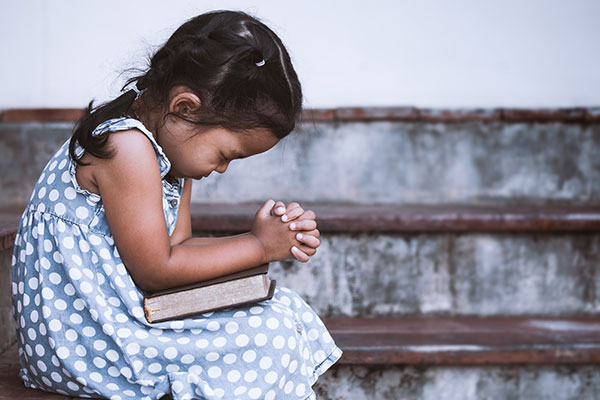
 Dear readers, Catholic Online was de-platformed by Shopify for our pro-life beliefs. They shut down our Catholic Online, Catholic Online School, Prayer Candles, and Catholic Online Learning Resources essential faith tools serving over 2.2 million students and millions of families worldwide. Our founders, now in their 70's, just gave their entire life savings to protect this mission. But fewer than 2% of readers donate. If everyone gave just $5, the cost of a coffee, we could rebuild stronger and keep Catholic education free for all. Stand with us in faith. Thank you. DONATE TODAY >
Feast of the Holy Name
FREE Catholic Classes
This feast is celebrated on the second Sunday after Epiphany (double of the second class). It is the central feast of all the mysteries of Christ the Redeemer; it unites all the other feasts of the Lord, as a burning glass focuses the rays of the sun in one point, to show what Jesus is to us, what He has done, is doing, and will do for mankind. It originated towards the end of the fifteenth century, and was instituted by the private authority of some bishops in Germany, Scotland, England, Spain, and Belgium. The Office and the Mass composed by Bernardine dei Busti (d. 1500) were approved by Sixtus IV. The feast was officially granted to the Franciscans 25 February, 1530, and spread over a great part of the Church. The Franciscans, Carmelites, and Augustinians kept it on 14 Jan.; the Dominicans 15 Jan. At Salisbury, York, and Durham in England, and at Aberdeen in Scotland it was celebrated 7 Aug., at Liège, 31 Jan., at Compostela and Cambrai, 8 Jan. (Grotefend, "Zeitrechnung", II, 2. 89). The Carthusians obtained it for the second Sunday after Epiphany about 1643; for that Sunday it was also extended to Spain, and later, 20 Dec., 1721, to the Universal Church. The Office used at present is nearly identical with the Office of Bernardine dei Busti. The hymns "Jesu dulcis memoria", "Jesu Rex admirabilis", "Jesu decus angelicum", usually ascribed to St. Bernard, are fragments of a very extensive "jubilus" or "cursus de aeterna sapientia" of some unknown author in the thirteenth century. For the beautiful sequence "Dulcis Jesus Nazarenus" (Morel, "Hymnen des Mittelalters", 67) of Bernardine dei Busti the Franciscans substituted a prose sequence of modern origin: "Lauda Sion Salvatoris"; they still celebrate the feast on 14 January.

Come Grow With Us
Sign up and walk the Catholic journey with millions around the world.
Receive inspiring emails on saints, daily readings, and free faith-building resources—no cost, ever.
You could be the answer to a child’s prayer.
Please Watch

- 7 Morning Prayers
- Mysteries of the Rosary
- Litany of the Bl. Virgin Mary
- Popular Saints
- Popular Prayers
- Female Saints
- Saint Feast Days by Month
- Stations of the Cross
- St. Francis of Assisi
- St. Michael the Archangel
- The Apostles' Creed
- Unfailing Prayer to St. Anthony
- Pray the Rosary






Copyright 2026 Catholic Online. All materials contained on this site, whether written, audible or visual are the exclusive property of Catholic Online and are protected under U.S. and International copyright laws, © Copyright 2026 Catholic Online. Any unauthorized use, without prior written consent of Catholic Online is strictly forbidden and prohibited.
Catholic Online is a Project of Your Catholic Voice Foundation, a Not-for-Profit Corporation. Your Catholic Voice Foundation has been granted a recognition of tax exemption under Section 501(c)(3) of the Internal Revenue Code. Federal Tax Identification Number: 81-0596847. Your gift is tax-deductible as allowed by law.
