Temptation of Christ
FREE Catholic Classes
In the Catholic translation of the Bible , the word "temptation" is used in various senses, the principal of which are the following:
- the act of testing or trying ( Deuteronomy 4:34 ; Tobit 2:12; Luke 22:28 ; etc.);
- enticement to evil ( Matthew 26:41 ; 1 Corinthians 10:13 ; etc.);
- the state of being tempted ( Matthew 6:13 ; Luke 4:13 ; etc.);
- that which tempts or entices to evil ( James 1:12 ; 2 Peter 2:9 ; etc.);
- the name of a place ( Exodus 17:7 ; Deuteronomy 6:16 ; etc.)
Like Adam, Christ (the second Adam) endured temptation only from without, inasmuch as His human nature was free from all concupiscence ; but unlike Adam, He withstood the assaults of the Tempter on all points, thereby affording His mystical members a perfect model of resistance to their spiritual enemy, and a permanent source of victorious help ( Hebrews 4:15-16 ). In our first three Gospels ( Matthew 4:1-11 ; Mark 1:12-13 ; Luke 4:1-13 ), the narrative of Christ's temptation is placed in immediate connexion with His baptism on the one hand, and with the beginning of His public ministry on the other. The reason of this is clear. The Synoptists naturally regard the baptism of Christ as the external designation of Jesus from above for His Messianic work to be pursued under the guidance of the Holy Spirit bestowed upon Him on this occasion; and they no less naturally regard Christ's sojourn in the desert where He was tempted, as His own immediate preparation for that great work under the guidance of the same Holy Spirit. As our first three Gospels agree concerning the time to which they assign the temptation of Christ, so they are at one in ascribing the same general place to its occurrence, viz. "the desert ", whereby they no doubt mean the Wilderness of Judea, where Jesus would indeed be, as St. Mark says: "with beasts". From St. Mark (i, 13) -- with whom compare St. Luke iv, 2 -- we learn that Jesus Christ was tempted during the forty days which He spent in the desert (cf. St. Augustine, "Harmony of the Evangelists ", II, xvi), so that the three onsets given in detail by St. Matthew and St. Luke are apparently the three final assaults of Satan against Christ. The first of these assaults is directly connected in both St. Matthew and St. Luke with the prolonged fast of Jesus in the wilderness. The Tempter suggested to Jesus that He should use His miraculous power to relieve His hunger, by changing into bread the loaf-like flints of the desert. The two other assaults are given in a different order, St. Matthew adhering probably to the order of time, and St. Luke to that of place. The spot pointed out by tradition as the summit from which Satan offered to Jesus dominion over all earthly kingdoms is the "Quarantania", a limestone peak on the road from Jerusalem to Jericho. As regards the Temple's pinnacle from which the Tempter bade Jesus cast Himself down, it was not the top of the House of Yahweh, but probably the roof of Solomon's portico from which, at a later date, St. James was actually hurled to the pavement below ( Eusebius, "Hist. eccl.", IV, xiii).
According to St. Luke (4:13) , after having subjected Christ to all kinds of temptations -- the Messianic import of which is undoubted -- Satan withdrew, awaiting a favourable opportunity like that which followed Christ's prolonged fast in the desert. The later conflict thus alluded to is no other than that of Christ's Passion (cf. Luke 22:53 ; John 14:30 ). The ministry of angels to Jesus, in connection with His temptation, is mentioned in Mark, i, 13. Satan's exact manner of appearance to Jesus is not stated by the Evangelists. Despite the difficulties urged, chiefly by non-Catholic scholars, against the historical character of the three temptations of Jesus, as recorded by St. Matthew and St. Luke, it is plain that these sacred writers intended to describe an actual and visible approach of Satan, to chronicle an actual shifting of places, etc., and that the traditional view, which maintains the objective nature of Christ's temptations, is the only one meeting all the requirements of the Gospel narrative.

Join the Movement
When you sign up below, you don't just join an email list - you're joining an entire movement for Free world class Catholic education.


-

-
Mysteries of the Rosary
-
St. Faustina Kowalska
-
Litany of the Blessed Virgin Mary
-
Saint of the Day for Wednesday, Oct 4th, 2023
-
Popular Saints
-
St. Francis of Assisi
-
Bible
-
Female / Women Saints
-
7 Morning Prayers you need to get your day started with God
-
Litany of the Blessed Virgin Mary


Sacrifices of Faith: The Pro-Life Legacies of St. Gianna and Jessica Hanna
-
How to love God by caring for our bodies
-
Pope Francis calls for negotiations to End Russia-Ukraine War
-
Pope Francis Contemplates Return to U.S. for United Nations Assembly Address
-
Pope Francis Calls on Faithful to Embrace Faith, Hope, and Charity in New Teaching Series


Daily Catholic
- Daily Readings for Sunday, April 28, 2024
- St. Peter Chanel: Saint of the Day for Sunday, April 28, 2024
- Prayer before a Crucifix: Prayer of the Day for Sunday, April 28, 2024
- Daily Readings for Saturday, April 27, 2024
- St. Zita: Saint of the Day for Saturday, April 27, 2024
- Prayer for the Dead # 2: Prayer of the Day for Saturday, April 27, 2024
 Daily Readings for Sunday, April 28, 2024
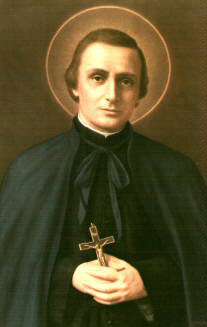 St. Peter Chanel: Saint of the Day for Sunday, April 28, 2024
 Prayer before a Crucifix: Prayer of the Day for Sunday, April 28, 2024
We ask you, humbly: don't scroll away.
Hi readers, it seems you use Catholic Online a lot; that's great! It's a little awkward to ask, but we need your help. If you have already donated, we sincerely thank you. We're not salespeople, but we depend on donations averaging $14.76 and fewer than 1% of readers give. If you donate just $5.00, the price of your coffee, Catholic Online School could keep thriving. Thank you.Help Now >

 Hi readers, it seems you use Catholic Online a lot; that's great! It's a little awkward to ask, but we need your help. If you have already donated, we sincerely thank you. We're not salespeople, but we depend on donations averaging $14.76 and fewer than 1% of readers give. If you donate just $5.00, the price of your coffee, Catholic Online School could keep thriving. Thank you. Help Now >

Copyright 2024 Catholic Online. All materials contained on this site, whether written, audible or visual are the exclusive property of Catholic Online and are protected under U.S. and International copyright laws, © Copyright 2024 Catholic Online. Any unauthorized use, without prior written consent of Catholic Online is strictly forbidden and prohibited.
Catholic Online is a Project of Your Catholic Voice Foundation, a Not-for-Profit Corporation. Your Catholic Voice Foundation has been granted a recognition of tax exemption under Section 501(c)(3) of the Internal Revenue Code. Federal Tax Identification Number: 81-0596847. Your gift is tax-deductible as allowed by law.