We ask you, humbly: don't scroll away.
Hi readers, it seems you use Catholic Online a lot; that's great! It's a little awkward to ask, but we need your help. If you have already donated, we sincerely thank you. We're not salespeople, but we depend on donations averaging $14.76 and fewer than 1% of readers give. If you donate just $5.00, the price of your coffee, Catholic Online School could keep thriving. Thank you.Help Now >
Josue (Joshua)
FREE Catholic Classes
The name of eight persons in the Old Testament, and of one of the Sacred Books.
THE BOOK OF JOSHUA
The sixth book of the Old Testament ; in the plan of the critics, the last book of the Hexateuch (see P ENTATEUCH ). In the Fathers, the book is often called "Jesus Nave". The name dates from the time of Origen, who translated the Hebrew "son of Nun " by uìòs Nauê and insisted upon the Nave as a type of a ship; hence in the name Jesus Nave many of the Fathers see the type of Jesus, the Ship wherin the world is saved.
 Hi readers, it seems you use Catholic Online a lot; that's great! It's a little awkward to ask, but we need your help. If you have already donated, we sincerely thank you. We're not salespeople, but we depend on donations averaging $14.76 and fewer than 1% of readers give. If you donate just $5.00, the price of your coffee, Catholic Online School could keep thriving. Thank you. Help Now >
The Book of Josue contains two parts: the conquest of the promised land and the division thereof. (a) The Conquest (i- xii). Josue enters the land of promise, after being assured by spies that the way is safe. It is the tenth day of the first month, forty-one years since the Exodus. The channel of the Jordan is dry during the passage of Israel (i-iii) A monument is erected in the midst of the Jordan, and one at Galgal, to commemorate the miracle. Josue camps at Galgal (iv). The Israelites born during the wandering are circumcised ; the pasch is eaten the first time in the land of promise; the manna ceases to fall; Josue is strengthened by the vision of an angel (v). The walls of Jericho fall without a blow; the city is sacked; its inhabitants are put to death ; only the family of Rahab is spared (vi). Israel goes up against Hai. The crime of Achan causes defeat. Josue punishes that crime and takes Hai (vii-viii, 29); sets up an altar on Mount Hebal; subjugates the Gabaonites (viii, 30-ix), defeats the kings of Jerusalem, Hebron, Jerimoth, Lachis, and Eglon; captures and destroys Maceda, Lebna, Lachis, Eglon, Hebron, Dabir, and the South even to Gaza ; marches North and defeats the combined forces of the kings at the waters of Meron (x-xii). (b) The Division of the Land among the Tribes of Israel (xiii-xxii). Epilogue: last message and death of Josue (xxiii and xxiv).
(2) Canonicity(a) In the Jewish canon Josue is among the Early Prophets Josue, Judges, and the four Books of Kings. It was not grouped with the Pentateuch, chiefly because, unlike Exodus and Leviticus, it contained no Torah, or law ; also because the five books of the Torah were assigned to Moses (see P ENTATEUCH ). (b) In the Christian canon Josue has ever held the same place as in the Jewish canon.
(3)UnityNon-Catholics have almost all followed the critics in the question of the "Hexateuch"; even the conservative Hastings, "Dict. of the Bible ", ed. 1909, takes it for granted that Josue (Joshua) is a post-Exile patchwork. The first part (i-xii) is made up of two documents, probably J and E (Jehovistic and Elohistic elements), put together by J E and later revised by the Deuterocanonical editor (D); to this latter is assigned all of the first chapter. Very little of this portion is the work of P (the compiler of the Priestly Code). In the second part (xiii-xxii) the critics are uncertain as to whether the last editing was the work of the Deuteronomic or the Priestly editor; they agree in this that the same hands those of J, E, D, and P are at work in both parts, and that the portions which must be assigned to P have characteristics which are not at all found in his work in the Pentateuch. The final redaction is post-Exilic a work done about 440-400 B.C. Such in brief is the theory of the critics, who differ here as elsewhere in the matter of the details assigned to the various writers and the order of the editing, which all assume was certainly done. (See G. A. Smith and Welch in Hastings, "Dict. of the Bible ", large and small editions respectively, s. v. "Joshua"; Moore in Cheyne, "Encyc. Bibl."; Wellhausen, "Die Composition des Hexateuchs und der historischen Bücher des A. T.", Berlin, 1889; Driver, "Introd. to Lit. of O.T.", New York, 1892, 96.)

The Jews knew no such Hexateuch, no such six books set together by a final editor; they always kept a marked distinction between the Pentateuch and Josue, and rather linked Josue with Judges than with Deuteronomy. The well-known preface to Ecclesiasticus (Septuagint) separates the "Law" from the "Prophets". The Samaritans have the Torah entirely separate from the recently discovered Samaritan Josue.
Catholics almost universally defend the unity of Josue. It is true that before the decree of the Biblical Commission on the question of the multiple authorship of the Pentateuch, some Catholics assigned Josue, as well as the five Mosaic books, to J, E, D, and P. Catholic Biblical scholars favour the pre-Exilic unity of composition of Josue and its editorial independence of the Pentateuch. This independence is shown by the completeness and originality of the plan of the book. We have seen the unity of this plan Josue's conquest and division of the promised land. The purpose is clear to carry on the history of the chosen people after the death of Moses. The purpose of the Pentateuch was very different to codify the laws of the chosen people as well as to sum up their primitive history. No laws are codified in Josue. The critics argue that the death of Moses leaves a void to be filled up, i.e. the conquest of the land of promise, and therefore postulate this conquest for the historical, if not for the legal, completeness of the Pentateuch. Such an hypothesis would justify one in postulating also that the history of the conquest after the death of Josue be needed for the historical completeness of the Pentateuch. Again, the completeness of Josue's narrative of the conquest of the promised land is clear from the fact that it repeats data which are already given in the Pentateuch and are details of that conquest. The orders of Moses to the children of Ruben and of Gad are clear cut in the Pentateuch ( Numbers 32:20 sqq. ); so, too, is the execution of these orders by the Rubenites and Gadites in the lands of the Amorrhites and of Basan ( Numbers 32:33-38 ). If Josue is part of the composite and late composition which the critics make the Mosaic books out to be, how comes it that these very data concerning the children of Ruben and of Gad are repeated by the supposititious Deuteronomic D¹ or D² when he comes to set together the J and E and P of Josue? Why does he break in upon his continued narrative (see Joshua 1:12 ; 13:15-28 )? Why this useless repetition of the same names, if not because of the unity of composition of Josue? Why are the cities of refuge given again (cf. 20:8; Deuteronomy 4:41 sqq. )? To answer these and similar difficulties, the critics have recourse to an uncritical subterfuge D¹ or D² was not brought up in the school of modern criticism; hence his blunderings. We cannot accept so uncritical and free-handed a writer as the God-chosen and inspired editor of the Pentateuch and Josue. For a full refutation of the critics, see Cornely, "Introd. Specialis in Hist. V. T. Libros", II (Paris, 1887, 177).
(4) Authorship
(a) The Book of Josue was certainly written before the time of David, for the Chanaanite still dwelt in Gazer (xvi, 10), the Jebusite in Jerusalem (xv, 63), and Sidon held supremacy in Phoenicia (xiv, 28); whereas, before the time of Solomon, the Egyptians had driven the Chanaanite from Gazer ( 1 Kings 9:16 ), David had captured Jerusalem in the eighth year of his reign ( 2 Samuel 5:5 ), and Tyre (twelfth century B.C. ) had supplanted Sidon in the supremacy of Phoenicia. Moreover, in David's time, no writer could have set down his allies the Phoenicians among the peoples to be destroyed (xiii, 6). (b) Internal evidence favours the view that the author lived not long after the death of Josue. The territory assigned to each tribe is very exactly described. Only the land allotted to Ephraim is set down (xvi, 5), since occupation was delayed (xvii, 16); on the other hand, we are told not only the portion of land allotted to Juda and Benjamin, but the cities they had captured (xv, 1 sqq.; xviii, 11 sqq.); as for the other tribes, the progress they had made in winning the cities of their lot is told us with an accuracy which could not be explained were we to admit that the narrative is post-Exilic in its final redaction. Only the inadmissible bungling of the uncritical D¹ or D² will serve to explain away this argument. (c) The question remains: Did Josue write all save the epilogue? Catholics are divided. Most of the Fathers seem to have taken it for granted that the author is Josue; still there have ever been Catholics who assigned the work to some one shortly after the death of the great leader. Theodoret (In Jos., q. xiv), Pseudo-Athanasius (Synopsis Sacr. Scrip.), Tostatus (In Jos., i, q. xiii; vii), Maes ("Josue Imperatoris Historia", Antwerp, 1574), Haneberg ("Gesch. der bibl. Offenbarung", Ratisbon, 1863, 202), Danko ("Hist. Rev. Div. V. T.", Vienna, 1862, 200), Meignan ("De Moïse à David ", Paris, 1896, 335), and many other Catholic authors admit that the Book of Josue contains signs of later editing; but all insist that this editing was done before the Exile.
(5) HistoricityThe Biblical Commission (15 Feb., 1909) has decreed the historicity of the primitive narrative of Genesis 1-3 ; a fortiori it will not tolerate that a Catholic deny the historicity of Josue. The chief objection of rationalists to the historical worth of the book is the almost overwhelming force of the miraculous therein; this objection has no worth to the Catholic exegete. Other objections are forestalled in the treatment of the authenticity of the work. Full answer to the rationalistic objections will be found in the standard works of Catholics on introduction. Saints Paul ( Hebrews 11:30-31 ; 13:5 ), James (ii, 25), and Stephen ( Acts 7:45 ), the tradition of the Synagogue and of the Church accept the Book of Josue as historical. To the Fathers Josue is an historical person and a type of the Messias. As an antidote to accusations that Josue was cruel and murderous, etc., one should read the Assyrian and Egyptian accounts of the almost contemporary treatment of the vanquished. St. Augustine solved the rationalistic difficulty by saying that the abominations of the Chanaanites merited the punishment which God, as Master of the world, meted out to them by the hand of Israel (In Hept., III, 56; P.L., XXXIV, 702, 816). These abominations of phallic worship and infant sacrifice have been proven by the excavations of the Palestine Exploration Fund at Gazer.

The Septuagint is preserved in two different recensions the Alexandrian (A) and Vatican (B) and varies considerably from the Masorah ; the Vulgate often differs from all three (iii, 4; iv, 3, 13; v, 6). The Samaritan Josue recently discovered, resembles the Sept. more closely than the Masorah.


Join the Movement
When you sign up below, you don't just join an email list - you're joining an entire movement for Free world class Catholic education.


-

-
Mysteries of the Rosary
-
St. Faustina Kowalska
-
Litany of the Blessed Virgin Mary
-
Saint of the Day for Wednesday, Oct 4th, 2023
-
Popular Saints
-
St. Francis of Assisi
-
Bible
-
Female / Women Saints
-
7 Morning Prayers you need to get your day started with God
-
Litany of the Blessed Virgin Mary

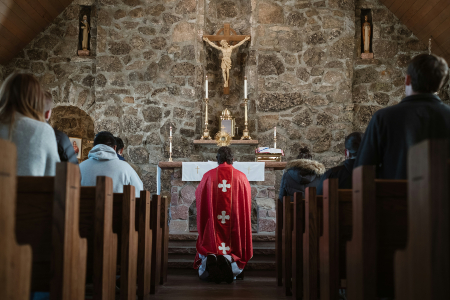
U.S. Catholic Parishes Experience Resurgence of Traditional Practices
-
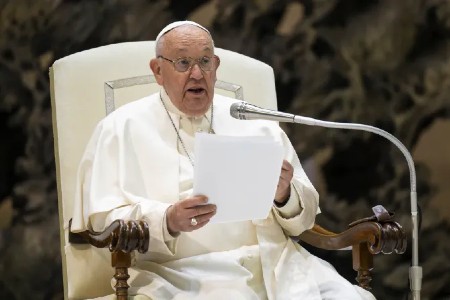
Pope Francis Urges Faith and Prayers for Peace
-
Florida Welcomes Volunteer Chaplains to Public Schools
-
10 Fascinating Details About St. Joseph the Worker: Celebrating His Feast Day - May 1
-
St. Joseph the Worker: Model for Men, Young and Old

Daily Catholic
- Daily Readings for Thursday, May 02, 2024
- St. Athanasius: Saint of the Day for Thursday, May 02, 2024
- The Our Father: Prayer of the Day for Thursday, May 02, 2024
- Daily Readings for Wednesday, May 01, 2024
- St. Marculf: Saint of the Day for Wednesday, May 01, 2024
- To Saint Peregrine: Prayer of the Day for Wednesday, May 01, 2024
 Daily Readings for Thursday, May 02, 2024
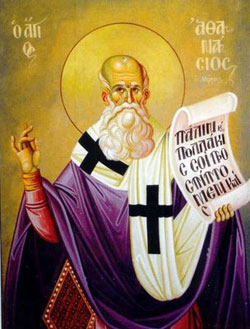 St. Athanasius: Saint of the Day for Thursday, May 02, 2024
 The Our Father: Prayer of the Day for Thursday, May 02, 2024
We ask you, humbly: don't scroll away.
Hi readers, it seems you use Catholic Online a lot; that's great! It's a little awkward to ask, but we need your help. If you have already donated, we sincerely thank you. We're not salespeople, but we depend on donations averaging $14.76 and fewer than 1% of readers give. If you donate just $5.00, the price of your coffee, Catholic Online School could keep thriving. Thank you.Help Now >


Copyright 2024 Catholic Online. All materials contained on this site, whether written, audible or visual are the exclusive property of Catholic Online and are protected under U.S. and International copyright laws, © Copyright 2024 Catholic Online. Any unauthorized use, without prior written consent of Catholic Online is strictly forbidden and prohibited.
Catholic Online is a Project of Your Catholic Voice Foundation, a Not-for-Profit Corporation. Your Catholic Voice Foundation has been granted a recognition of tax exemption under Section 501(c)(3) of the Internal Revenue Code. Federal Tax Identification Number: 81-0596847. Your gift is tax-deductible as allowed by law.