 Dear readers, Catholic Online was de-platformed by Shopify for our pro-life beliefs. They shut down our Catholic Online, Catholic Online School, Prayer Candles, and Catholic Online Learning Resources essential faith tools serving over 2.2 million students and millions of families worldwide. Our founders, now in their 70's, just gave their entire life savings to protect this mission. But fewer than 2% of readers donate. If everyone gave just $5, the cost of a coffee, we could rebuild stronger and keep Catholic education free for all. Stand with us in faith. Thank you. DONATE TODAY >
St. Hilary of Poitiers
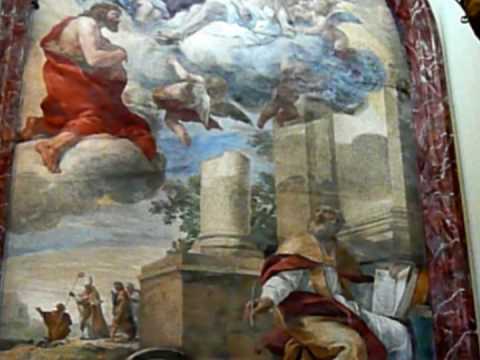

Facts
Patron: against snake bites
Death: 368
Author and Publisher - Catholic Online
Printable Catholic Saints PDFs
Shop St. Hilary of Poitiers
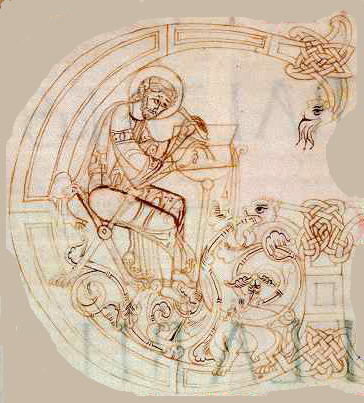
"They didn't know who they were." This is how Hilary summed up the problem with the Arian heretics of the fourth century.
Hilary, on the other hand, knew very well who he was -- a child of a loving God who had inherited eternal life through belief in the Son of God. He hadn't been raised as a Christian but he had felt a wonder at the gift of life and a desire to find out the meaning of that gift. He first discarded the approach of many people who around him, who believed the purpose of life was only to satisfy desires. He knew he wasn't a beast grazing in a pasture. The philosophers agreed with him. Human beings should rise above desires and live a life of virtue, they said. But Hilary could see in his own heart that humans were meant for even more than living a good life.
If he didn't lead a virtuous life, he would suffer from guilt and be unhappy. His soul seemed to cry out that wasn't enough to justify the enormous gift of life. So Hilary went looking for the giftgiver. He was told many things about the divine -- many that we still hear today: that there were many Gods, that God didn't exist but all creation was the result of random acts of nature, that God existed but didn't really care for his creation, that God was in creatures or images. One look in his own soul told him these images of the divine were wrong. God had to be one because no creation could be as great as God. God had to be concerned with God's creation -- otherwise why create it?
At that point, Hilary tells us, he "chanced upon" the Hebrew and Christian Scriptures. When he read the verse where God tells Moses "I AM WHO I AM" (Exodus 3:14), Hilary said, "I was frankly amazed at such a clear definition of God, which expressed the incomprehensible knowledge of the divine nature in words most suited to human intelligence." In the Psalms and the Prophets he found descriptions of God's power, concern, and beauty. For example in Psalm 139, "Where shall I go from your spirit?", he found confirmation that God was everywhere and omnipotent.
But still he was troubled. He knew the giftgiver now, but what was he, the recipient of the gift? Was he just created for the moment to disappear at death? It only made sense to him that God's purpose in creation should be "that what did not exist began to exist, not that what had begun to exist would cease to exist." Then he found the Gospels and read John's words including "In the beginning was the Word, and the Word was with God, and the Word was God. He was in the beginning with God..." (John 1:1-2). From John he learned of the Son of God and how Jesus had been sent to bring eternal life to those who believed. Finally his soul was at rest. "No longer did it look upon the life of this body as troublesome or wearisome, but believed it to be what the alphabet is to children... namely, as the patient endurance of the present trials of life in order to gain a blissful eternity." He had found who he was in discovering God and God's Son Jesus Christ.
After becoming a Christian, he was elected bishop of Poitiers in what is now France by the laity and clergy. He was already married with one daughter named Apra.
Not everyone at that time had the same idea of who they were. The Arians did not believe in the divinity of Christ and the Arians had a lot of power including the support of the emperor Constantius. This resulted in many persecutions. When Hilary refused to support their condemnation of Saint Athanasius he was exiled from Poitiers to the East in 356. The Arians couldn't have had a worse plan -- for themselves.
Hilary really had known very little of the whole Arian controversy before he was banished. Perhaps he supported Athanasius simply because he didn't like their methods. But being exiled from his home and his duties gave him plenty of time to study and write. He learned everything he could about what the Arians said and what the orthodox Christians answered and then he began to write. "Although in exile we shall speak through these books, and the word of God, which cannot be bound, shall move about in freedom." The writings of his that still exist include On the Trinity, a commentary on the Gospel of Matthew, and a commentary on the Psalms. He tells us about the Trinity, "For one to attempt to speak of God in terms more precise than he himself has used: -- to undertake such a thing is to embark upon the boundless, to dare the incomprehensible. He fixed the names of His nature: Father, Son, and Holy Spirit. Whatever is sought over and above this is beyond the meaning of words, beyond the limits of perception, beyond the embrace of understanding."
After three years the emperor kicked him back to Poitiers, because, we are told by Sulpicius Severus, the emperor was tired of having to deal with the troublemaker, "a sower of discord an a disturber of the Orient." But no one told Hilary he had to go straight back to his home and so he took a leisurely route through Greece and Italy, preaching against the Arians as he went.
In the East he had also heard the hymns used by Arians and orthodox Christians as propaganda. These hymns were not based on Scripture as Western hymns but full of beliefs about God. Back at home, Hilary started writing hymns of propaganda himself to spread the faith. His hymns are the first in the West with a known writer.
Some of use may wonder at all the trouble over what may seem only words to us now. But Hilary wasn't not fighting a war of words, but a battle for the eternal life of the souls who might hear the Arians and stop believing in the Son of God, their hope of salvation.
The death of Constantius in 361 ended the persecution of the orthodox Christians. Hilary died in 367 or 368 and was proclaimed a doctor of the Church in 1851.
In His Footsteps:In Exodus, the Prophets, and the Gospel of John, Hilary found his favorite descriptions of God and God's relationship to us. What verses of Scripture describe God best for you? If you aren't familiar with Scripture, look up the verses that Hilary found. What do they mean to you?
Prayer:Saint Hilary of Poitiers, instead of being discouraged by your exile, you used your time to study and write. Help us to bring good out of suffering and isolation in our own lives and see adversity as an opportunity to learn about or share our faith. Amen
Come Grow With Us
Sign up and walk the Catholic journey with millions around the world.
Receive inspiring emails on saints, daily readings, and free faith-building resources—no cost, ever.
WHAT HAPPENS IF WE CAN’T CONTINUE?
Please Watch

- 7 Morning Prayers
- Mysteries of the Rosary
- Litany of the Bl. Virgin Mary
- Popular Saints
- Popular Prayers
- Female Saints
- Saint Feast Days by Month
- Stations of the Cross
- St. Francis of Assisi
- St. Michael the Archangel
- The Apostles' Creed
- Unfailing Prayer to St. Anthony
- Pray the Rosary








Copyright 2026 Catholic Online. All materials contained on this site, whether written, audible or visual are the exclusive property of Catholic Online and are protected under U.S. and International copyright laws, © Copyright 2026 Catholic Online. Any unauthorized use, without prior written consent of Catholic Online is strictly forbidden and prohibited.
Catholic Online is a Project of Your Catholic Voice Foundation, a Not-for-Profit Corporation. Your Catholic Voice Foundation has been granted a recognition of tax exemption under Section 501(c)(3) of the Internal Revenue Code. Federal Tax Identification Number: 81-0596847. Your gift is tax-deductible as allowed by law.
