We ask you, urgently: don't scroll past this
Dear readers, Catholic Online was de-platformed by Shopify for our pro-life beliefs. They shut down our Catholic Online, Catholic Online School, Prayer Candles, and Catholic Online Learning Resources essential faith tools serving over 1.4 million students and millions of families worldwide. Our founders, now in their 70's, just gave their entire life savings to protect this mission. But fewer than 2% of readers donate. If everyone gave just $5, the cost of a coffee, we could rebuild stronger and keep Catholic education free for all. Stand with us in faith. Thank you.Help Now >
Frequently Asked Questions about Saints
Exactly how many saints are there?
There are over 10,000 named saints and beati from history, the Roman Martyology and Orthodox sources, but no definitive "head count".
How does the Church choose saints?
Canonization, the process the Church uses to name a saint, has only been used since the tenth century. For hundreds of years, starting with the first martyrs of the early Church, saints were chosen by public acclaim. Though this was a more democratic way to recognize saints, some saints' stories were distorted by legend and some never existed. Gradually, the bishops and finally the Vatican took over authority for approving saints.
In 1983, Pope John Paul II made sweeping changes in the canonization procedure. The process begins after the death of a Catholic whom people regard as holy. Often, the process starts many years after death in order give perspective on the candidate. The local bishop investigates the candidate's life and writings for heroic virtue (or martyrdom) and orthodoxy of doctrine. Then a panel of theologians at the Vatican evaluates the candidate. After approval by the panel and cardinals of the Congregation for the Causes of Saints, the pope proclaims the candidate "venerable."
The next step, beatification, requires evidence of one miracle (except in the case of martyrs). Since miracles are considered proof that the person is in heaven and can intercede for us, the miracle must take place after the candidate's death and as a result of a specific petition to the candidate. When the pope proclaims the candidate beatified or "blessed," the person can be venerated by a particular region or group of people with whom the person holds special importance.
Only after one more miracle will the pope canonize the saint (this includes martyrs as well). The title of saint tells us that the person lived a holy life, is in heaven, and is to be honored by the universal Church. Canonization does not "make" a person a saint; it recognizes what God has already done.
Though canonization is infallible and irrevocable, it takes a long time and a lot of effort. So while every person who is canonized is a saint, not every holy person has been canonized. You have probably known many "saints" in your life, and you are called by God to be one yourself.
When did the Church start honoring saints?
By the year 100 A.D., Christians were honoring other Christians who had died, and asking for their intercession. Many people think that honoring saints was something the Church set up later, but it was part of Christianity from the very beginning. As a matter of fact, this practice came from a long-standing tradition in the Jewish faith of honoring prophets and holy people with shrines. The first saints were martyrs, people who had given up their lives for the Faith in the persecution of Christians.
Is keeping statues or pictures of saints idolatry?
Look at the pictures of your loved ones in your wallet or around your home or office. Why do you keep these particular pictures? You might answer that you carry those pictures to remind you of people you love, to help you feel that they're close to you when you're not together, or to share with people you meet. But you probably didn't say you worshipped them. Those are some of the same reasons we have statues and pictures of saints. Seeing a statue of Saint Therese of Lisieux who lost her mother when she was a child might make us feel less alone when we are grieving. A picture of Saint Francis of Assisi might remind us of how much he loved God's creation and make us more aware of our environment.
Do Catholics pray to saints?
We pray with saints, not to them. Have you ever asked anyone to pray for you when you were having a hard time? Why did you choose to ask that person?
You may have chosen someone you could trust, or someone who understood your problem, or someone who was close to God. Those are all reasons we ask saints to pray for us in times of trouble.
Since saints led holy lives and are close to God in heaven, we feel that their prayers are particularly effective. Often we ask particular saints to pray for us if we feel they have a particular interest in our problem. For example, many people ask Saint Monica to pray for them if they have trouble with unanswered prayers, because Monica prayed for twenty years for her son to be converted. Finally her prayers were answered in a way she never dreamed of -- her son, Augustine, became a canonized saint and a Doctor of the Church.
What is a patron saint?
Patron saints are chosen as special protectors or guardians over areas of life. These areas can include occupations, illnesses, churches, countries, causes -- anything that is important to us. The earliest records show that people and churches were named after apostles and martyrs as early as the fourth century. Recently, the popes have named patron saints but patrons can be chosen by other individuals or groups as well. Patron saints are often chosen today because an interest, talent, or event in their lives overlaps with the special area. For example, Francis of Assisi loved nature and so he is patron of ecologists. Francis de Sales was a writer and so he is patron of journalists and writers. Clare of Assisi was named patron of television because one Christmas when she was too ill to leave her bed she saw and heard Christmas Mass -- even though it was taking place miles away. Angels can also be named as patron saints.A patron saint can help us when we follow the example of that saint's life and when we ask for that saint's intercessory prayers to God.
Is there a Feast day for every day of the year?
Well, yes and no. The official Roman calendar of feast days for celebration by the Universal Church (in other words, all over the world) does not have a saint's feast day every day. The Church chooses saints to be celebrated worldwide very carefully -- they must have a strong message for the Church as a whole. That doesn't mean that other saints are somehow less holy -- although some of the saints that have been dropped were legendary and there is little evidence they existed.
Religious orders, countries, localities, and individuals are free to celebrate the feast days of saints not listed on the universal calendar but which have some importance to them. And there are indeed feast days for saints every day of the year. As a matter of fact there are at least three saints for almost every day.
Butler's Lives of the Saints has the most complete listing of saints' feast days I have found, though I advise care in choosing the edition. Recent changes have been made to the calendar that would affect feast days.
Whatever happened to St. Christopher? Is he still a saint?"
Before the 1969 reform of the Roman calendar, Christopher was listed as a martyr who died under Decius. Nothing else is known about him. There are several legends about him including the one in which he was crossing a river when a child asked to be carried across. When Christopher put the child on his shoulders he found the child was unbelievably heavy. The child, according to the legend, was Christ carrying the weight of the whole world. This was what made Christopher patron saint of travelers. His former feast day is July 25.
Before the formal canonization process began in the fifteenth century, many saints were proclaimed by popular approval. This was a much faster process but unfortunately many of the saints so named were based on legends, pagan mythology, or even other religions -- for example, the story of the Buddha traveled west to Europe and he was "converted" into a Catholic saint! In 1969, the Church took a long look at all the saints on its calendar to see if there was historical evidence that that saint existed and lived a life of holiness. In taking that long look, the Church discovered that there was little proof that many "saints", including some very popular ones, ever lived. Christopher was one of the names that was determined to have a basis mostly in legend. Therefore Christopher (and others) were dropped from the universal calendar.
Some saints were considered so legendary that their cult was completely repressed (including St. Ursula). Christopher's cult was not suppressed but it is confined to local calendars (those for a diocese, country, or so forth).

Join the Movement
When you sign up below, you don't just join an email list - you're joining an entire movement for Free world class Catholic education.
-

- Easter / Lent
- Ascension Day
- 7 Morning Prayers
- Mysteries of the Rosary
- Litany of the Bl. Virgin Mary
- Popular Saints
- Popular Prayers
- Female Saints
- Saint Feast Days by Month
- Stations of the Cross
- St. Francis of Assisi
- St. Michael the Archangel
- The Apostles' Creed
- Unfailing Prayer to St. Anthony
- Pray the Rosary


Catholic Online News Declares War on Lies – A 2,000-Year-Old Force for Truth Enters the Global News Arena

How to Build a Nuclear Bomb: Start to Strike

Saint Anthony of Padua: The Miracle-Worker Who Brings Us Back to Christ
Daily Catholic
- Daily Readings for Sunday, June 15, 2025
- St. Germaine Cousin: Saint of the Day for Sunday, June 15, 2025
- Prayer for God's Blessing of One's Daily Work: Prayer of the Day for Sunday, June 15, 2025
- Daily Readings for Saturday, June 14, 2025
- St. Methodius I: Saint of the Day for Saturday, June 14, 2025
- Prayer for America: Prayer of the Day for Saturday, June 14, 2025
 Daily Readings for Sunday, June 15, 2025
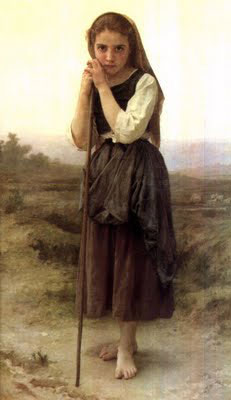 St. Germaine Cousin: Saint of the Day for Sunday, June 15, 2025
 Prayer for God's Blessing of One's Daily Work: Prayer of the Day for Sunday, June 15, 2025
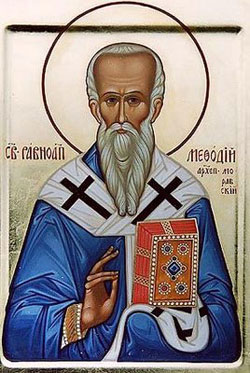 St. Methodius I: Saint of the Day for Saturday, June 14, 2025



Copyright 2025 Catholic Online. All materials contained on this site, whether written, audible or visual are the exclusive property of Catholic Online and are protected under U.S. and International copyright laws, © Copyright 2025 Catholic Online. Any unauthorized use, without prior written consent of Catholic Online is strictly forbidden and prohibited.
Catholic Online is a Project of Your Catholic Voice Foundation, a Not-for-Profit Corporation. Your Catholic Voice Foundation has been granted a recognition of tax exemption under Section 501(c)(3) of the Internal Revenue Code. Federal Tax Identification Number: 81-0596847. Your gift is tax-deductible as allowed by law.