 Hi readers, it seems you use Catholic Online a lot; that's great! It's a little awkward to ask, but we need your help. If you have already donated, we sincerely thank you. We're not salespeople, but we depend on donations averaging $14.76 and fewer than 1% of readers give. If you donate just $5.00, the price of your coffee, Catholic Online School could keep thriving. Thank you. Help Now >
All Souls' Day

Learn More
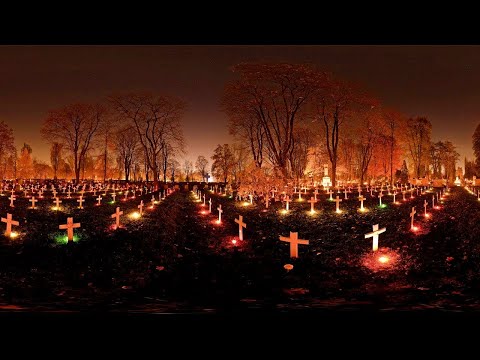
All Souls Day is a holy day set aside for honoring the dead. The day is primarily celebrated in the Catholic Church, but it is also celebrated in the Eastern Orthodox Church and a few other denominations of Christianity. The Anglican church is the largest protestant church to celebrate the holy day. Most protestant denominations do not recognize the holiday and disagree with the theology behind it.
According to Catholic belief, the soul of a person who dies can go to one of three places. The first is heaven, where a person who dies in a state of perfect grace and communion with God goes. The second is hell, where those who die in a state of mortal sin are naturally condemned by their choice. The intermediate option is purgatory, which is thought to be where most people, free of mortal sin, but still in a state of lesser (venial) sin, must go.
Purgatory is necessary so that souls can be cleansed and perfected before they enter into heaven. There is scriptural basis for this belief. The primary reference is in 2 Maccabees, 12:26 and 12:32. "Turning to supplication, they prayed that the sinful deed might be fully blotted out... Thus made atonement for the dead that they might be free from sin."
Additional references are found in Zechariah, Sirach, and the Gospel of Matthew. Jewish tradition also reinforces this belief as well as the tradition and teaching of the Church, which has been affirmed throughout history.
Consistent with these teachings and traditions, Catholics believe that through the prayers of the faithful on Earth, the dead are cleansed of their sins so they may enter into heaven.
The belief in purgatory has not been without controversy. Certainly, some flagrant abuses of the doctrine were used to raise money for the Church during the renaissance. Famously, Martin Luther argued with the monk, Johan Tetzel, over the sale of indulgences. Indulgences were sold as spiritual pardons to the poor and applied to the souls of the dead (or the living) to get people into heaven. The abuse of indulgences and the blatant, sometimes fraudulent practice of selling indulgences for money, led to Luther's protest.
When Martin Luther translated the Bible into German, he omitted the seven books of the canon which refer to prayers for the dead. He then introduced the heretical belief that people are simply saved, or not, and argued that there is no need to pray for the dead to get them into heaven.
The Church reeled from Luther's accusation, and reformed its practice of selling indulgences. However, it reemphasized the Biblical and traditional practice of praying for the departed and the importance of such prayers.
All Souls Day is celebrated in much of the western world on November 2. Other rites have their own celebrations. The Eastern Orthodox Church has several such days throughout the year, mostly on Saturdays. All Souls Day is not a holy day of obligation. It should not be confused with All Saints' Day, which is a holy day of obligation.
Many cultures also mark the day differently. In North America, Americans may say extra prayers or light candles for the departed. In parts of Latin America, families visit the graves of their ancestors and sometimes leave food offerings for the departed.
More about All Souls' Day from Wikipedia
All Souls' Day commemorates the faithful departed. In Western Christianity, this day is observed principally in the Catholic Church, although some churches of the Anglican Communion and the Old Catholic Churches also celebrate it. The Eastern Orthodox churches observe several All Souls' Days during the year. The Roman Catholic celebration is associated with the doctrine that the souls of the faithful who at death have not been cleansed from the temporal punishment due to venial sins and from attachment to mortal sins cannot immediately attain the beatific vision in heaven, and that they may be helped to do so by prayer and by the sacrifice of the Mass (see Purgatory).[1] In other words, when they died, they had not yet attained full sanctification and moral perfection, a requirement for entrance into Heaven. This sanctification is carried out posthumously in Purgatory.
We ask you, humbly: don't scroll away.
Hi readers, it seems you use Catholic Online a lot; that's great! It's a little awkward to ask, but we need your help. If you have already donated, we sincerely thank you. We're not salespeople, but we depend on donations averaging $14.76 and fewer than 1% of readers give. If you donate just $5.00, the price of your coffee, Catholic Online School could keep thriving. Thank you.Help Now >
The official name of the celebration in the Roman Rite liturgy of the Roman Catholic Church is "The Commemoration of All the Faithful Departed".[1]
Another popular name in English is Feast of All Souls. In some other languages the celebration, not necessarily on the same date, is known as Day of the Dead (DĂa de los Muertos or de los Difuntos in Spanish-speaking countries; halottak napja in Hungary; Yom el Maouta in Lebanon, Israel and Syria).
The Western celebration of All Souls' Day is on 2 November and follows All Saints' Day, which commemorates the departed who have attained the beatific vision. If 2 November falls on a Sunday, the Mass is of All Souls, but the Office is that of the Sunday. However, Morning and Evening Prayer (Lauds and Vespers) for the Dead, in which the people participate, may be said. In pre-1969 calendars, which some still follow, and in the Anglican Communion, All Souls Day is instead transferred, whenever 2 November falls on a Sunday, to the next day, 3 November, as in 2008.
The Eastern Orthodox Church dedicates several days throughout the year to the dead, mostly on Saturdays, because of Jesus' resting in the tomb on Saturday.
The Western celebration
 All Souls' Day procession, Tucson, Arizona, 2008
Historically, the Western tradition identifies the general custom of praying for the dead dating as far back as 2 Maccabees 12:42-46. The custom of setting apart a special day for intercession for certain of the faithful on November 2 was first established by St. Odilo of Cluny (d. 1048) at his abbey of Cluny in 998.[2] From Cluny the custom spread to the other houses of the Cluniac order, which became the largest and most extensive network of monasteries in Europe. The celebration was soon adopted in several dioceses in France, and spread throughout the Western Church. It was accepted in Rome only in the fourteenth century. While 2 November remained the liturgical celebration, in time the entire month of November became associated in the Western Catholic tradition with prayer for the departed; lists of names of those to be remembered being placed in the proximity of the altar on which the sacrifice of the mass is offered.[3]
The legend connected with its foundation is given by Peter Damiani in his Life of St Odilo: a pilgrim returning from the Holy Land was cast by a storm on a desolate island. A hermit living there told him that amid the rocks was a chasm communicating with purgatory, from which perpetually rose the groans of tortured souls. The hermit also claimed he had heard the demons complaining of the efficacy of the prayers of the faithful, and especially the monks of Cluny, in rescuing their victims. Upon returning home, the pilgrim hastened to inform the abbot of Cluny, who then set 2 November as a day of intercession on the part of his community for all the souls in Purgatory.
Hi readers, it seems you use Catholic Online a lot; that's great! It's a little awkward to ask, but we need your help. If you have already donated, we sincerely thank you. We're not salespeople, but we depend on donations averaging $14.76 and fewer than 1% of readers give. If you donate just $5.00, the price of your coffee, Catholic Online School could keep thriving. Thank you. Help Now >
Eastern-Rite Catholics and the Eastern Orthodox churches
Among Eastern Orthodox and Eastern Catholic Christians, there are several All Souls' Days during the year. Most of these fall on Saturday, since Jesus lay in the Tomb on Holy Saturday. These are referred to as Soul Saturdays. They occur on the following occasions:
- The Saturday of Meatfare Week (the second Saturday before Great Lent).the day before the Sunday of the Last Judgement
- The second Saturday of Great Lent
- The third Saturday of Great Lent
- The fourth Saturday of Great Lent
- Radonitsa (Monday or Tuesday after Thomas Sunday)
- The Saturday before Pentecost
- Demetrius Saturday (the Saturday before the feast of Saint Demetrius of Thessaloniki.26 October) (In the Bulgarian Orthodox Church there is a commemoration of the dead on the Saturday before the feast of Saint Michael the Archangel.8 November, instead of the Demetrius Soul Saturday)
(In the Serbian Orthodox Church there is also a commemoration of the dead on the Saturday closest to the Conception of St. John the Baptist.23 September)
Saturdays throughout the year are devoted to general prayer for the departed, unless some greater feast or saint's commemoration occurs.
Protestantism and Roman Catholic Church
At the Reformation the celebration of All Souls' Day was fused with All Saints' Day in the Anglican Church, though it was renewed individually in certain churches in connection with the Catholic Revival of the 19th century. The observance was restored with the publication of the 1980 Alternative Service Book, and it features in Common Worship as a Lesser Festival called "Commemoration of the Faithful Departed (All Souls' Day)".

Among continental Protestants its tradition has been more tenaciously maintained. Even Luther's influence was not sufficient to abolish its celebration in Saxony during his lifetime; and, though its ecclesiastical sanction soon lapsed even in the Lutheran Church, its memory survives strongly in popular custom. Just as it is the custom of French people, of all ranks and creeds, to decorate the graves of their dead on the jour des morts, so German [3] and Polish people stream to the graveyards once a year with offerings of flowers and special grave lights (see the picture), and among Czech people the custom of visiting and tidying graves of relatives on the day is quite common even among atheists. In North America, however, most Protestant acknowledgment of the holiday is generally secular, celebrated in the form of Halloween festivities.
Folklore
The origins of All Souls' Day in European folklore and folk belief are related to customs of ancestor veneration[citation needed] practised worldwide, through events such as the Chinese Ghost Festival, the Japanese Bon Festival, or the Mexican Day of the Dead. The Roman custom was that of the Lemuria.
In Tirol, cakes are left for them on the table and the room kept warm for their comfort. In Brittany, people flock to the cemeteries at nightfall to kneel, bareheaded, at the graves of their loved ones, and to anoint the hollow of the tombstone with holy water or to pour libations of milk on it. At bedtime, the supper is left on the table for the souls.
In Bolivia, many people believe that the dead eat the food that is left out for them. In Brazil people attend a mass or visit the cemetery taking flowers to decorate their relatives' grave, but no food is involved.
See also
Notes
- ^ a b Mershman 1907.
- ^ The decree ordaining the celebration is printed in the Bollandist Acta Sanctorum (Saec. VI, pt. i. p. 585).
- ^ a b Anonymous 1911.

Join the Movement
When you sign up below, you don't just join an email list - you're joining an entire movement for Free world class Catholic education.


-

-
Mysteries of the Rosary
-
St. Faustina Kowalska
-
Litany of the Blessed Virgin Mary
-
Saint of the Day for Wednesday, Oct 4th, 2023
-
Popular Saints
-
St. Francis of Assisi
-
Bible
-
Female / Women Saints
-
7 Morning Prayers you need to get your day started with God
-
Litany of the Blessed Virgin Mary


Sacrifices of Faith: The Pro-Life Legacies of St. Gianna and Jessica Hanna
-
How to love God by caring for our bodies
-
Pope Francis calls for negotiations to End Russia-Ukraine War
-
Pope Francis Contemplates Return to U.S. for United Nations Assembly Address
-
Pope Francis Calls on Faithful to Embrace Faith, Hope, and Charity in New Teaching Series


Daily Catholic
- Daily Readings for Saturday, April 27, 2024
- St. Zita: Saint of the Day for Saturday, April 27, 2024
- Prayer for the Dead # 2: Prayer of the Day for Saturday, April 27, 2024
- Daily Readings for Friday, April 26, 2024
- St. Cletus: Saint of the Day for Friday, April 26, 2024
- Prayer before the Closing of the Day: Prayer of the Day for Friday, April 26, 2024
 Daily Readings for Saturday, April 27, 2024
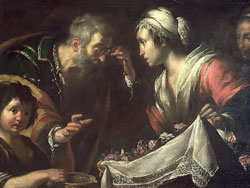 St. Zita: Saint of the Day for Saturday, April 27, 2024
 Prayer for the Dead # 2: Prayer of the Day for Saturday, April 27, 2024


Copyright 2024 Catholic Online. All materials contained on this site, whether written, audible or visual are the exclusive property of Catholic Online and are protected under U.S. and International copyright laws, © Copyright 2024 Catholic Online. Any unauthorized use, without prior written consent of Catholic Online is strictly forbidden and prohibited.
Catholic Online is a Project of Your Catholic Voice Foundation, a Not-for-Profit Corporation. Your Catholic Voice Foundation has been granted a recognition of tax exemption under Section 501(c)(3) of the Internal Revenue Code. Federal Tax Identification Number: 81-0596847. Your gift is tax-deductible as allowed by law.