Jacques de Vitry
FREE Catholic Classes
Historian of the crusades, cardinal Bishop of Acre, later of Tusculum, b. at Vitry-sur-Seine, near Paris, probably about 1160; d. at Rome, 1240. After attending the University of Paris , then in its infancy, he visited Marie d'Oignies, a mystic of the Diocese of Liège , attracted by her reputation for holiness. On her advice he became a canon regular, returned to Paris for ordination to the priesthood, and thereafter devoted himself to preaching; from 1210 to 1213 he was one of the most noted preachers of the crusade against the Albigenses. In fact so great was his renown throughout Christendom that the Latin clergy of St. John of Acre chose him as their bishop. He accepted the episcopal dignity with the approbation of Honorius III. From Palestine he went to Egypt and was present at the capture of Damietta (1218-20), an account of which he wrote to the pope. The leaders of the crusade complained of his imperious temper and attributed their reverses to his stubbornness. In 1227 he returned to Rome but soon resumed the offensive against the heretics of the Diocese of Liège. In 1229 Gregory IX allowed him to resign the See of Acre, created him a cardinal and Bishop of Tusculum and later legate in France and in Germany. He did not long survive his refusal of the Patriarchate of Jerusalem ; at his request his body was conveyed to Oignies.
We ask you, humbly: don't scroll away.
Hi readers, it seems you use Catholic Online a lot; that's great! It's a little awkward to ask, but we need your help. If you have already donated, we sincerely thank you. We're not salespeople, but we depend on donations averaging $14.76 and fewer than 1% of readers give. If you donate just $5.00, the price of your coffee, Catholic Online School could keep thriving. Thank you.Help Now >
Among his works are letters to Pope Honorius, which form an important source of the history of the Egyptian crusade (ed. Roehrich, "Zeitschrift fuer Kirchengesch.," XIV-XVI), a collection of sermon-models for the use of preachers; a "Liber de mulieribus Leodiensibus," the most celebrated of these being Marie d'Oignies, whose wonderful visions the author relates (ed. Acta SS., June, IV, 636, 666), finally the "Historia Orientalis seu Hierosolymitana," his principal work, an account, at first hand, of the conditions in the Holy Land in the thirteenth century. He was of an inquiring and observant mind and conceived the plan — a remarkable one for the age in which he lived — of writing a geographical description of Palestine.
The first book is wholly devoted to that land and gives its history from the time of Mohammed ; describing the expansion of Islam, he gives many picturesque details concerning Oriental idolaters, the Turcomans, the Bedouins, and especially the Assassins, subjects of the Old Man of the Mountain. His recount of the crusades is followed by praise for the fertility of Palestine under Christian domination, and for the efforts of the Italians, French, Germans, Bretons, and English to colonize it. He likewise dwells upon the characteristics of the various indigenous nations and of the "Pullani," half-breeds, to whose vices he attributes the reverses of the Christians. The writer then undertakes a regular description of the physical geography of the country, and gives a great many particulars, half real and half fabulous, regarding its climate, flora, fauna, minerals, its barbarous and extraordinary nations, the Amazons, etc. The honey gathered from the reeds ( ex calamellis ) was, of course, only cane sugar. A still more curious account is that which he gives of the magnetic compass: "Acus ferrea postquam adamantem contingerit, ad stellam septentrionalem, quae velut axis firmamenti aliis vergentibus non movetur, semper convertitur. Unde valde necessaria est navigantibus in mari." (Bongars, "Gesta Dei," I, 1106.) The remainder of the book is a history of the Kingdom of Jerusalem . Book II, a dismally painted picture of the Christians of the East, closes with an account of the monastic orders and the hierarchy of Palestine. A third book, the story of the Egyptian crusade, is not from Jacques de Vitry, but from the pen of Oliver the Scholastic, Bishop of Paderborn.


Join the Movement
When you sign up below, you don't just join an email list - you're joining an entire movement for Free world class Catholic education.


-

-
Mysteries of the Rosary
-
St. Faustina Kowalska
-
Litany of the Blessed Virgin Mary
-
Saint of the Day for Wednesday, Oct 4th, 2023
-
Popular Saints
-
St. Francis of Assisi
-
Bible
-
Female / Women Saints
-
7 Morning Prayers you need to get your day started with God
-
Litany of the Blessed Virgin Mary

U.S. Catholic Parishes Experience Resurgence of Traditional Practices
-
Pope Francis Urges Faith and Prayers for Peace
-
Florida Welcomes Volunteer Chaplains to Public Schools
-
10 Fascinating Details About St. Joseph the Worker: Celebrating His Feast Day - May 1
-
St. Joseph the Worker: Model for Men, Young and Old

Daily Catholic
- Daily Readings for Thursday, May 02, 2024
- St. Athanasius: Saint of the Day for Thursday, May 02, 2024
- The Our Father: Prayer of the Day for Thursday, May 02, 2024
- Daily Readings for Wednesday, May 01, 2024
- St. Marculf: Saint of the Day for Wednesday, May 01, 2024
- To Saint Peregrine: Prayer of the Day for Wednesday, May 01, 2024
 Daily Readings for Thursday, May 02, 2024
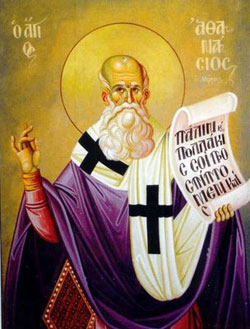 St. Athanasius: Saint of the Day for Thursday, May 02, 2024
 The Our Father: Prayer of the Day for Thursday, May 02, 2024
We ask you, humbly: don't scroll away.
Hi readers, it seems you use Catholic Online a lot; that's great! It's a little awkward to ask, but we need your help. If you have already donated, we sincerely thank you. We're not salespeople, but we depend on donations averaging $14.76 and fewer than 1% of readers give. If you donate just $5.00, the price of your coffee, Catholic Online School could keep thriving. Thank you.Help Now >


Copyright 2024 Catholic Online. All materials contained on this site, whether written, audible or visual are the exclusive property of Catholic Online and are protected under U.S. and International copyright laws, © Copyright 2024 Catholic Online. Any unauthorized use, without prior written consent of Catholic Online is strictly forbidden and prohibited.
Catholic Online is a Project of Your Catholic Voice Foundation, a Not-for-Profit Corporation. Your Catholic Voice Foundation has been granted a recognition of tax exemption under Section 501(c)(3) of the Internal Revenue Code. Federal Tax Identification Number: 81-0596847. Your gift is tax-deductible as allowed by law.
