Pope Innocent IV
FREE Catholic Classes
(Sinibaldo de' Fieschi)
Count of Lavagna, born at Genoa, date unknown; died at Naples, 7 December, 1254. He was educated at Parma and Bologna. For some time he taught canon law at Bologna, then he became canon at Parma and in 1226 is mentioned as auditor of the Roman Curia. On 23 September,1227, he was created Cardinal-Priest of San Lorenzo in Lucina; on 28 July, 1228, vice-chancellor of Rome ; and in 1235 Bishop of Albenga and legate in Northern Italy. When Celestine IV died after a short reign of sixteen days, the excommunicated emperor, Frederick II, was in possession of the jtates of the Church around Rome and attempted to intimidate the cardinals into electing a pope to his own liking. The cardinals fled to Anagni and cast their votes for Sinibaldo de Fiesehi, who ascended the papal throne as Innocent IV on 25 June, 1243, after an interregnum of 1 year, 7 months, and 15 days. Innocent IV had previously been a friend of Frederick II. Immediately after the election the emperor sent messengers with congratulations and overtures of peace. The pope was desirous of peace, but he knew from the experience of Gregory IX how little trust could be put in the emperor's promises. He refused to receive the latter's messengers, because, like the emperor himself, they were under the ban of the Church. But two months later he sent Peter, Archbishop of Rouen, William of Modena, who had resigned his episcopal office, and Abbot William of St. Facundus as legates to the emperor at Melfi with instructions to ask him to release the prelates whom he had captured while on their way to the council which Gregory IX had intended to hold at Rome. The legates were furthermore instructed to find out what satisfaction the emperor was willing to make for the injuries which he had inflicted upon the Church and which caused Gregory IX to put him under the ban. Should the emperor deny that he had done any wrong to the Church, or even assert that the injustice had been done on the side of the Church, the legates were to propose that the decision should be left to a council of kings, prelates, and temporal princes. Frederick entered into an agreement with Innocent on 31 March, 1244. He promised to yield to the demands of the Curia in all essential points, viz., to restore the States of the Church, to release the prelates, and to grant amnesty to the allies of the pope. His insincerity became apparent when he secretly incited various tumults in Rome and refused to release the imprisoned prelates. Feeling himself hindered in his freedom of action on account of the emperor's military preponderance, and fearing for his personal safety, the pope decided to leave Italy. At his request the Genoese sent him a fleet which arrived at Civitavecchia while the pope was in Sutri. As soon as he was notified of its arrival, he left Sutri in disguise during the night of 27-28 June and hastened over the mountains to Civitavecchia, whence the fleet brought him to Genoa. In October he went to Burgundy, and in December to Lyons, where he took up his abode during the following six years. He at once made preparations for a general council, which on 3 January, 1245, he proclaimed for 24 June of the same year. Innocent had nothing to fear in France and proceeded with great severity against the emperor.
 Hi readers, it seems you use Catholic Online a lot; that's great! It's a little awkward to ask, but we need your help. If you have already donated, we sincerely thank you. We're not salespeople, but we depend on donations averaging $14.76 and fewer than 1% of readers give. If you donate just $5.00, the price of your coffee, Catholic Online School could keep thriving. Thank you. Help Now >
At the Council of Lyons the emperor was represented by Thaddeus of Suessa, who offered new concessions if his master were freed from the ban; but Innocent rejected them, and having brought new accusations against the emperor during the second session, on 5 July, solemnly deposed him at the third session, on 17 July. He now ordered the princes of Germany to proceed to the election of a new king, and sent Philip of Ferrara as legate to Germany to bring about the election of Henry Raspe, Landgrave of Thuringia. The pope's candidate was elected on 22 May, 1246, at Veitshochheim on the Main. Most of the princes, however, had abstained from voting and he never found general recognition. The same may be said of the incapable William of Holland, whom the papal party elected after Henry Raspe died on 17 February, 1247. But Innocent IV was determined upon the destruction of Frederick II and repeatedly asserted that no Hohenstaufen would ever again be emperor. All attempts of St. Louis IX of France to bring about peace were of no avail. In 1249 the pope ordered a crusade to be preached against Frederick II, and after the emperor's death (13 December, 1250), he continued the struggle against Conrad IV and Manfred with unrelenting severity. On 19 April, 1251, Innocent IV set out for Italy and entered Rome in October, 1253. The crown of Sicily devolved upon the Holy See at the deposition of Frederick II. Innocent had previously offered it to Richard of Cornwall, brother of Henry III of England. Upon his refusal, he tried Charles of Anjou and Edmund, son of Henry III of England. But after some negotiation they also refused owing to the difficulty of dislodging Conrad IV and Manfred who held Sicily by force of arms. After the death of Conrad IV, 20 May, 1264, the pope finally recognized the hereditary claims of Conrad's two-year-old son Conradin. Manfred also submitted, and Innocent made his solemn entry into Naples, 27 October, 1254, but Manfred soon revolted and defeated the papal troops at Foggia (2 Dec., 1254).
In England, Innocent IV made his power felt by protecting Henry III against the lay as well as the ecclesiastical nobility. But here and in other countries many just complaints arose against him on account of the excessive taxes which he imposed upon the people. In Austria, he confirmed Ottocar, the son of King Wenzel, as duke, in 1252, and mediated between him and King Béla of Hungary in 1254. In Portugal, he appointed Alfonso III administrator of the kingdom, because the people were disgusted at the immorality and the tyranny of his father, Sancho III. He favoured the missions in Prussia, Russia, Armenia, and Mongolia, but owing to his continual warfare with Frederick II and his successors he neglected the internal affairs of the Church and allowed many abuses, provided they served to strengthen his position against the Hohenstaufen. He approved the rule of the Sylvestrines on 27 June, 1247, and that of the Poor Clares on 9 August, 1253. The following saints were canonized by him: Edmund Rich, Archbishop of Canterbury, on 16 December, 1246; William, Bishop of St-Brieuc, in 1247; Peter of Verona ; Dominican inquisitor and martyr, in 1253; Stanislaus, Bishop of Cracow, in the same year. He is the author of "Apparatus in quinque libros decretalium", which was first published at Strasburg in 1477, and afterwards reprinted; it is considered the best commentary on the Decretals of Gregory IX. The registers of Innocent IV were edited by Elie Berger in four volumes (Paris, 1881-98) and his letters, 762 in number, by Rodenberg in "Mon. Germ. Epp. sæculi XIII", II (1887), 1-568.

We ask you, humbly: don't scroll away.
Hi readers, it seems you use Catholic Online a lot; that's great! It's a little awkward to ask, but we need your help. If you have already donated, we sincerely thank you. We're not salespeople, but we depend on donations averaging $14.76 and fewer than 1% of readers give. If you donate just $5.00, the price of your coffee, Catholic Online School could keep thriving. Thank you.Help Now >

Join the Movement
When you sign up below, you don't just join an email list - you're joining an entire movement for Free world class Catholic education.


-

-
Mysteries of the Rosary
-
St. Faustina Kowalska
-
Litany of the Blessed Virgin Mary
-
Saint of the Day for Wednesday, Oct 4th, 2023
-
Popular Saints
-
St. Francis of Assisi
-
Bible
-
Female / Women Saints
-
7 Morning Prayers you need to get your day started with God
-
Litany of the Blessed Virgin Mary


Sacrifices of Faith: The Pro-Life Legacies of St. Gianna and Jessica Hanna
-
How to love God by caring for our bodies
-
Pope Francis calls for negotiations to End Russia-Ukraine War
-
Pope Francis Contemplates Return to U.S. for United Nations Assembly Address
-
Pope Francis Calls on Faithful to Embrace Faith, Hope, and Charity in New Teaching Series


Daily Catholic
- Daily Readings for Sunday, April 28, 2024
- St. Peter Chanel: Saint of the Day for Sunday, April 28, 2024
- Prayer before a Crucifix: Prayer of the Day for Sunday, April 28, 2024
- Daily Readings for Saturday, April 27, 2024
- St. Zita: Saint of the Day for Saturday, April 27, 2024
- Prayer for the Dead # 2: Prayer of the Day for Saturday, April 27, 2024
 Daily Readings for Sunday, April 28, 2024
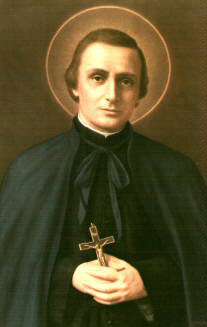 St. Peter Chanel: Saint of the Day for Sunday, April 28, 2024
 Prayer before a Crucifix: Prayer of the Day for Sunday, April 28, 2024

Copyright 2024 Catholic Online. All materials contained on this site, whether written, audible or visual are the exclusive property of Catholic Online and are protected under U.S. and International copyright laws, © Copyright 2024 Catholic Online. Any unauthorized use, without prior written consent of Catholic Online is strictly forbidden and prohibited.
Catholic Online is a Project of Your Catholic Voice Foundation, a Not-for-Profit Corporation. Your Catholic Voice Foundation has been granted a recognition of tax exemption under Section 501(c)(3) of the Internal Revenue Code. Federal Tax Identification Number: 81-0596847. Your gift is tax-deductible as allowed by law.