Thomas Grant
FREE Catholic Classes
First Bishop of Southwark ; b. at Ligny-les-Aires, Arras, France, 25 Nov., 1816; d. at Rome, 1 June, 1870. He was the son of Bernard Grant, an Irishman who enlisted in the British army, became sergeant, and finally purchased a commission. His mother, Ann MacGowan, was also Irish by birth. In January, 1829, he was sent to Ushaw College , where he studied until 1836, when he went to the English College at Rome. There he was ordained priest, 28 Nov., 1841, was created doctor of divinity and appointed as secretary to Cardinal Acton, a position in which he acquired a thorough knowledge of canon law, and an intimate acquaintance with the method of conducting ecclesiastical affairs at Rome. In October, 1844, at the early age of twenty-eight, he became rector of the English College, and was made agent for the English bishops. In this capacity he was of great assistance to Dr. Ullathorne, who was then negotiating for the restoration of the English hierarchy. He also translated for Propaganda all English documents relating to the matter, and furnished the materials for the historical preface to the Decree of 1850. A year later, he was appointed to the new Diocese of Southwark, and was consecrated bishop on 6 July, 1851. Though he came to England almost as a stranger, he soon won the confidence of Catholics and others. As the Government was shy of transacting business directly with Cardinal Wiseman, many negotiations were carried on by Dr. Grant, who was specially successful in obtaining from the Government the appointment of military and naval chaplains, as well as prison chaplains.

To the newly appointed hierarchy he was, as Bishop Ullathorne testified, most useful: "His acuteness of learning, readiness of resource and knowledge of the forms of ecclesiastical business made him invaluable to our joint counsels at home, whether in synods or in our yearly episcopal meetings; and his obligingness, his untiring spirit of work, and the expedition and accuracy with which he struck off documents in Latin, Italian, or English, naturally brought the greater part of such work on his shoulders." In the administration of his diocese he proved equal to the task of organization, which was necessary in an age of rapid expansion, while the remarkable sanctity of his private life led to his being generally regarded as a saint, and caused Pius IX , when he learned of his death, to exclaim "Another saint in heaven !" The virtues of charity and humility in particular were practised by him in an heroic degree. The last years of his life were spent in great suffering, caused by cancer, and when he set out to attend the Vatican Council at Rome in 1870, he knew that he would not return. He was appointed member of the Congregation for the Oriental Rites and the Apostolic Missions, but was too ill to take an active part in the proceedings. After death his body was brought back to England for burial. His works were a translation of the "Hidden Treasure" of Blessed Leonard of Port Maurice (Edinburgh, 1855), and "Meditations of the Sisters of Mercy before Renewal of Vows" (London, 1874)
We ask you, humbly: don't scroll away.
Hi readers, it seems you use Catholic Online a lot; that's great! It's a little awkward to ask, but we need your help. If you have already donated, we sincerely thank you. We're not salespeople, but we depend on donations averaging $14.76 and fewer than 1% of readers give. If you donate just $5.00, the price of your coffee, Catholic Online School could keep thriving. Thank you.Help Now >

Join the Movement
When you sign up below, you don't just join an email list - you're joining an entire movement for Free world class Catholic education.


-

-
Mysteries of the Rosary
-
St. Faustina Kowalska
-
Litany of the Blessed Virgin Mary
-
Saint of the Day for Wednesday, Oct 4th, 2023
-
Popular Saints
-
St. Francis of Assisi
-
Bible
-
Female / Women Saints
-
7 Morning Prayers you need to get your day started with God
-
Litany of the Blessed Virgin Mary

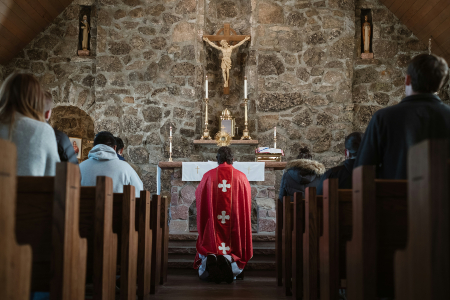
U.S. Catholic Parishes Experience Resurgence of Traditional Practices
-
Pope Francis Urges Faith and Prayers for Peace
-
Florida Welcomes Volunteer Chaplains to Public Schools
-
10 Fascinating Details About St. Joseph the Worker: Celebrating His Feast Day - May 1
-
St. Joseph the Worker: Model for Men, Young and Old

Daily Catholic
- Daily Readings for Thursday, May 02, 2024
- St. Athanasius: Saint of the Day for Thursday, May 02, 2024
- The Our Father: Prayer of the Day for Thursday, May 02, 2024
- Daily Readings for Wednesday, May 01, 2024
- St. Marculf: Saint of the Day for Wednesday, May 01, 2024
- To Saint Peregrine: Prayer of the Day for Wednesday, May 01, 2024
 Daily Readings for Thursday, May 02, 2024
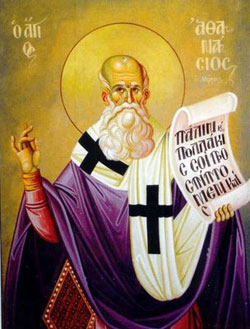 St. Athanasius: Saint of the Day for Thursday, May 02, 2024
 The Our Father: Prayer of the Day for Thursday, May 02, 2024
 Hi readers, it seems you use Catholic Online a lot; that's great! It's a little awkward to ask, but we need your help. If you have already donated, we sincerely thank you. We're not salespeople, but we depend on donations averaging $14.76 and fewer than 1% of readers give. If you donate just $5.00, the price of your coffee, Catholic Online School could keep thriving. Thank you. Help Now >

Copyright 2024 Catholic Online. All materials contained on this site, whether written, audible or visual are the exclusive property of Catholic Online and are protected under U.S. and International copyright laws, © Copyright 2024 Catholic Online. Any unauthorized use, without prior written consent of Catholic Online is strictly forbidden and prohibited.
Catholic Online is a Project of Your Catholic Voice Foundation, a Not-for-Profit Corporation. Your Catholic Voice Foundation has been granted a recognition of tax exemption under Section 501(c)(3) of the Internal Revenue Code. Federal Tax Identification Number: 81-0596847. Your gift is tax-deductible as allowed by law.