We ask you, humbly: don't scroll away.
Hi readers, it seems you use Catholic Online a lot; that's great! It's a little awkward to ask, but we need your help. If you have already donated, we sincerely thank you. We're not salespeople, but we depend on donations averaging $14.76 and fewer than 1% of readers give. If you donate just $5.00, the price of your coffee, Catholic Online School could keep thriving. Thank you.Help Now >
St. Agnes of Rome
FREE Catholic Classes
Of all the virgin martyrs of Rome none was held in such high honour by the primitive church, since the fourth century, as St. Agnes.
In the ancient Roman calendar of the feasts of the martyrs (Depositio Martyrum), incorporated into the collection of Furius Dionysius Philocalus, dating from 354 and often reprinted, e.g. in Ruinart [ Acta Sincera Martyrum (ed. Ratisbon, 1859), 63 sqq.], her feast is assigned to 21 January, to which is added a detail as to the name of the road (Via Nomentana) near which her grave was located. The earliest sacramentaries give the same date for her feast, and it is on this day that the Latin Church even now keeps her memory sacred.
Since the close of the fourth century the Fathers of the Church and Christian poets have sung her praises and extolled her virginity and heroism under torture. It is clear, however, from the diversity in the earliest accounts that there was extant at the end of the fourth century no accurate and reliable narrative, at least in writing, concerning the details of her martyrdom. On one point only is there mutual agreement, viz., the youth of the Christian heroine. St. Ambrose gives her age as twelve (De Virginibus, I, 2; P.L., XVI, 200-202: Haec duodecim annorum martyrium fecisse traditur ), St. Augustine as thirteen ( Agnes puella tredecim annorum ; Sermo cclxxiii, 6, P.L., XXXVIII, 1251), which harmonizes well with the words of Prudentius: Aiunt jugali vix habilem toro ( Peristephanon , Hymn xiv, 10 in Ruinart, Act. Sinc., ed cit. 486). Damasus depicts her as hastening to martyrdom from the lap of her mother or nurse ( Nutricis gremium subito liquisse puella ; in St. Agneten, 3, ed. Ihm, Damasi epigrammata, Leipzig, 1895, 43, n. 40). We have no reason whatever for doubting this tradition. It indeed explains very well the renown of the youthful martyr.

Sources
We have already cited the testimony of the three oldest witnesses to the martyrdom of St. Agnes:
- St. Ambrose, De Virginibus, I, 2;
- the inscription of Pope Damasus engraved on marble, the original of which may yet be seen at the foot of the stairs leading to the sepulchre and church of St. Agnes (Sant' Agnese fuori le muri );
- Prudentius, Peristephanon , Hymn 14.
The rhetorical narrative of St. Ambrose, in addition to the martyr's age, gives nothing except her execution by the sword.
Pope DamasusThe metrical panegyric of Pope Damasus tells us that immediately after the promulgation of the imperial edict against the Christians, Agnes voluntarily declared herself a Christian, and suffered very steadfastly the martyrdom of fire, giving scarcely a thought to the frightful torments she had to endure, and concerned only with veiling, by means of her flowing hair, her chaste body which had been exposed to the gaze of the heathen multitude ( Nudaque profusum crinem per membra dedisse, Ne domini templum facies peritura videret ).
PrudentiusPrudentius, in his description of the martyrdom, adheres rather to the account of St. Ambrose, but adds a new episode: The judge threatened to give over her virginity to a house of prostitution, and even executed this final threat; but when a young man turned a lascivious look upon the virgin, he fell to the ground stricken with blindness, and lay as one dead. Possibly this is what Damasus and Ambrose refer to, in saying that the purity of St. Agnes was endangered; the latter in particular says (loc. cit.): Habetis igitur in una hostiâ duplex martyrium, pudoris et religionis: et virgo permansit et martyrium obtinuit (Behold therefore in the same victim a double martyrdom, one of modesty, the other of religion. She remained a virgin, and obtained the crown of martyrdom ). Prudentius, therefore, may have drawn at least the substance of this episode from a trustworthy popular legend.
Agnes beatae virginisStill another source of information, earlier than the Acts of her martyrdom, is the glorious hymn : Agnes beatae virginis , which, though probably not from the pen of St. Ambrose (since the poet's narrative clings more closely to the account of Damasus), still betrays a certain use of the text of St. Ambrose, and was composed not long after the latter work. (See the text in Dreves, Aur. Ambrosius der Vater des Kirchengesanges, 135, Freiburg, 1893.)
The Acts of the Martyrdom of St. AgnesThe Acts of the Martyrdom of St. Agnes belong to a somewhat later period, and are met with in three recensions, two Greek and one Latin. The oldest of them is the shorter of the two Greeks texts, on which the Latin text was based, though it was at the same time quite freely enlarged. The longer Greek text is a translation of this Latin enlargement (Pio Franchi de Cavalieri, St. Agnese nella tradizione e nella legenda , in Römische Quartalschrift, Supplement X, Rome, 1899; cf. Acta SS., Jan. II, 350 sqq). The Latin, and consequently, the shorter Greek text date back to the first half of the fifth century, when St. Maximus, Bishop of Turin (c. 450-470), evidently used the Latin Acts in a sermon (P.L., LVII, 643 sqq.). In these Acts the brothel episode is still further elaborated, and the virgin is decapitated after remaining untouched by the flames.
We ask you, humbly: don't scroll away.
Hi readers, it seems you use Catholic Online a lot; that's great! It's a little awkward to ask, but we need your help. If you have already donated, we sincerely thank you. We're not salespeople, but we depend on donations averaging $14.76 and fewer than 1% of readers give. If you donate just $5.00, the price of your coffee, Catholic Online School could keep thriving. Thank you.Help Now >
After her martyrdom
We do not know with certainty in which persecution the courageous virgin won the martyr's crown. Formerly it was customary to assign her death to the persecution of Diocletian (c. 304), but arguments are now brought forward, based on the inscription of Damasus, to prove that it occurred during one of the third-century persecutions subsequent to that of Decius.
The body of the virgin martyr was placed in a separate sepulchre on the Via Nomentana, and around her tomb there grew up a larger catacomb that bore her name. The original slab which covered her remains, with the inscriptions Agne sanctissima , is probably the same one which is now preserved in the Museum at Naples. During the reign of Constantine, through the efforts of his daughter Constantina, a basilica was erected over the grave of St. Agnes, which was later entirely remodelled by Pope Honorius (625-638), and has since remained unaltered. In the apse is a mosaic showing the martyr amid flames, with a sword at her feet. A beautiful relief of the saint is found on a marble slab that dates from the fourth century and was originally a part of the altar of her church.
Since the Middle Ages St. Agnes has been represented with a lamb, the symbol of her virginal innocence. On her feast two lambs are solemnly blessed, and from their wool are made the palliums sent by the Pope to archbishops.

 Hi readers, it seems you use Catholic Online a lot; that's great! It's a little awkward to ask, but we need your help. If you have already donated, we sincerely thank you. We're not salespeople, but we depend on donations averaging $14.76 and fewer than 1% of readers give. If you donate just $5.00, the price of your coffee, Catholic Online School could keep thriving. Thank you. Help Now >
Join the Movement
When you sign up below, you don't just join an email list - you're joining an entire movement for Free world class Catholic education.


-

-
Mysteries of the Rosary
-
St. Faustina Kowalska
-
Litany of the Blessed Virgin Mary
-
Saint of the Day for Wednesday, Oct 4th, 2023
-
Popular Saints
-
St. Francis of Assisi
-
Bible
-
Female / Women Saints
-
7 Morning Prayers you need to get your day started with God
-
Litany of the Blessed Virgin Mary


Sacrifices of Faith: The Pro-Life Legacies of St. Gianna and Jessica Hanna
-
How to love God by caring for our bodies
-
Pope Francis calls for negotiations to End Russia-Ukraine War
-
Pope Francis Contemplates Return to U.S. for United Nations Assembly Address
-
Pope Francis Calls on Faithful to Embrace Faith, Hope, and Charity in New Teaching Series


Daily Catholic
- Daily Readings for Sunday, April 28, 2024
- St. Peter Chanel: Saint of the Day for Sunday, April 28, 2024
- Prayer before a Crucifix: Prayer of the Day for Sunday, April 28, 2024
- Daily Readings for Saturday, April 27, 2024
- St. Zita: Saint of the Day for Saturday, April 27, 2024
- Prayer for the Dead # 2: Prayer of the Day for Saturday, April 27, 2024
 Daily Readings for Sunday, April 28, 2024
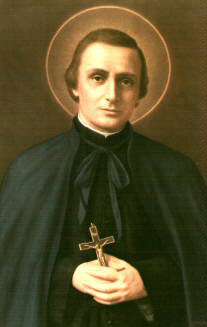 St. Peter Chanel: Saint of the Day for Sunday, April 28, 2024
 Prayer before a Crucifix: Prayer of the Day for Sunday, April 28, 2024
We ask you, humbly: don't scroll away.
Hi readers, it seems you use Catholic Online a lot; that's great! It's a little awkward to ask, but we need your help. If you have already donated, we sincerely thank you. We're not salespeople, but we depend on donations averaging $14.76 and fewer than 1% of readers give. If you donate just $5.00, the price of your coffee, Catholic Online School could keep thriving. Thank you.Help Now >

Copyright 2024 Catholic Online. All materials contained on this site, whether written, audible or visual are the exclusive property of Catholic Online and are protected under U.S. and International copyright laws, © Copyright 2024 Catholic Online. Any unauthorized use, without prior written consent of Catholic Online is strictly forbidden and prohibited.
Catholic Online is a Project of Your Catholic Voice Foundation, a Not-for-Profit Corporation. Your Catholic Voice Foundation has been granted a recognition of tax exemption under Section 501(c)(3) of the Internal Revenue Code. Federal Tax Identification Number: 81-0596847. Your gift is tax-deductible as allowed by law.