St. Bartholomew
FREE Catholic Classes
One of the Twelve Apostles, mentioned sixth in the three Gospel lists ( Matthew 10:3 ; Mark 3:18 ; Luke 6:14 ), and seventh in the list of Acts (1:13) .
The name ( Bartholomaios ) means "son of Talmai" (or Tholmai) which was an ancient Hebrew name, borne, e.g. by the King of Gessur whose daughter was a wife of David ( 2 Samuel 3:3 ). It shows, at least, that Bartholomew was of Hebrew descent; it may have been his genuine proper name or simply added to distinguish him as the son of Talmai. Outside the instances referred to, no other mention of the name occurs in the New Testament.
Nothing further is known of him for certain. Many scholars, however, identify him with Nathaniel ( John 1:45-51 ; 21:2 ). The reasons for this are that Bartholomew is not the proper name of the Apostle ; that the name never occurs in the Fourth Gospel, while Nathaniel is not mentioned in the synoptics ; that Bartholomew's name is coupled with Philip's in the lists of Matthew and Luke , and found next to it in Mark , which agrees well with the fact shown by St. John that Philip was an old friend of Nathaniel's and brought him to Jesus ; that the call of Nathaniel, mentioned with the call of several Apostles, seems to mark him for the apostolate, especially since the rather full and beautiful narrative leads one to expect some important development; that Nathaniel was of Galilee where Jesus found most, if not all, of the Twelve ; finally, that on the occasion of the appearance of the risen Savior on the shore of the Sea of Tiberias, Nathaniel is found present, together with several Apostles who are named and two unnamed Disciples who were, almost certainly, likewise Apostles (the word "apostle" not occurring in the Fourth Gospel and "disciple" of Jesus ordinarily meaning Apostle ) and so, presumably, was one of the Twelve. This chain of circumstantial evidence is ingenious and pretty strong; the weak link is that, after all, Nathaniel may have been another personage in whom, for some reason, the author of the Fourth Gospel may have been particularly interested, as he was in Nicodemus, who is likewise not named in the synoptics.
We ask you, humbly: don't scroll away.
Hi readers, it seems you use Catholic Online a lot; that's great! It's a little awkward to ask, but we need your help. If you have already donated, we sincerely thank you. We're not salespeople, but we depend on donations averaging $14.76 and fewer than 1% of readers give. If you donate just $5.00, the price of your coffee, Catholic Online School could keep thriving. Thank you.Help Now >
No mention of St. Bartholomew occurs in ecclesiastical literature before Eusebius, who mentions that Pantaenus, the master of Origen, while evangelizing India, was told that the Apostle had preached there before him and had given to his converts the Gospel of St. Matthew written in Hebrew, which was still treasured by the Church. "India" was a name covering a very wide area, including even Arabia Felix. Other traditions represent St. Bartholomew as preaching in Mesopotamia, Persia, Egypt, Armenia, Lycaonia, Phrygia, and on the shores of the Black Sea; one legend, it is interesting to note, identifies him with Nathaniel.
The manner of his death, said to have occurred at Albanopolis in Armenia, is equally uncertain; according to some, he was beheaded, according to others, flayed alive and crucified, head downward, by order of Astyages, for having converted his brother, Polymius, King of Armenia. On account of this latter legend, he is often represented in art (e.g. in Michelangelo's Last Judgment) as flayed and holding in his hand his own skin. His relics are thought by some to be preserved in the church of St. Bartholomew-in-the-Island, at Rome. His feast is celebrated on 24 August. An apocryphal gospel of Bartholomew existed in the early ages.


Join the Movement
When you sign up below, you don't just join an email list - you're joining an entire movement for Free world class Catholic education.


-

-
Mysteries of the Rosary
-
St. Faustina Kowalska
-
Litany of the Blessed Virgin Mary
-
Saint of the Day for Wednesday, Oct 4th, 2023
-
Popular Saints
-
St. Francis of Assisi
-
Bible
-
Female / Women Saints
-
7 Morning Prayers you need to get your day started with God
-
Litany of the Blessed Virgin Mary

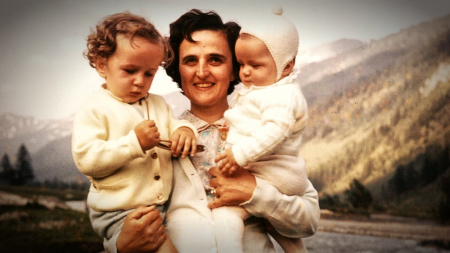
Sacrifices of Faith: The Pro-Life Legacies of St. Gianna and Jessica Hanna
-
How to love God by caring for our bodies
-
Pope Francis calls for negotiations to End Russia-Ukraine War
-
Pope Francis Contemplates Return to U.S. for United Nations Assembly Address
-
Pope Francis Calls on Faithful to Embrace Faith, Hope, and Charity in New Teaching Series


Daily Catholic
- Daily Readings for Monday, April 29, 2024
- St. Catherine of Siena: Saint of the Day for Monday, April 29, 2024
- Prayer for the Dead # 3: Prayer of the Day for Monday, April 29, 2024
- Daily Readings for Sunday, April 28, 2024
- St. Peter Chanel: Saint of the Day for Sunday, April 28, 2024
- Prayer before a Crucifix: Prayer of the Day for Sunday, April 28, 2024
 Daily Readings for Monday, April 29, 2024
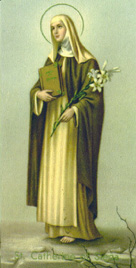 St. Catherine of Siena: Saint of the Day for Monday, April 29, 2024
 Prayer for the Dead # 3: Prayer of the Day for Monday, April 29, 2024
 Hi readers, it seems you use Catholic Online a lot; that's great! It's a little awkward to ask, but we need your help. If you have already donated, we sincerely thank you. We're not salespeople, but we depend on donations averaging $14.76 and fewer than 1% of readers give. If you donate just $5.00, the price of your coffee, Catholic Online School could keep thriving. Thank you. Help Now >
We ask you, humbly: don't scroll away.
Hi readers, it seems you use Catholic Online a lot; that's great! It's a little awkward to ask, but we need your help. If you have already donated, we sincerely thank you. We're not salespeople, but we depend on donations averaging $14.76 and fewer than 1% of readers give. If you donate just $5.00, the price of your coffee, Catholic Online School could keep thriving. Thank you.Help Now >

Copyright 2024 Catholic Online. All materials contained on this site, whether written, audible or visual are the exclusive property of Catholic Online and are protected under U.S. and International copyright laws, © Copyright 2024 Catholic Online. Any unauthorized use, without prior written consent of Catholic Online is strictly forbidden and prohibited.
Catholic Online is a Project of Your Catholic Voice Foundation, a Not-for-Profit Corporation. Your Catholic Voice Foundation has been granted a recognition of tax exemption under Section 501(c)(3) of the Internal Revenue Code. Federal Tax Identification Number: 81-0596847. Your gift is tax-deductible as allowed by law.