We ask you, urgently: don't scroll past this
Dear readers, Catholic Online was de-platformed by Shopify for our pro-life beliefs. They shut down our Catholic Online, Catholic Online School, Prayer Candles, and Catholic Online Learning Resources essential faith tools serving over 1.4 million students and millions of families worldwide. Our founders, now in their 70's, just gave their entire life savings to protect this mission. But fewer than 2% of readers donate. If everyone gave just $5, the cost of a coffee, we could rebuild stronger and keep Catholic education free for all. Stand with us in faith. Thank you.Help Now >
St. Tarasius
Facts
Birth: 730
Death: 806
Author and Publisher - Catholic Online
Printable Catholic Saints PDFs
Shop St. Tarasius

St. Tarasius was subject of the Byzantine Empire. He was raised to the highest honors in the Empire as Consul, and later became first secretary to the Emperor Constantine and his mother, Irene. When being elected Patriarch of Constantinople, he consented to accept the dignity offered to him only on condition that a General Council should be summoned to resolve the disputes concerning the veneration of sacred images, for Constantinople had been separated from the Holy See on account of the war between the Emperors. The Council was held in the Church of the Holy Apostles at Constantinople in 786; it met again the following year at Nice and its decrees were approved by the Pope. The holy Patriarch incurred the enmity of the Emperor by his persistent refusal to sanction his divorce from his lawful wife. He witnessed the death of Constantine, which was occasioned by his own mother; he beheld the reign and the downfall of Irene and usurpation of Nicephorus. St. Tarasius' whole life in the Episcopacy was one of penance and prayer, and of hard labor to reform his clergy and people. He occupied the See of Constantinople twenty-one years and two months. His charity toward the poor was one of the characteristic virtues of his life. He visited in person, all the houses and hospitals in Constantinople, so that no indigent person might be overlooked in the distribution of alms. This saintly Bishop was called to his eternal reward in the year 806. His feast day is February 25th.
More Saints
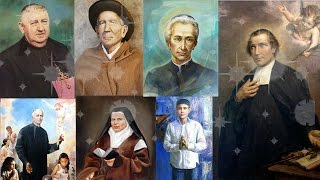 New Saints canonized by Pope Francis
FREE Saint Classes Printable Saint PDF's Light a Virtual Saint Candle
Come Grow With Us
Sign up and walk the Catholic journey with millions around the world.
Receive inspiring emails on saints, daily readings, and free faith-building resources—no cost, ever.
Easter Was Just the Beginning - Please Watch
- Easter / Lent
- 5 Lenten Prayers
- Ash Wednesday
- 7 Morning Prayers
- Mysteries of the Rosary
- Litany of the Bl. Virgin Mary
- Popular Saints
- Popular Prayers
- Female Saints
- Saint Feast Days by Month
- Stations of the Cross
- St. Francis of Assisi
- St. Michael the Archangel
- The Apostles' Creed
- Unfailing Prayer to St. Anthony
- Pray the Rosary









Copyright 2026 Catholic Online. All materials contained on this site, whether written, audible or visual are the exclusive property of Catholic Online and are protected under U.S. and International copyright laws, © Copyright 2026 Catholic Online. Any unauthorized use, without prior written consent of Catholic Online is strictly forbidden and prohibited.
Catholic Online is a Project of Your Catholic Voice Foundation, a Not-for-Profit Corporation. Your Catholic Voice Foundation has been granted a recognition of tax exemption under Section 501(c)(3) of the Internal Revenue Code. Federal Tax Identification Number: 81-0596847. Your gift is tax-deductible as allowed by law.
