We ask you, humbly: don't scroll away.
Hi readers, it seems you use Catholic Online a lot; that's great! It's a little awkward to ask, but we need your help. If you have already donated, we sincerely thank you. We're not salespeople, but we depend on donations averaging $14.76 and fewer than 1% of readers give. If you donate just $5.00, the price of your coffee, Catholic Online School could keep thriving. Thank you.Help Now >
The Second Council of Nicaea
FREE Catholic Classes
Seventh Ecumenical Council of the Catholic Church, held in 787. (For an account of the controversies which occasioned this council and the circumstances in which it was convoked, see ICONOCLASM, Sections I and II.) An attempt to hold a council at Constantinople, to deal with Iconoclasm, having been frustrated by the violence of the Iconoclastic soldiery, the papal legates left that city. When, however, they had reached Sicily on their way back to Rome, they were recalled by the Empress Irene. She replaced the mutinous troops at Constantinople with troops commanded by officers in whom she had every confidence. This accomplished, in May, 787, a new council was convoked at Nicaea in Bithynia. The pope's letters to the empress and to the patriarch (see ICONOCLASM, II) prove superabundantly that the Holy See approved the convocation of the Council. The pope afterwards wrote to Charlemagne : "Et sic synodum istam, secundum nostram ordinationem, fecerunt" (Thus they have held the synod in accordance with our directions).
The empress-regent and her son did not assist in person at the sessions, but they were represented there by two high officials: the patrician and former consul, Petronius, and the imperial chamberlain and logothete John, with whom was associated as secretary the former patriarch, Nicephorus. The acts represent as constantly at the head of the ecclesiastical members the two Roman legates, the archpriest Peter and the abbot Peter; after them come Tarasius, Patriarch of Constantinople, and then two Oriental monks and priests, John and Thomas, representatives of the Patriarchs of Alexandria, Antioch, and Jerusalem. The operations of the council show that Tarasius, properly speaking, conducted the sessions. The monks John and Thomas professed to represent the Oriental patriarchs, though these did not know that the council had been convoked. However, there was no fraud on their part: they had been sent, not by the patriarchs, but by the monks and priests of superior rank acting sedibus impeditis , in the stead and place of the patriarchs who were prevented from acting for themselves. Necessity was their excuse. Moreover, John and Thomas did not subscribe at the Council as vicars of the patriarchs, but simply in the name of the Apostolic sees of the Orient. With the exception of these monks and the Roman legates, all the members of the Council were subjects of the Byzantine Empire . Their number, bishops as well as representatives of bishops, varies in the ancient historians between 330 and 367; Nicephorus makes a manifest mistake in speaking of only 150 members: the Acts of the Council which we still possess show not fewer than 308 bishops or representatives of bishops. To these may be added a certain number of monks, archimandrites, imperial secretaries, and clerics of Constantinople who had not the right to vote.

The first session opened in the church of St. Sophia, 24 September, 787. Tarasius opened the council with a short discourse: "Last year, in the beginning of the month of August, it was desired to hold, under my presidency, a council in the Church of the Apostles at Constantinople; but through the fault of several bishops whom it would be easy to count, and whose names I prefer not to mention, since everybody knows them, that council was made impossible. The sovereigns have deigned to convoke another at Nicaea, and Christ will certainly reward them for it. It is this Lord and Saviour whom the bishops must also invoke in order to pronounce subsequently an equitable judgment in a just and impartial manner." The members then proceeded to the reading of various official documents, after which three Iconoclastic bishops who had retracted were permitted to take their seats. Seven others who had plotted to make the Council miscarry in the preceding year presented themselves and declared themselves ready to profess the Faith of the Fathers, but the assembly thereupon engaged in a long discussion concerning the admission of heretics and postponed their case to another session. On 26 September, the second session was held, during which the pope's letters to the empress and the Patriarch Tarasius were read. Tarasius declared himself in full agreement with the doctrine set forth in these letters. On 28, or 29, September, in the third session, some bishops who had retracted their errors were allowed to take their seats, after which various documents were read. The fourth session was held on 1 October. In it the secretaries of the council read a long series of citations from the Bible and the Fathers in favour of the veneration of images. Afterwards the dogmatic decree was presented, and was signed by all the members present, by the archimandrites of the monasteries, and by some monks ; the papal legates added a declaration to the effect that they were ready to receive all who had abandoned the Iconoclastic heresy. In the fifth session on 4 October, passages form the Fathers were read which declared, or seemed to declare, against the worship of images, but the reading was not continued to the end, and the council decided in favour of the restoration and veneration of images. On 6 October, in the sixth session, the doctrines of the conciliabulum of 753 were refuted. The discussion was endless, but in the course of it several noteworthy things were said. The next session, that of 13 October, was especially important; at it was read the horos , or dogmatic decision, of the council [see VENERATION OF IMAGES (6)]. The last (eighth) was held in the Magnaura Palace, at Constantinople, in presence of the empress and her son, on 23 October. It was spent in discourses, signing of names, and acclamations.
We ask you, humbly: don't scroll away.
Hi readers, it seems you use Catholic Online a lot; that's great! It's a little awkward to ask, but we need your help. If you have already donated, we sincerely thank you. We're not salespeople, but we depend on donations averaging $14.76 and fewer than 1% of readers give. If you donate just $5.00, the price of your coffee, Catholic Online School could keep thriving. Thank you.Help Now >
The council promulgated twenty-two canons relating to points of discipline, which may be summarized as follows:
- Canon 1: The clergy must observe "the holy canons," which include the Apostolic, those of the six previous Ecumenical Councils, those of the particular synods which have been published at other synods, and those of the Fathers.
- Canon 2: Candidates for a bishop's orders must know the Psalter by heart and must have read thoroughly, not cursorily, all the sacred Scriptures.
- Canon 3 condemns the appointment of bishops, priests, and deacons by secular princes.
- Canon 4: Bishops are not to demand money of their clergy : any bishop who through covetousness deprives one of his clergy is himself deposed.
- Canon 5 is directed against those who boast of having obtained church preferment with money, and recalls the Thirtieth Apostolic Canon and the canons of Chalcedon against those who buy preferment with money.
- Canon 6: Provincial synods are to be held annually.
- Canon 7: Relics are to be placed in all churches: no church is to be consecrated without relics.
- Canon 8 prescribes precautions to be taken against feigned converts from Judaism.
- Canon 9: All writings against the venerable images are to be surrendered, to be shut up with other heretical books.
- Canon 10: Against clerics who leave their own dioceses without permission, and become private chaplains to great personages.
- Canon 11: Every church and every monastery must have its own œconomus.
- Canon 12: Against bishops or abbots who convey church property to temporal lords.
- Canon 13: Episcopal residences, monasteries and other ecclesiastical buildings converted to profane uses are to be restored their rightful ownership.
- Canon 14: Tonsured persons not ordained lectors must not read the Epistle or Gospel in the ambo.
- Canon 15: Against pluralities of benefices.
- Canon 16: The clergy must not wear sumptuous apparel.
- Canon 17: Monks are not to leave their monasteries and begin building other houses of prayer without being provided with the means to finish the same.
- Canon 18: Women are not to dwell in bishops' houses or in monasteries of men.
- Canon 19: Superiors of churches and monasteries are not to demand money of those who enter the clerical or monastic state. But the dowry brought by a novice to a religious house is to be retained by that house if the novice leaves it without any fault on the part of the superior.
- Canon 20 prohibits double monasteries .
- Canon 21: A monk or nun may not leave one convent for another.
- Canon 22: Among the laity, persons of opposite sexes may eat together, provided they give thanks and behave with decorum. But among religious persons, those of opposite sexes may eat together only in the presence of several God-fearing men and women, except on a journey when necessity compels.

Join the Movement
When you sign up below, you don't just join an email list - you're joining an entire movement for Free world class Catholic education.


-

-
Mysteries of the Rosary
-
St. Faustina Kowalska
-
Litany of the Blessed Virgin Mary
-
Saint of the Day for Wednesday, Oct 4th, 2023
-
Popular Saints
-
St. Francis of Assisi
-
Bible
-
Female / Women Saints
-
7 Morning Prayers you need to get your day started with God
-
Litany of the Blessed Virgin Mary

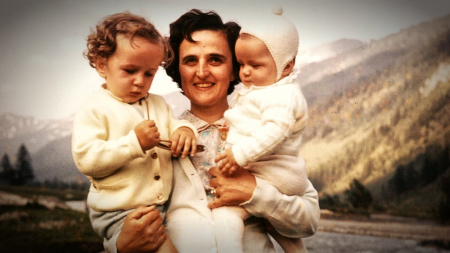
Sacrifices of Faith: The Pro-Life Legacies of St. Gianna and Jessica Hanna
-
How to love God by caring for our bodies
-
Pope Francis calls for negotiations to End Russia-Ukraine War
-
Pope Francis Contemplates Return to U.S. for United Nations Assembly Address
-
Pope Francis Calls on Faithful to Embrace Faith, Hope, and Charity in New Teaching Series
Daily Catholic
- Daily Readings for Monday, April 29, 2024
- St. Catherine of Siena: Saint of the Day for Monday, April 29, 2024
- Prayer for the Dead # 3: Prayer of the Day for Monday, April 29, 2024
- Daily Readings for Sunday, April 28, 2024
- St. Peter Chanel: Saint of the Day for Sunday, April 28, 2024
- Prayer before a Crucifix: Prayer of the Day for Sunday, April 28, 2024
 Daily Readings for Monday, April 29, 2024
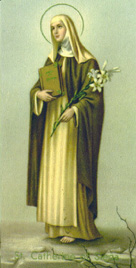 St. Catherine of Siena: Saint of the Day for Monday, April 29, 2024
 Prayer for the Dead # 3: Prayer of the Day for Monday, April 29, 2024
We ask you, humbly: don't scroll away.
Hi readers, it seems you use Catholic Online a lot; that's great! It's a little awkward to ask, but we need your help. If you have already donated, we sincerely thank you. We're not salespeople, but we depend on donations averaging $14.76 and fewer than 1% of readers give. If you donate just $5.00, the price of your coffee, Catholic Online School could keep thriving. Thank you.Help Now >

Copyright 2024 Catholic Online. All materials contained on this site, whether written, audible or visual are the exclusive property of Catholic Online and are protected under U.S. and International copyright laws, © Copyright 2024 Catholic Online. Any unauthorized use, without prior written consent of Catholic Online is strictly forbidden and prohibited.
Catholic Online is a Project of Your Catholic Voice Foundation, a Not-for-Profit Corporation. Your Catholic Voice Foundation has been granted a recognition of tax exemption under Section 501(c)(3) of the Internal Revenue Code. Federal Tax Identification Number: 81-0596847. Your gift is tax-deductible as allowed by law.