We ask you, humbly: don't scroll away.
Hi readers, it seems you use Catholic Online a lot; that's great! It's a little awkward to ask, but we need your help. If you have already donated, we sincerely thank you. We're not salespeople, but we depend on donations averaging $14.76 and fewer than 1% of readers give. If you donate just $5.00, the price of your coffee, Catholic Online School could keep thriving. Thank you.Help Now >
St. Andrew
FREE Catholic Classes
The name "Andrew" (Gr., andreia , manhood, or valour), like other Greek names, appears to have been common among the Jews from the second or third century B.C.
St. Andrew, the Apostle, son of Jonah, or John ( Matthew 16:17 ; John 1:42 ), was born in Bethsaida of Galilee ( John 1:44 ). He was brother of Simon Peter ( Matthew 10:2 ; John 1:40 ). Both were fishermen ( Matthew 4:18 ; Mark 1:16 ), and at the beginning of Our Lord's public life occupied the same house at Capharnaum ( Mark 1:21, 29 ).
From the fourth Gospel we learn that Andrew was a disciple of the Baptist, whose testimony first led him and John the Evangelist to follow Jesus ( John 1:35-40 ). Andrew at once recognized Jesus as the Messias, and hastened to introduce Him to his brother, Peter, ( John 1:41 ). Thenceforth the two brothers were disciples of Christ. On a subsequent occasion, prior to the final call to the apostolate, they were called to a closer companionship, and then they left all things to follow Jesus ( Luke 5:11 ; Matthew 4:19-20 ; Mark 1:17-18 ).
Finally Andrew was chosen to be one of the Twelve ; and in the various lists of Apostles given in the New Testament ( Matthew 10:2-4 ); Mark 3:16-19 ; Luke 6:14-16 ; Acts 1:13 ) he is always numbered among the first four. The only other explicit reference to him in the Synoptists occurs in Mark 13:3 , where we are told he joined with Peter, James and John in putting the question that led to Our Lord's great eschatological discourse. In addition to this scanty information, we learn from the fourth Gospel that on the occasion of the miraculous feeding of the five thousand, it was Andrew who said: "There is a boy here who has five barley loaves and two fishes: but what are these among so many?" ( John 6:8-9 ); and when, a few days before Our Lord's death, certain Greeks asked Philip that they might see Jesus, Philip referred the matter to Andrew as to one of greater authority, and then both told Christ ( John 12:20-22 ). Like the majority of the Twelve, Andrew is not named in the Acts except in the list of the Apostles, where the order of the first four is Peter, John, James, Andrew; nor have the Epistles or the Apocalypse any mention of him.
From what we know of the Apostles generally, we can, of course, supplement somewhat these few details. As one of the Twelve, Andrew was admitted to the closest familiarity with Our Lord during His public life; he was present at the Last Supper ; beheld the risen Lord ; witnessed the Ascension ; shared in the graces and gifts of the first Pentecost, and helped, amid threats and persecution, to establish the Faith in Palestine.
When the Apostles went forth to preach to the Nations, Andrew seems to have taken an important part, but unfortunately we have no certainty as to the extent or place of his labours. Eusebius (H.E. III:1), relying, apparently, upon Origen, assigns Scythia as his mission field: Andras de [eilechen] ten Skythian ; while St. Gregory of Nazianzus (Or. 33) mentions Epirus; St. Jerome (Ep. ad Marcell.) Achaia ; and Theodoret (on Ps. cxvi) Hellas. Probably these various accounts are correct, for Nicephorus (H.E. II:39), relying upon early writers, states that Andrew preached in Cappadocia, Galatia, and Bithynia, then in the land of the anthropophagi and the Scythian deserts, afterwards in Byzantium itself, where he appointed St. Stachys as its first bishop, and finally in Thrace, Macedonia, Thessaly, and Achaia. It is generally agreed that he was crucified by order of the Roman Governor, Aegeas or Aegeates, at Patrae in Achaia, and that he was bound, not nailed, to the cross, in order to prolong his sufferings. The cross on which he suffered is commonly held to have been the decussate cross, now known as St. Andrew's, though the evidence for this view seems to be no older than the fourteenth century. His martyrdom took place during the reign of Nero, on 30 November, A.D. 60); and both the Latin and Greek Churches keep 30 November as his feast.
St. Andrew's relics were translated from Patrae to Constantinople, and deposited in the church of the Apostles there, about A.D. 357. When Constantinople was taken by the French, in the beginning of the thirteenth century, Cardinal Peter of Capua brought the relics to Italy and placed them in the cathedral of Amalfi, where most of them still remain. St. Andrew is honoured as their chief patron by Russia and Scotland.
We ask you, humbly: don't scroll away.
Hi readers, it seems you use Catholic Online a lot; that's great! It's a little awkward to ask, but we need your help. If you have already donated, we sincerely thank you. We're not salespeople, but we depend on donations averaging $14.76 and fewer than 1% of readers give. If you donate just $5.00, the price of your coffee, Catholic Online School could keep thriving. Thank you.Help Now >

Join the Movement
When you sign up below, you don't just join an email list - you're joining an entire movement for Free world class Catholic education.


-

-
Mysteries of the Rosary
-
St. Faustina Kowalska
-
Litany of the Blessed Virgin Mary
-
Saint of the Day for Wednesday, Oct 4th, 2023
-
Popular Saints
-
St. Francis of Assisi
-
Bible
-
Female / Women Saints
-
7 Morning Prayers you need to get your day started with God
-
Litany of the Blessed Virgin Mary


Sacrifices of Faith: The Pro-Life Legacies of St. Gianna and Jessica Hanna
-
How to love God by caring for our bodies
-
Pope Francis calls for negotiations to End Russia-Ukraine War
-
Pope Francis Contemplates Return to U.S. for United Nations Assembly Address
-
Pope Francis Calls on Faithful to Embrace Faith, Hope, and Charity in New Teaching Series


Daily Catholic
- Daily Readings for Sunday, April 28, 2024
- St. Peter Chanel: Saint of the Day for Sunday, April 28, 2024
- Prayer before a Crucifix: Prayer of the Day for Sunday, April 28, 2024
- Daily Readings for Saturday, April 27, 2024
- St. Zita: Saint of the Day for Saturday, April 27, 2024
- Prayer for the Dead # 2: Prayer of the Day for Saturday, April 27, 2024
 Daily Readings for Sunday, April 28, 2024
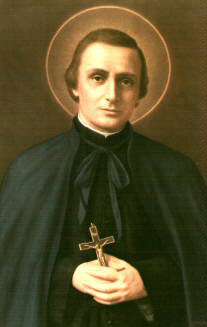 St. Peter Chanel: Saint of the Day for Sunday, April 28, 2024
 Prayer before a Crucifix: Prayer of the Day for Sunday, April 28, 2024


Copyright 2024 Catholic Online. All materials contained on this site, whether written, audible or visual are the exclusive property of Catholic Online and are protected under U.S. and International copyright laws, © Copyright 2024 Catholic Online. Any unauthorized use, without prior written consent of Catholic Online is strictly forbidden and prohibited.
Catholic Online is a Project of Your Catholic Voice Foundation, a Not-for-Profit Corporation. Your Catholic Voice Foundation has been granted a recognition of tax exemption under Section 501(c)(3) of the Internal Revenue Code. Federal Tax Identification Number: 81-0596847. Your gift is tax-deductible as allowed by law.
