Pope Innocent VI
FREE Catholic Classes
(ETIENNE AUBERT)
Born at Mont in the Diocese of Limoges ( France ); elected at Avignon, 18 December 1352; died there, 12 September, 1362. He began his career as professor of civil law at Toulouse where he subsequently rose to the highest judicial position. Having entered the ecclesiastical state he became successively Bishop of Noyon (1338), of Clermont (1340), cardinal-priest (1342), Cardinal-Bishop of Ostia, and Grand Penitentiary (1352). The conclave which elected him to the papacy is remarkable for the fact that the first certain election capitulation was framed by the cardinals present, each of whom bound himself to divide, in case of election, his power and revenues with the College of Cardinals . Aubert took this engagement but with the restriction; "in so far as it was not contrary to church law ". When the choice fell on him, one of his first pontifical acts declared the pact illegal and null, because it contained a limitation of the Divinely conferred papal power. The new pope also gave immediate proofs of the thoroughly ecclesiastical spirit which was to animate his policy. Shortly after his coronation the numerous ecclesiastics who had flocked to Avignon in search of preferment received a peremptory order to repair, under penalty of excommunication, to their respective places of residence. Some appointments to benefices made by his predecessor were repealed, numerous reservations abolished, and pluralities disapproved. Luxury was banished from the papal court and the obligation of following this example set by the pope imposed upon the cardinals. To the auditors of the Rota, whose services were gratuitous, a fixed income was assigned in the interest of a more impartial administration of justice. As the territory of the Papal States had been usurped by petty princes, Innocent VI sent Cardinal Gil de Albornoz (q.v.) to Italy with unlimited power. Success on the battle-field and diplomatic skill enabled this legate to restore papal authority in the States of the Church.
We ask you, humbly: don't scroll away.
Hi readers, it seems you use Catholic Online a lot; that's great! It's a little awkward to ask, but we need your help. If you have already donated, we sincerely thank you. We're not salespeople, but we depend on donations averaging $14.76 and fewer than 1% of readers give. If you donate just $5.00, the price of your coffee, Catholic Online School could keep thriving. Thank you.Help Now >
Pope Innocent viewed favourably the imperial coronation of the German king, Charles IV, at Rome, but at the same time exacted from him a solemn pledge that be would leave Rome the very day on which the ceremony would take place. Charles was crowned on Easter Sunday, 1355, by the Cardinal-Bishop of Ostia and faithfully observed his promise. The following year he issued the celebrated "Golden Bull ", against which the pope protested because it silently passed over the papal claims to confirm the German kings and to administer the empire during a vacancy. Objection was also made in 1359 to the emperor's resolution to undertake a reform of the German clergy independently of the pope ; Charles's reformatory plans, however, subsequently received ecclesiastical approbation. The mutual peaceful dispositions prevented any conflict of a serious character. Innocent VI sought to terminate the war between France and England, and finally through his intervention the Peace of Brétigny was concluded in 1360. To protect the papal residence against the bands of freebooters that were then devastating France, Innocent increased the fortifications of Avignon ; but before these were completed he was attacked and constrained to buy off his assailants by an enormous ransom. He used with but little success the severest ecclesiastical penalties against Peter I of Castile (1350-69), who had repudiated and poisoned his wife and is deservedly known as "the Cruel". His efforts to restore peace between Castile and Aragon were fruitless, so also his plans for a crusade and for the reunion of the Eastern Church with Rome. At the request of Emperor Charles IV he instituted (1354) for Germany and Bohemia the feast of the Holy Lance and Nails ( Lance� et Clavorum ). He renewed the previous privileges of the mendicant orders, then in conflict with Richard Fitzralph, Archbishop of Armagh. Although tainted with nepotism he ranks among the best of the Avignon popes. His patronage of arts and his moral integrity are generally recognized.
 Hi readers, it seems you use Catholic Online a lot; that's great! It's a little awkward to ask, but we need your help. If you have already donated, we sincerely thank you. We're not salespeople, but we depend on donations averaging $14.76 and fewer than 1% of readers give. If you donate just $5.00, the price of your coffee, Catholic Online School could keep thriving. Thank you. Help Now >

Join the Movement
When you sign up below, you don't just join an email list - you're joining an entire movement for Free world class Catholic education.


-

-
Mysteries of the Rosary
-
St. Faustina Kowalska
-
Litany of the Blessed Virgin Mary
-
Saint of the Day for Wednesday, Oct 4th, 2023
-
Popular Saints
-
St. Francis of Assisi
-
Bible
-
Female / Women Saints
-
7 Morning Prayers you need to get your day started with God
-
Litany of the Blessed Virgin Mary


Sacrifices of Faith: The Pro-Life Legacies of St. Gianna and Jessica Hanna
-
How to love God by caring for our bodies
-
Pope Francis calls for negotiations to End Russia-Ukraine War
-
Pope Francis Contemplates Return to U.S. for United Nations Assembly Address
-
Pope Francis Calls on Faithful to Embrace Faith, Hope, and Charity in New Teaching Series


Daily Catholic
- Daily Readings for Sunday, April 28, 2024
- St. Peter Chanel: Saint of the Day for Sunday, April 28, 2024
- Prayer before a Crucifix: Prayer of the Day for Sunday, April 28, 2024
- Daily Readings for Saturday, April 27, 2024
- St. Zita: Saint of the Day for Saturday, April 27, 2024
- Prayer for the Dead # 2: Prayer of the Day for Saturday, April 27, 2024
 Daily Readings for Sunday, April 28, 2024
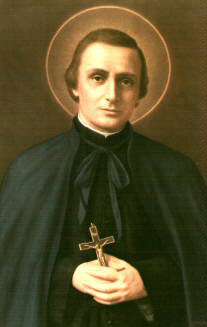 St. Peter Chanel: Saint of the Day for Sunday, April 28, 2024
 Prayer before a Crucifix: Prayer of the Day for Sunday, April 28, 2024


Copyright 2024 Catholic Online. All materials contained on this site, whether written, audible or visual are the exclusive property of Catholic Online and are protected under U.S. and International copyright laws, © Copyright 2024 Catholic Online. Any unauthorized use, without prior written consent of Catholic Online is strictly forbidden and prohibited.
Catholic Online is a Project of Your Catholic Voice Foundation, a Not-for-Profit Corporation. Your Catholic Voice Foundation has been granted a recognition of tax exemption under Section 501(c)(3) of the Internal Revenue Code. Federal Tax Identification Number: 81-0596847. Your gift is tax-deductible as allowed by law.