We ask you, humbly: don't scroll away.
Hi readers, it seems you use Catholic Online a lot; that's great! It's a little awkward to ask, but we need your help. If you have already donated, we sincerely thank you. We're not salespeople, but we depend on donations averaging $14.76 and fewer than 1% of readers give. If you donate just $5.00, the price of your coffee, Catholic Online School could keep thriving. Thank you.Help Now >
Guardian Angel
FREE Catholic Classes
( See also FEAST OF THE GUARDIAN ANGELS .)
That every individual soul has a guardian angel has never been defined by the Church, and is, consequently, not an article of faith ; but it is the "mind of the Church ", as St. Jerome expressed it: "how great the dignity of the soul, since each one has from his birth an angel commissioned to guard it." (Comm. in Matt., xviii, lib. II).
This belief in guardian angels can be traced throughout all antiquity; pagans, like Menander and Plutarch (cf. Eusebius, "Praep. Evang.", xii), and Neo-Platonists, like Plotinus, held it. It was also the belief of the Babylonians and Assyrians, as their monuments testify, for a figure of a guardian angel now in the British Museum once decorated an Assyrian palace, and might well serve for a modern representation; while Nabopolassar, father of Nebuchadnezzar the Great, says: "He (Marduk) sent a tutelary deity ( cherub ) of grace to go at my side; in everything that I did, he made my work to succeed."
In the Bible this doctrine is clearly discernible and its development is well marked. In Genesis 28-29 , angels not only act as the executors of God's wrath against the cities of the plain, but they deliver Lot from danger; in Exodus 12-13 , an angel is the appointed leader of the host of Israel, and in 32:34 , God says to Moses : "my angel shall go before thee." At a much later period we have the story of Tobias, which might serve for a commentary on the words of Psalm 90:11 : "For he hath given his angels charge over thee; to keep thee in all thy ways." (Cf. Psalm 33:8 and 34:5 ) Lastly, in Daniel 10angels are entrusted with the care of particular districts; one is called "prince of the kingdom of the Persians ", and Michael is termed "one of the chief princes"; cf. Deuteronomy 32:8 ( Septuagint ); and Ecclesiasticus 17:17 ( Septuagint ).
We ask you, humbly: don't scroll away.
Hi readers, it seems you use Catholic Online a lot; that's great! It's a little awkward to ask, but we need your help. If you have already donated, we sincerely thank you. We're not salespeople, but we depend on donations averaging $14.76 and fewer than 1% of readers give. If you donate just $5.00, the price of your coffee, Catholic Online School could keep thriving. Thank you.Help Now >
This sums up the Old Testament doctrine on the point; it is clear that the Old Testament conceived of God's angels as His ministers who carried out his behests, and who were at times given special commissions, regarding men and mundane affairs. There is no special teaching; the doctrine is rather taken for granted than expressly laid down; cf. 2 Maccabees 3:25 ; 10:29 ; 11:6 ; 15:23 .
But in the New Testament the doctrine is stated with greater precision. Angels are everywhere the intermediaries between God and man ; and Christ set a seal upon the Old Testament teaching: "See that you despise not one of these little ones: for I say to you, that their angels in heaven always see the face of my Father who is in heaven." ( Matthew 18:10 ). A twofold aspect of the doctrine is here put before us: even little children have guardian angels, and these same angels lose not the vision of God by the fact that they have a mission to fulfil on earth.
Without dwelling on the various passages in the New Testament where the doctrine of guardian angels is suggested, it may suffice to mention the angel who succoured Christ in the garden, and the angel who delivered St. Peter from prison. Hebrews 1:14 puts the doctrine in its clearest light: "Are they not all ministering spirits, sent to minister for them, who shall receive the inheritance of salvation ?" This is the function of the guardian angels ; they are to lead us, if we wish it, to the Kingdom of Heaven .
St. Thomas teaches us ( Summa Theologica I:113:4 ) that only the lowest orders of angels are sent to men, and consequently that they alone are our guardians, though Scotus and Durandus would rather say that any of the members of the angelic host may be sent to execute the Divine commands. Not only the baptized, but every soul that cometh into the world receives a guardian spirit ; St. Basil, however (Homily on Psalm 43), and possibly St. Chrysostom (Homily 3 on Colossians) would hold that only Christians were so privileged. Our guardian angels can act upon our senses ( I:111:4 ) and upon our imaginations ( I:111:3 ) -- not, however, upon our wills, except "per modum suadentis", viz. by working on our intellect, and thus upon our will, through the senses and the imagination. ( I:106:2 ; and I:111:2 ). Finally, they are not separated from us after death, but remain with us in heaven, not, however, to help us attain salvation, but "ad aliquam illustrationem" ( I:108:7, ad 3am ).


Join the Movement
When you sign up below, you don't just join an email list - you're joining an entire movement for Free world class Catholic education.


-

-
Mysteries of the Rosary
-
St. Faustina Kowalska
-
Litany of the Blessed Virgin Mary
-
Saint of the Day for Wednesday, Oct 4th, 2023
-
Popular Saints
-
St. Francis of Assisi
-
Bible
-
Female / Women Saints
-
7 Morning Prayers you need to get your day started with God
-
Litany of the Blessed Virgin Mary

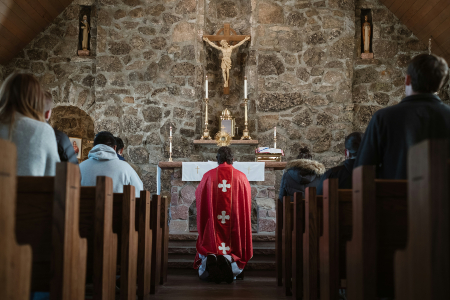
U.S. Catholic Parishes Experience Resurgence of Traditional Practices
-
Pope Francis Urges Faith and Prayers for Peace
-
Florida Welcomes Volunteer Chaplains to Public Schools
-
10 Fascinating Details About St. Joseph the Worker: Celebrating His Feast Day - May 1
-
St. Joseph the Worker: Model for Men, Young and Old

Daily Catholic
- Daily Readings for Thursday, May 02, 2024
- St. Athanasius: Saint of the Day for Thursday, May 02, 2024
- The Our Father: Prayer of the Day for Thursday, May 02, 2024
- Daily Readings for Wednesday, May 01, 2024
- St. Marculf: Saint of the Day for Wednesday, May 01, 2024
- To Saint Peregrine: Prayer of the Day for Wednesday, May 01, 2024
 Daily Readings for Thursday, May 02, 2024
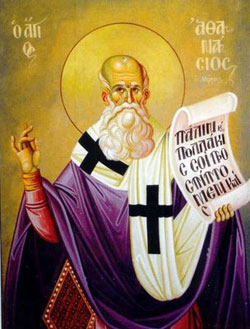 St. Athanasius: Saint of the Day for Thursday, May 02, 2024
 The Our Father: Prayer of the Day for Thursday, May 02, 2024
We ask you, humbly: don't scroll away.
Hi readers, it seems you use Catholic Online a lot; that's great! It's a little awkward to ask, but we need your help. If you have already donated, we sincerely thank you. We're not salespeople, but we depend on donations averaging $14.76 and fewer than 1% of readers give. If you donate just $5.00, the price of your coffee, Catholic Online School could keep thriving. Thank you.Help Now >

 Hi readers, it seems you use Catholic Online a lot; that's great! It's a little awkward to ask, but we need your help. If you have already donated, we sincerely thank you. We're not salespeople, but we depend on donations averaging $14.76 and fewer than 1% of readers give. If you donate just $5.00, the price of your coffee, Catholic Online School could keep thriving. Thank you. Help Now >

Copyright 2024 Catholic Online. All materials contained on this site, whether written, audible or visual are the exclusive property of Catholic Online and are protected under U.S. and International copyright laws, © Copyright 2024 Catholic Online. Any unauthorized use, without prior written consent of Catholic Online is strictly forbidden and prohibited.
Catholic Online is a Project of Your Catholic Voice Foundation, a Not-for-Profit Corporation. Your Catholic Voice Foundation has been granted a recognition of tax exemption under Section 501(c)(3) of the Internal Revenue Code. Federal Tax Identification Number: 81-0596847. Your gift is tax-deductible as allowed by law.