William Courtenay
FREE Catholic Classes
Archbishop of Canterbury, born in the parish of St. Martin's, Exeter, England, c. 1342; died at Maidstone, 31 July, 1396; was the son of Hugh Courtenay, Earl of Devon, and Margaret, daughter of Humphrey Bohun, Earl of Hereford. He studied at Oxford, where he took the degree of D.C.L. In 1367 he was elected chancellor of the university. On this occasion the university successfully resisted the Bishop of Lincoln's claim to the right of confirming its choice, and later Courtenay obtained from Urban V a Bull declaring a chancellor's election valid without the confirmation of the diocesan. After holding prebends in the churches of Exeter, Wells, and York, he was elected Bishop of Hereford and consecrated, 17 March, 1370. As bishop his support was given to the Prince of Wales and Bishop Wykeham against the anti-clerical movement led by John of Gaunt, Duke of Lancaster, and later his efforts to suppress the Lollards were unceasing. In the Convocation of 1373 he strongly opposed the granting of a subsidy to the king until the latter should try to remedy the evils then afflicting the Church. Courtenay was transferred to the See of London, 12 Sept., 1375. In 1377 Pope Gregory XI issued a Bull of excommunication against the Florentines, and Courtenay published it at Paul's Cross. The result was that the Florentines in London were attacked by the populace; the magistrates had to interfere, and the king extended his protection to the foreigners. Courtenay was accused of violating the law by publishing the Bull. When called upon to retract what he had published, his answer was made through an official, who declared from the pulpit that the bishop's words had been misunderstood, and there the matter ended. When the Convocation was summoned in 1377, the archbishop, in the interests of John of Gaunt, omitted to summon the Bishop of Winchester. Courtenay protested against this and succeeded in getting Wykeham's rights recognized. Then followed his attempts to repress the Lollards, and Wyclif was cited to appear before the archbishop at St. Paul's. Wyclif came accompanied by John of Gaunt, who insisted upon a seat being provided for the accused; an altercation ensued which resulted in the court breaking up in confusion. Courtenay's authority alone restrained the citizens from using violence towards Lancaster. Again, in obedience to the pope, 18 Dec., he summoned Wyclif, but nothing came of the summons, and the Lollards continued to increase in numbers and influence. Some think that about this time the pope offered to create Courtenay a cardinal ; whether this was so or not, he was never raised to that dignity, but on 30 July, 1381, he became Archbishop of Canterbury. Then followed his appointment to the chancellorship of the kingdom 10 Aug., 1382, an office which he shortly afterwards resigned (18 Nov., 1382).

Urged by Parliament he again turned his attention to the Lollards, calling a council which condemned their heretical opinions. Rigge, the Chancellor of Oxford and a leading Lollard, retracted and sued for pardon on his knees, but on his return to the university continued as before. The Oxford Lollards were finally brought to submission on 18 Nov., when the recantation of their leaders was received at St. Frideswide's. The archbishop then obtained a statute commanding sheriffs and other officers of the king to imprison heretics when certified as such by a bishop. Though this law was repealed the next year, he still had the royal sanction allowing bishops to detain heretics in their own prisons. After the subjugation of Oxford he turned to Leicester (1389), placed the town under an interdict, and in the end received the recantation of the leaders. About 1382 he began a general visitation of his province and met with much opposition; his interference was appealed against by the Bishops of Exeter and Salisbury, though both finally submitted. The Benedictine abbots also organized a strong opposition to his proposed visitation of Gloucester College, Oxford (1389); on his arrival he was treated with due respect, but they so firmly refused to acknowledge his right that he abandoned his design. Though a strong defender of the rights of the Church in England, he was always true and loyal to the pope. He so fearlessly condemned the extravagance of the king that he once (1385) had to take refuge in Devonshire to escape the royal anger. When the relations between king and Parliament became so strained as almost to lead to war, it was Courtenay who acted as mediator and averted the danger. He was first buried at Maidstone, where he had founded the College of St. Mary and All Saints; afterwards his body was removed to Canterbury and buried, in the king's presence, at the feet of the Black Prince, near the shrine of St. Thomas.
 Hi readers, it seems you use Catholic Online a lot; that's great! It's a little awkward to ask, but we need your help. If you have already donated, we sincerely thank you. We're not salespeople, but we depend on donations averaging $14.76 and fewer than 1% of readers give. If you donate just $5.00, the price of your coffee, Catholic Online School could keep thriving. Thank you. Help Now >

Join the Movement
When you sign up below, you don't just join an email list - you're joining an entire movement for Free world class Catholic education.


-

-
Mysteries of the Rosary
-
St. Faustina Kowalska
-
Litany of the Blessed Virgin Mary
-
Saint of the Day for Wednesday, Oct 4th, 2023
-
Popular Saints
-
St. Francis of Assisi
-
Bible
-
Female / Women Saints
-
7 Morning Prayers you need to get your day started with God
-
Litany of the Blessed Virgin Mary


Sacrifices of Faith: The Pro-Life Legacies of St. Gianna and Jessica Hanna
-
How to love God by caring for our bodies
-
Pope Francis calls for negotiations to End Russia-Ukraine War
-
Pope Francis Contemplates Return to U.S. for United Nations Assembly Address
-
Pope Francis Calls on Faithful to Embrace Faith, Hope, and Charity in New Teaching Series


Daily Catholic
- Daily Readings for Sunday, April 28, 2024
- St. Peter Chanel: Saint of the Day for Sunday, April 28, 2024
- Prayer before a Crucifix: Prayer of the Day for Sunday, April 28, 2024
- Daily Readings for Saturday, April 27, 2024
- St. Zita: Saint of the Day for Saturday, April 27, 2024
- Prayer for the Dead # 2: Prayer of the Day for Saturday, April 27, 2024
 Daily Readings for Sunday, April 28, 2024
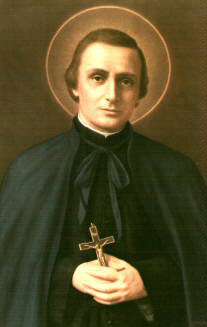 St. Peter Chanel: Saint of the Day for Sunday, April 28, 2024
 Prayer before a Crucifix: Prayer of the Day for Sunday, April 28, 2024
We ask you, humbly: don't scroll away.
Hi readers, it seems you use Catholic Online a lot; that's great! It's a little awkward to ask, but we need your help. If you have already donated, we sincerely thank you. We're not salespeople, but we depend on donations averaging $14.76 and fewer than 1% of readers give. If you donate just $5.00, the price of your coffee, Catholic Online School could keep thriving. Thank you.Help Now >

Copyright 2024 Catholic Online. All materials contained on this site, whether written, audible or visual are the exclusive property of Catholic Online and are protected under U.S. and International copyright laws, © Copyright 2024 Catholic Online. Any unauthorized use, without prior written consent of Catholic Online is strictly forbidden and prohibited.
Catholic Online is a Project of Your Catholic Voice Foundation, a Not-for-Profit Corporation. Your Catholic Voice Foundation has been granted a recognition of tax exemption under Section 501(c)(3) of the Internal Revenue Code. Federal Tax Identification Number: 81-0596847. Your gift is tax-deductible as allowed by law.