 Hi readers, it seems you use Catholic Online a lot; that's great! It's a little awkward to ask, but we need your help. If you have already donated, we sincerely thank you. We're not salespeople, but we depend on donations averaging $14.76 and fewer than 1% of readers give. If you donate just $5.00, the price of your coffee, Catholic Online School could keep thriving. Thank you. Help Now >
First Council of Constantinople
FREE Catholic Classes
(SECOND GENERAL COUNCIL.)
This council was called in May, 381, by Emperor Theodosius, to provide for a Catholic succession in the patriarchal See of Constantinople, to confirm the Nicene Faith, to reconcile the semi-Arians with the Church, and to put an end to the Macedonian heresy.
Originally it was only a council of the Orient; the arguments of Baronius (ad an. 381, nos. 19, 20) to prove that it was called by Pope Damasus are invalid ( Hefele - Leclercq, Hist. des Conciles, Paris, 1908, II, 4). It was attended by 150 Catholic and 36 heretical ( Semi-Arian, Macedonian) bishops, and was presided over by Meletius of Antioch ; after his death, by the successive Patriarchs of Constantinople, St. Gregory Nazianzen and Nectarius.
Its first measure was to confirm St. Gregory Nazianzen as Bishop of Constantinople. The Acts of the council have almost entirely disappeared, and its proceedings are known chiefly through the accounts of the ecclesiastical historians Socrates, Sozomen, and Theodoret. There is good reason to believe that it drew up a formal treatise ( tomos ) on the Catholic doctrine of the Trinity, also against Apollinarianism ; this important document has been lost, with the exception of the first canon of the council and its famous creed (Nicaeano-Constantinopolitanum). The latter is traditionally held to be an enlargement of the Nicene Creed, with emphasis on the Divinity of the Holy Spirit. It seems, however, to be of earlier origin, and was probably composed (369-73) by St. Cyril of Jerusalem as an expression of the faith of that Church (Bois), though its adoption by this council gave it special authority, both as a baptismal creed and as a theological formula. Recently Harnack (Realencyklopadie fur prot. Theol. und Kirche, 3rd ed., XI, 12-28) has maintained, on apparently inconclusive grounds, that not till after the Council of Chalcedon (451) was this creed (a Jerusalem formula with Nicene additions) attributed to the Fathers of this council. At Chalcedon, indeed, it was twice recited and appears twice in the Acts of that council; it was also read and accepted at the Sixth General Council, held at Constantinople in 680. The very ancient Latin version of its text ( Mansi, Coll. Conc., III, 567) is by Dionysius Exiguus.

The Greeks recognize seven canons, but the oldest Latin versions have only four; the other three are very probably (Hefele) later additions.
- The first canon is an important dogmatic condemnation of all shades of Arianism, also of Macedonianism and Apollinarianism.
- The second canon renews the Nicene legislation imposing upon the bishops the observance of diocesan and patriarchal limits.
- The fourth canon declares invalid the consecration of Maximus, the Cynic philosopher and rival of St. Gregory of Nazianzus, as Bishop of Constantinople.
- The famous third canon declares that because Constantinople is New Rome the bishop of that city should have a pre-eminence of honour after the Bishop of Old Rome. Baronius wrongly maintained the non-authenticity of this canon, while some medieval Greeks maintained (an equally erroneous thesis) that it declared the bishop of the royal city in all things the equal of the pope. The purely human reason of Rome's ancient authority, suggested by this canon, was never admitted by the Apostolic See, which always based its claim to supremacy on the succession of St. Peter. Nor did Rome easily acknowledge this unjustifiable reordering of rank among the ancient patriarchates of the East. It was rejected by the papal legates at Chalcedon. St. Leo the Great (Ep. cvi in P.L., LIV, 1003, 1005) declared that this canon has never been submitted to the Apostolic See and that it was a violation of the Nicene order. At the Eighth General Council in 869 the Roman legates ( Mansi, XVI, 174) acknowledged Constantinople as second in patriarchal rank. In 1215, at the Fourth Lateran Council (op. cit., XXII, 991), this was formally admitted for the new Latin patriarch, and in 1439, at the Council of Florence , for the Greek patriarch ( Hefele - Leclercq, Hist. des Conciles, II, 25-27). The Roman correctores of Gratian (1582), at dist. xxii, c. 3, insert the words: "canon hic ex iis est quos apostolica Romana sedes a principio et longo post tempore non recipit."
We ask you, humbly: don't scroll away.
Hi readers, it seems you use Catholic Online a lot; that's great! It's a little awkward to ask, but we need your help. If you have already donated, we sincerely thank you. We're not salespeople, but we depend on donations averaging $14.76 and fewer than 1% of readers give. If you donate just $5.00, the price of your coffee, Catholic Online School could keep thriving. Thank you.Help Now >
 Hi readers, it seems you use Catholic Online a lot; that's great! It's a little awkward to ask, but we need your help. If you have already donated, we sincerely thank you. We're not salespeople, but we depend on donations averaging $14.76 and fewer than 1% of readers give. If you donate just $5.00, the price of your coffee, Catholic Online School could keep thriving. Thank you. Help Now >
Join the Movement
When you sign up below, you don't just join an email list - you're joining an entire movement for Free world class Catholic education.


-

-
Mysteries of the Rosary
-
St. Faustina Kowalska
-
Litany of the Blessed Virgin Mary
-
Saint of the Day for Wednesday, Oct 4th, 2023
-
Popular Saints
-
St. Francis of Assisi
-
Bible
-
Female / Women Saints
-
7 Morning Prayers you need to get your day started with God
-
Litany of the Blessed Virgin Mary


Sacrifices of Faith: The Pro-Life Legacies of St. Gianna and Jessica Hanna
-
How to love God by caring for our bodies
-
Pope Francis calls for negotiations to End Russia-Ukraine War
-
Pope Francis Contemplates Return to U.S. for United Nations Assembly Address
-
Pope Francis Calls on Faithful to Embrace Faith, Hope, and Charity in New Teaching Series


Daily Catholic
- Daily Readings for Sunday, April 28, 2024
- St. Peter Chanel: Saint of the Day for Sunday, April 28, 2024
- Prayer before a Crucifix: Prayer of the Day for Sunday, April 28, 2024
- Daily Readings for Saturday, April 27, 2024
- St. Zita: Saint of the Day for Saturday, April 27, 2024
- Prayer for the Dead # 2: Prayer of the Day for Saturday, April 27, 2024
 Daily Readings for Sunday, April 28, 2024
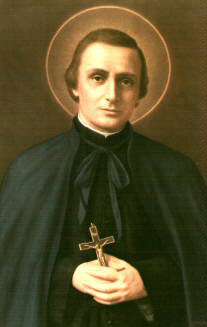 St. Peter Chanel: Saint of the Day for Sunday, April 28, 2024
 Prayer before a Crucifix: Prayer of the Day for Sunday, April 28, 2024
We ask you, humbly: don't scroll away.
Hi readers, it seems you use Catholic Online a lot; that's great! It's a little awkward to ask, but we need your help. If you have already donated, we sincerely thank you. We're not salespeople, but we depend on donations averaging $14.76 and fewer than 1% of readers give. If you donate just $5.00, the price of your coffee, Catholic Online School could keep thriving. Thank you.Help Now >

Copyright 2024 Catholic Online. All materials contained on this site, whether written, audible or visual are the exclusive property of Catholic Online and are protected under U.S. and International copyright laws, © Copyright 2024 Catholic Online. Any unauthorized use, without prior written consent of Catholic Online is strictly forbidden and prohibited.
Catholic Online is a Project of Your Catholic Voice Foundation, a Not-for-Profit Corporation. Your Catholic Voice Foundation has been granted a recognition of tax exemption under Section 501(c)(3) of the Internal Revenue Code. Federal Tax Identification Number: 81-0596847. Your gift is tax-deductible as allowed by law.