Honoré Tournély
FREE Catholic Classes
Theologian, b. Antibes, Provence, 28 August, 1658; d. at Paris, 26 December 1729. His parents were poor and obscure, but an uncle, a priest at Paris, invited him to that city and gave him a good education. On completing his philosophical and theological studies, he became a doctor of the Sorbonne in 1686, and two years later was sent by the king to the University of Douai to teach theology. Here, he distinguished himself by the brilliance of his lectures and by his zeal in opposing the Jansenists. He was even accused of forgeries in order to compromise them, but the proofs of this accusation have never been forthcoming. Four years later he was recalled to Paris, appointed professor of theology at the Sorbonne, made a canon of the Sainte-Chapelle, and given the Abbey of Plainpied ( Diocese of Bourges ). He taught with unvarying success for twenty-four years, and at Douai showed himself the determined opponent of the Jansenists. In return they published pamphlets and multiplied attacks and calumnies to discredit him and his teaching, especially after the publication of the Constitution "Unigenitus", in which Clement XI condemned (8 Sept. 1713) their error as manifested in the "Reflections morales" of Quesnel. Tournély was actively engaged in furthering the acceptance of this Constitution by the assembly of the French clergy , of which he was a consultor, and by the faculty of theology of which he was an influential member. When, after the death of Louis XIV (1 Sept., 1715) and after the connivance of Cardinal Noailles, the Jansenists became masters of the faculty of theology, they expunged from its registers the Bull "Unigenitus" and expelled from its meetings Tournély and a score of his friends among the doctors (Jan., 1716). It was only at the earnest intervention of the regent, the Duke of Orléans, that they were reinstated five years later (Feb., 1721).

Tournély had so far published nothing, at least in his own name, but he is regarded as the author or inspirer of several anonymous works against the Jansenists which appeared at that time. On his retirement he immediately began to revise his lectures and, at the request of Cardinal de Fleury and others, to publish them in 1725. With the common title "Præ Theologicæ", he issued in Latin the following treatises in octavo: "On God and His Attributes" (1725); "On grace" (1726); "On the Trinity" (1726); "On the Church" (1726); "On the Sacraments in general" (1727); "On the Incarnation" (1727); "On the Sacraments of Baptism and Confirmation" (1727); "On Penance and Extreme Unction" (1728); "On the Eucharist" (1729); "On Holy Orders" (1729); "On Marriage" (1730). The work passed through several editions, among others those of Paris (16 vols., in 8 vo, 1731-46), Cologne (10 vols., in fol., 1752-65). Several of these treatises have been abridged for use in seminaries, and they still appear in Tournély's name, but they are in reality the work of Montagne, Robinet, and Collet. Tournély's own work is still so important in extent and value that he may be regarded as on of the most notable theologians of his age. The learned Lafiteau, Bishop of Sisteron, even then declared him "one of the greatest men who has ever been in the Sorbonne", and his works were highly esteemed by St. Alphonsus Liguori . His chief merits are clearness of explanation, elegance of style, deep learning and orthodoxy ; his one defect was Gallicanism, for, like all French theologians at that time, he was a Gallican.
We ask you, humbly: don't scroll away.
Hi readers, it seems you use Catholic Online a lot; that's great! It's a little awkward to ask, but we need your help. If you have already donated, we sincerely thank you. We're not salespeople, but we depend on donations averaging $14.76 and fewer than 1% of readers give. If you donate just $5.00, the price of your coffee, Catholic Online School could keep thriving. Thank you.Help Now >
Join the Movement
When you sign up below, you don't just join an email list - you're joining an entire movement for Free world class Catholic education.


-

-
Mysteries of the Rosary
-
St. Faustina Kowalska
-
Litany of the Blessed Virgin Mary
-
Saint of the Day for Wednesday, Oct 4th, 2023
-
Popular Saints
-
St. Francis of Assisi
-
Bible
-
Female / Women Saints
-
7 Morning Prayers you need to get your day started with God
-
Litany of the Blessed Virgin Mary


Sacrifices of Faith: The Pro-Life Legacies of St. Gianna and Jessica Hanna
-
How to love God by caring for our bodies
-
Pope Francis calls for negotiations to End Russia-Ukraine War
-
Pope Francis Contemplates Return to U.S. for United Nations Assembly Address
-
Pope Francis Calls on Faithful to Embrace Faith, Hope, and Charity in New Teaching Series


Daily Catholic
- Daily Readings for Sunday, April 28, 2024
- St. Peter Chanel: Saint of the Day for Sunday, April 28, 2024
- Prayer before a Crucifix: Prayer of the Day for Sunday, April 28, 2024
- Daily Readings for Saturday, April 27, 2024
- St. Zita: Saint of the Day for Saturday, April 27, 2024
- Prayer for the Dead # 2: Prayer of the Day for Saturday, April 27, 2024
 Daily Readings for Sunday, April 28, 2024
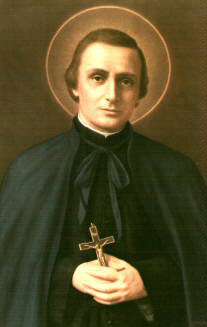 St. Peter Chanel: Saint of the Day for Sunday, April 28, 2024
 Prayer before a Crucifix: Prayer of the Day for Sunday, April 28, 2024
We ask you, humbly: don't scroll away.
Hi readers, it seems you use Catholic Online a lot; that's great! It's a little awkward to ask, but we need your help. If you have already donated, we sincerely thank you. We're not salespeople, but we depend on donations averaging $14.76 and fewer than 1% of readers give. If you donate just $5.00, the price of your coffee, Catholic Online School could keep thriving. Thank you.Help Now >
 Hi readers, it seems you use Catholic Online a lot; that's great! It's a little awkward to ask, but we need your help. If you have already donated, we sincerely thank you. We're not salespeople, but we depend on donations averaging $14.76 and fewer than 1% of readers give. If you donate just $5.00, the price of your coffee, Catholic Online School could keep thriving. Thank you. Help Now >

Copyright 2024 Catholic Online. All materials contained on this site, whether written, audible or visual are the exclusive property of Catholic Online and are protected under U.S. and International copyright laws, © Copyright 2024 Catholic Online. Any unauthorized use, without prior written consent of Catholic Online is strictly forbidden and prohibited.
Catholic Online is a Project of Your Catholic Voice Foundation, a Not-for-Profit Corporation. Your Catholic Voice Foundation has been granted a recognition of tax exemption under Section 501(c)(3) of the Internal Revenue Code. Federal Tax Identification Number: 81-0596847. Your gift is tax-deductible as allowed by law.