Rationale
FREE Catholic Classes
Rational, an episcopal humeral, a counterpart of the pallium, and like it worn over the chasuble. At the present time it is only used by the Bishops of Eichstätt, Paderborn, Toul, and Cracow. As worn by the Bishops of Eichstätt, Paderborn, and Toul, the rationale is in the form of a humeral collar, ornamented in the front and back with appendages. The one used by the Bishop of Cracow is made of two bands crossing the shoulder and joined at the breast and at the back, having the appearance of a discoid connected by medallions. During the Middle Ages the use of the rationale was affected by a number of German bishops, e.g. the Bishops of Würzburg, Ratisbon, Eichstätt, Naumburg, Halberstadt, Paderborn, Minden, Speier, Metz, Augsburg, Prague, Olmutz, and by the Bishops of Liège and Toul, whose dioceses at that time belonged to the German Empire. There is no account of this rationale being worn by any other bishops except a few in territories adjoining that of Germany (Cracow, Aquileia ). Of the above-mentioned bishops many only used it temporarily. The earliest mention of the rationale dates from the second half of the tenth century. The earliest representations are two pictures of Bishop Sigebert of Minden (1022-36), a miniature and an ivory tablet, which were both incorporated in a Mass Ordo belonging to Bishop Sigebert. The form of the rationale during the Middle Ages was manifold. Besides the two forms which have survived to our time, there were two other types, one closely resembling a Y-form pallium, the other like a T-form pallium, with the difference that instead of being striped vertically, it was simply tasselled in front and at the back. There were no rules governing the ornamentation of the rationale, as is clearly seen by representations of it on monuments, and by such rationales as have been preserved (Bamberg, Ratisbon, Eichstätt, Paderborn, Munich ). The edges were generally adorned with small bells.
We ask you, humbly: don't scroll away.
Hi readers, it seems you use Catholic Online a lot; that's great! It's a little awkward to ask, but we need your help. If you have already donated, we sincerely thank you. We're not salespeople, but we depend on donations averaging $14.76 and fewer than 1% of readers give. If you donate just $5.00, the price of your coffee, Catholic Online School could keep thriving. Thank you.Help Now >
The Rationale is an imitation and an equivalent of the pallium. That this is the case is evident, apart from other papal Bulls, from the Bull of John XIX (1027), conferring on the Patriarch Poppo of Aquileia the pallium and the rationale at the same time, with the condition that he could only wear the pallium on high festivals. It appears, however, that the humeral ornaments of the Jewish high-priests ( ephod, etc.) were not without influence in evoking this pontifical adornment, as may be seen from the original rationales preserved at Bamberg and Ratisbon. The name at least is derived from the appellation of the breast ornament of the high-priest Aaron.
From the tenth to the thirteenth century the rationale was also the name of an episcopal ornament similar to a large pectoral clasp, made of precious metal, ornamented with diamonds, and worn over the chasuble. It is frequently met with in pictures of the twelfth and thirteenth centuries, and is generally square, seldom round in form. Its use was discontinued in the course of the thirteenth century, and it is only at Reims that its use can be traced to the beginning of the sixteenth century. It originated undoubtedly in the pomp developed in episcopal vestments during the tenth century, and took its name from the breast ornament of the Jewish high-priest.


Join the Movement
When you sign up below, you don't just join an email list - you're joining an entire movement for Free world class Catholic education.


-

-
Mysteries of the Rosary
-
St. Faustina Kowalska
-
Litany of the Blessed Virgin Mary
-
Saint of the Day for Wednesday, Oct 4th, 2023
-
Popular Saints
-
St. Francis of Assisi
-
Bible
-
Female / Women Saints
-
7 Morning Prayers you need to get your day started with God
-
Litany of the Blessed Virgin Mary


Sacrifices of Faith: The Pro-Life Legacies of St. Gianna and Jessica Hanna
-
How to love God by caring for our bodies
-
Pope Francis calls for negotiations to End Russia-Ukraine War
-
Pope Francis Contemplates Return to U.S. for United Nations Assembly Address
-
Pope Francis Calls on Faithful to Embrace Faith, Hope, and Charity in New Teaching Series


Daily Catholic
- Daily Readings for Sunday, April 28, 2024
- St. Peter Chanel: Saint of the Day for Sunday, April 28, 2024
- Prayer before a Crucifix: Prayer of the Day for Sunday, April 28, 2024
- Daily Readings for Saturday, April 27, 2024
- St. Zita: Saint of the Day for Saturday, April 27, 2024
- Prayer for the Dead # 2: Prayer of the Day for Saturday, April 27, 2024
 Daily Readings for Sunday, April 28, 2024
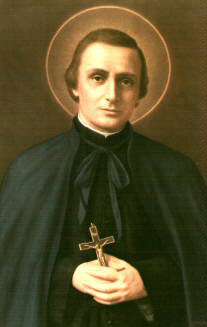 St. Peter Chanel: Saint of the Day for Sunday, April 28, 2024
 Prayer before a Crucifix: Prayer of the Day for Sunday, April 28, 2024
 Hi readers, it seems you use Catholic Online a lot; that's great! It's a little awkward to ask, but we need your help. If you have already donated, we sincerely thank you. We're not salespeople, but we depend on donations averaging $14.76 and fewer than 1% of readers give. If you donate just $5.00, the price of your coffee, Catholic Online School could keep thriving. Thank you. Help Now >



Copyright 2024 Catholic Online. All materials contained on this site, whether written, audible or visual are the exclusive property of Catholic Online and are protected under U.S. and International copyright laws, © Copyright 2024 Catholic Online. Any unauthorized use, without prior written consent of Catholic Online is strictly forbidden and prohibited.
Catholic Online is a Project of Your Catholic Voice Foundation, a Not-for-Profit Corporation. Your Catholic Voice Foundation has been granted a recognition of tax exemption under Section 501(c)(3) of the Internal Revenue Code. Federal Tax Identification Number: 81-0596847. Your gift is tax-deductible as allowed by law.