Matthew of Cracow
FREE Catholic Classes
Renowned scholar and preacher of the fourteenth century, b. at Cracow about 1335, d. at Pisa, 5 March, 1410. The view, once generally held, that he was descended from the Pomeranian noble family of Crakow, is now entirely discredited (cf. Sommererlad, "Matthäus von Krakow", 1891). His father was probably a notary in Cracow. Entering the University of Prague, Matthew graduated bachelor of arts in 1355 and master in 1357, and later filled for several terms the office of dean in the same faculty. In 1387 we first find documentary reference to him as professor of theology, and one manuscript speaks of him as "city preacher of Prague". About 1382 he headed an embassy from his university to Urban VI, before whom he delivered a dissertation in favour of reform. Accepting an invitation from the University of Heidelberg, he joined its professorial staff in 1395, and a year later was appointed rector. In 1395 he was named councillor to Ruprecht II, and the raising of Ruprecht III to the dignity of King of Rome in 1400 marks the beginning of Matthew's career as a statesman. Frequently employed by the king both at court and on embassies, he appeared at Rome in 1403 to solicit Boniface IX's confirmation of Reprechet's claims. On the elevation of Innocent VII to the papal throne in 1404, Matthew greeted him on behalf of Ruprecht. During the same year Matthew was appointed Bishop of Worms, but, beyond his settling of the dispute between the people and clergy of that city, we know little of his episcopal activity.
That he continued to reside in Heidelberg is very probable, and also that he continued to act as professor. Gregory XII wished to name him Cardinal Priest of S. Cyriaci in Thermis, but Matthew declined the honour. As ambassador of Ruprecht to the Council of Pisa , he displayed the greatest zeal on behalf of Gregory XII, whom he regarded as the legitimate occupant of the papal throne. He was a very prolific theological writer. Apart from Biblical commentaries, sermons, and works on current topics, the most important of his writings are: "De consolatione theologiae"; "De modo confitendi"; "De puritate conscientiae"; "De corpore Christi"; "De celebratione Missae". That he wrote "De arte moriendi"—to be distinguished from a similar work by Cardinal Capran—cannot be maintained with certainty, and recent investigation has shown beyond doubt that the work "De squaloribus curiae Romanae" is not from his hands (Scheuffgen, "Beiträge zur Gesch. Des grossen Schismas", 1889, p. 91).


Join the Movement
When you sign up below, you don't just join an email list - you're joining an entire movement for Free world class Catholic education.


-

-
Mysteries of the Rosary
-
St. Faustina Kowalska
-
Litany of the Blessed Virgin Mary
-
Saint of the Day for Wednesday, Oct 4th, 2023
-
Popular Saints
-
St. Francis of Assisi
-
Bible
-
Female / Women Saints
-
7 Morning Prayers you need to get your day started with God
-
Litany of the Blessed Virgin Mary

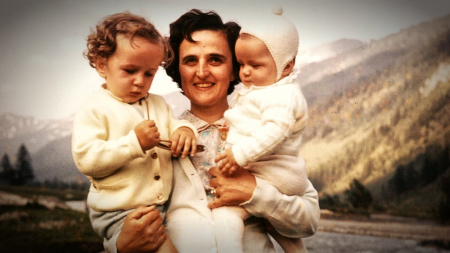
Sacrifices of Faith: The Pro-Life Legacies of St. Gianna and Jessica Hanna
-
How to love God by caring for our bodies
-
Pope Francis calls for negotiations to End Russia-Ukraine War
-
Pope Francis Contemplates Return to U.S. for United Nations Assembly Address
-
Pope Francis Calls on Faithful to Embrace Faith, Hope, and Charity in New Teaching Series

Daily Catholic
- Daily Readings for Monday, April 29, 2024
- St. Catherine of Siena: Saint of the Day for Monday, April 29, 2024
- Prayer for the Dead # 3: Prayer of the Day for Monday, April 29, 2024
- Daily Readings for Sunday, April 28, 2024
- St. Peter Chanel: Saint of the Day for Sunday, April 28, 2024
- Prayer before a Crucifix: Prayer of the Day for Sunday, April 28, 2024
 Daily Readings for Monday, April 29, 2024
 St. Catherine of Siena: Saint of the Day for Monday, April 29, 2024
 Prayer for the Dead # 3: Prayer of the Day for Monday, April 29, 2024
 Hi readers, it seems you use Catholic Online a lot; that's great! It's a little awkward to ask, but we need your help. If you have already donated, we sincerely thank you. We're not salespeople, but we depend on donations averaging $14.76 and fewer than 1% of readers give. If you donate just $5.00, the price of your coffee, Catholic Online School could keep thriving. Thank you. Help Now >
We ask you, humbly: don't scroll away.
Hi readers, it seems you use Catholic Online a lot; that's great! It's a little awkward to ask, but we need your help. If you have already donated, we sincerely thank you. We're not salespeople, but we depend on donations averaging $14.76 and fewer than 1% of readers give. If you donate just $5.00, the price of your coffee, Catholic Online School could keep thriving. Thank you.Help Now >

Copyright 2024 Catholic Online. All materials contained on this site, whether written, audible or visual are the exclusive property of Catholic Online and are protected under U.S. and International copyright laws, © Copyright 2024 Catholic Online. Any unauthorized use, without prior written consent of Catholic Online is strictly forbidden and prohibited.
Catholic Online is a Project of Your Catholic Voice Foundation, a Not-for-Profit Corporation. Your Catholic Voice Foundation has been granted a recognition of tax exemption under Section 501(c)(3) of the Internal Revenue Code. Federal Tax Identification Number: 81-0596847. Your gift is tax-deductible as allowed by law.