We ask you, humbly: don't scroll away.
Hi readers, it seems you use Catholic Online a lot; that's great! It's a little awkward to ask, but we need your help. If you have already donated, we sincerely thank you. We're not salespeople, but we depend on donations averaging $14.76 and fewer than 1% of readers give. If you donate just $5.00, the price of your coffee, Catholic Online School could keep thriving. Thank you.Help Now >
Lector
FREE Catholic Classes
A lector (reader) in the West is a clerk having the second of the four minor orders. In all Eastern Churches also, readers are ordained to a minor order preparatory to the diaconate. The primary reason for a special class of readers was the need of some persons sufficiently educated to be able to read the books in church, for the Christians continued the Jewish practice of reading the Sacred Books publicly. The first mention of a Christian liturgical reader is by Justin Martyr (d. about 165) in I Apol., lxvii, 3, 4. The homily known as "II Clem. ad Corinthios" also contains a reference to a lector, anaginoskon (xix, 1). The position of reader was honourable and dignified. It involved a higher standard of education than that of most offices. Although Justin says that the bishop preached the sermon, it appears that the reader himself often went on to expound what he had read. As the idea obtained that a special blessing and dedication should be given to everyone who performs an office for the Church, the reader too was instituted by prayers and some ceremony. Readers were blessed and set apart, as were the fossores who dug graves, the notarii who kept registers, and widows. All the group of rituals that depend on the "Apostolic Constitutions" contain the rite of ordaining readers. "Apost. Const.", vii, xxii, tells the bishop to ordain a reader by laying on his hand and saying a prayer, which is given. The derived documents however forbid an imposition of hands. ("Epitome Const. Ap.", xiii; Funk, "Didascalia", Paderborn, 1905, II, p. 82; see also the "Egyptian Church Order", V, ib., p. 105).

During the first centuries all the lessons in the liturgy, including the Epistle and Gospel, were read by the lector. Cornelius I (251-53) in a letter to Fabius of Antioch mentions that the Church of Rome has forty-two acolytes and fifty-two exorcists, readers and doorkeepers. ( Denzinger, "Enchiridion", n. 45). In the fourth century in Africa the Church of Cirta had four priests, three deacons, four subdeacons, and seven readers. The account of the persecution ("Gesta apud Zenophilum" printed in the appendix to Optatus of Mileve in the Vienna edition of "Corp. Script. eccl. lat.", XXVI, 185-97) describes how the readers kept the sacred books which the magistrate demanded to be given up (p. 187). An old set of Western canons, ascribed (wrongly) to a supposed Council of Carthage in 398, but really of the sixth century, gives forms for all ordinations. Canon 8 is about our subject: "When a reader is ordained let the bishop speak about him ( faciat de illo verbum ) to the people, pointing out his faith and life and skill. After this, while the people look on, let him give him the book from which he is to read, saying to him: Receive this and be the spokesman ( relator ) of the word of God and you shall have, if you do your work faithfully and usefully, a part with those who have administered the word of God " ( Denzinger, op. cit., n. 156). But gradually the lectorate lost all importance. The deacon obtained the office of reading the Gospel; in the West the Epistle became the privilege of the subdeacon. In the Eastern Churches this and other lessons are still supposed to be read by a lector, but everywhere his office (as all minor orders ) may be supplied by a layman. The lector is still mentioned twice in the Roman Missal. In the rubrics at the beginning it is said that if Mass be sung without deacon and subdeacon a lector wearing a surplice may sing the Epistle in the usual place; but at the end he does not kiss the celebrant's hand (Ritus celebr. Missam", vi, 8). On Good Friday the morning service begins with a prophecy read by a lector at the place where the Epistle is usually read (first rubric on Good Friday ).
Everywhere the order of reader has become merely a stepping-stone to major orders, and a memory of early days. In the Roman Rite in is the second minor order ( Ostiarius, Lector, Exorcista, Acolythus ). The minor orders are conferred during Mass after the first Lesson; but they may be given apart from Mass, on Sundays or doubles, in the morning. The lectorate involves no obligation of celibacy or of any other kind. The Byzantine Office will be found in the "Euchologion" ( Euchologion to mega , Venetian 8th edition, 1898, pp. 186-87). The Armenians (Gregorian and Uniate) have adopted the Roman system of four minor orders exactly. Their rite of ordaining a reader also consists essentially in handing to him the book of the Epistles.

We ask you, humbly: don't scroll away.
Hi readers, it seems you use Catholic Online a lot; that's great! It's a little awkward to ask, but we need your help. If you have already donated, we sincerely thank you. We're not salespeople, but we depend on donations averaging $14.76 and fewer than 1% of readers give. If you donate just $5.00, the price of your coffee, Catholic Online School could keep thriving. Thank you.Help Now >
 Hi readers, it seems you use Catholic Online a lot; that's great! It's a little awkward to ask, but we need your help. If you have already donated, we sincerely thank you. We're not salespeople, but we depend on donations averaging $14.76 and fewer than 1% of readers give. If you donate just $5.00, the price of your coffee, Catholic Online School could keep thriving. Thank you. Help Now >
Join the Movement
When you sign up below, you don't just join an email list - you're joining an entire movement for Free world class Catholic education.


-

-
Mysteries of the Rosary
-
St. Faustina Kowalska
-
Litany of the Blessed Virgin Mary
-
Saint of the Day for Wednesday, Oct 4th, 2023
-
Popular Saints
-
St. Francis of Assisi
-
Bible
-
Female / Women Saints
-
7 Morning Prayers you need to get your day started with God
-
Litany of the Blessed Virgin Mary


Sacrifices of Faith: The Pro-Life Legacies of St. Gianna and Jessica Hanna
-
How to love God by caring for our bodies
-
Pope Francis calls for negotiations to End Russia-Ukraine War
-
Pope Francis Contemplates Return to U.S. for United Nations Assembly Address
-
Pope Francis Calls on Faithful to Embrace Faith, Hope, and Charity in New Teaching Series


Daily Catholic
- Daily Readings for Sunday, April 28, 2024
- St. Peter Chanel: Saint of the Day for Sunday, April 28, 2024
- Prayer before a Crucifix: Prayer of the Day for Sunday, April 28, 2024
- Daily Readings for Saturday, April 27, 2024
- St. Zita: Saint of the Day for Saturday, April 27, 2024
- Prayer for the Dead # 2: Prayer of the Day for Saturday, April 27, 2024
 Daily Readings for Sunday, April 28, 2024
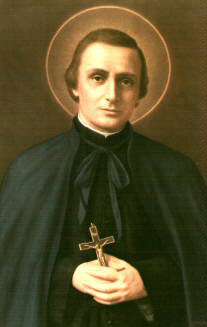 St. Peter Chanel: Saint of the Day for Sunday, April 28, 2024
 Prayer before a Crucifix: Prayer of the Day for Sunday, April 28, 2024



Copyright 2024 Catholic Online. All materials contained on this site, whether written, audible or visual are the exclusive property of Catholic Online and are protected under U.S. and International copyright laws, © Copyright 2024 Catholic Online. Any unauthorized use, without prior written consent of Catholic Online is strictly forbidden and prohibited.
Catholic Online is a Project of Your Catholic Voice Foundation, a Not-for-Profit Corporation. Your Catholic Voice Foundation has been granted a recognition of tax exemption under Section 501(c)(3) of the Internal Revenue Code. Federal Tax Identification Number: 81-0596847. Your gift is tax-deductible as allowed by law.