Jerome Gratian
FREE Catholic Classes
Spiritual director of St. Teresa and first Provincial of the Discalced Carmelites ; born at Valladolid, 6 June, 1545; died at Brussels, 21 September, 1614. The son of Diego Gracian de Aldorete, secretary to Charles V and Philip II, and of Jane de Antisco, daughter of the Polish ambassador at the Spanish Court, he received his early education in his native town and at the Jesuit College in Madrid. He afterwards studied philosophy and theology at Alcalá where he took his degrees and was ordained priest in 1569. The position of his family, his talents and virtues would have opened for him the door to the highest dignities, but, having become acquainted with some Teresian nuns, he took the habit of the Discalced Carmelites at Pastrana, 25 March, 1572, under the name of Jerome of the Mother of God. Even during his novitiate he was employed in the direction of souls and the administration of the convent, and, almost immediately after his profession (28 March, 1573), was nominated pro-vicar apostolic of the Calced Carmelites of the Province of Andalusia. This province, which for many years had given trouble, resented the nomination of one who had only just entered the order, and offered a stubborn resistance to his regulations, even after his faculties had been confirmed and extended by the Nuncio Hormaneto. In virtue of these same faculties Gratian founded a convent of Discalced Carmelites at Seville, of which he became prior, and approved of the establishment of several other convents of friars as well as of nuns.
We ask you, humbly: don't scroll away.
Hi readers, it seems you use Catholic Online a lot; that's great! It's a little awkward to ask, but we need your help. If you have already donated, we sincerely thank you. We're not salespeople, but we depend on donations averaging $14.76 and fewer than 1% of readers give. If you donate just $5.00, the price of your coffee, Catholic Online School could keep thriving. Thank you.Help Now >
The chapter of 1575, listening to the complaints of the Andalusians, decided to dissolve the reformed convents, but the nuncio gave Gratian fresh powers, and for a while the reform continued to spread. Hormaneto was succeeded by Sega (June, 1577), who, prejudiced by false rumours, turned against the followers of St. Teresa. Gratian was censured and relegated to the convent of Alcalá, and the other leading members of the reform suffered similar punishments, until at length Philip II intervened. The next chapter general (1580) granted the Discalced Carmelites canonical approbation, and Gratian became their superior. Ever since he had first met St. Teresa (1575), he had remained her director, to whom, at the command of Our Lord, she made a personal vow of obedience, while Gratian in all his works guided himself by the lights of the saint. In her books and in numerous letters she bears testimony to their agreement in spiritual as well as administrative matters; they were also at one in favouring the active life, the care of souls, and missionary work. After St. Teresa's death a party, calling themselves zelanti , came into prominence, with Nicholas Doria at their head, whose ideal of religious life consisted in a rigid observance of the rule to the exclusion of exterior activity. Although St. John of the Cross and other prominent men were on Gratian's side, the opposite party came into office in 1585, and Gratian was charged with having introduced mitigations and novelties. In order to give effect to his views Doria introduced a new kind of government which concentrated all power, even in details, in the hands of a committee under his own presidency.
Great was the consternation among the moderate party, greater still that of the nuns, who resented any interference in their affairs. Through the instrumentality of St. John of the Cross and Father Gratian, the nuns obtained from Rome approval of St. Teresa's constitutions, whereupon Doria resolved to exclude the nuns from the order. He also understood that so long as the opposition was being led by Gratian ( St. John of the Cross having meanwhile died) the new government could never come into force. On pretext, therefore, that his writings reflected unfavourably on the superiors, Gratian was summoned to Madrid, and, the informations taken against him having been materially altered by a personal enemy, he -- the director and right hand of St. Teresa, the soul of her reform, and for ten years its superior -- was expelled from the order on 17 February, 1592. This sentence, based on falsified evidence, was confirmed by the king, the nuncio, and even by the authorities at Rome, who commanded Gratian to enter some other order.

The Carthusians, Capuchins, and the Dominicans would not receive him, but the Augustinians consented to employ him in the foundation of some reformed convents. The ship, however, which was to carry him from Gaeta to Rome, was taken by pirates and he was made prisoner. Working among the Christian slaves in the bagnio at Tunis, he strengthened those who were wavering, reconciled apostates at the risk of his life, and liberated many with the alms he succeeded in collecting. After eighteen months' captivity he obtained his freedom and returned to Rome. Clement VIII, to whom on a former occasion he had revealed secrets made known to him in prayer, hearing of his works and sufferings, exclaimed: "This man is a saint", and caused the process of expulsion to be reexamined and the sentence to be rescinded (6 March 1596). But, as his return to the Discalced Carmelites would have revived the former dissensions, Gratian was affiliated to the Calced Friars with all the honours and privileges, and the right to practise the Rule of the Reform. He was sent to Ceuta and Tetuan to preach the Jubilee (1600-1605), proceeded afterwards to Valladolid to assist his dying mother, and was finally called to Brussels by his friend and protector, Archduke Albers (1606). There he continued a life of self-abnegation and apostolic zeal. Buried in the chapter-house of the Calced Carmelites at Brussels, his remains were repeatedly transferred, but finally lost during the Revolution.


Join the Movement
When you sign up below, you don't just join an email list - you're joining an entire movement for Free world class Catholic education.


-

-
Mysteries of the Rosary
-
St. Faustina Kowalska
-
Litany of the Blessed Virgin Mary
-
Saint of the Day for Wednesday, Oct 4th, 2023
-
Popular Saints
-
St. Francis of Assisi
-
Bible
-
Female / Women Saints
-
7 Morning Prayers you need to get your day started with God
-
Litany of the Blessed Virgin Mary

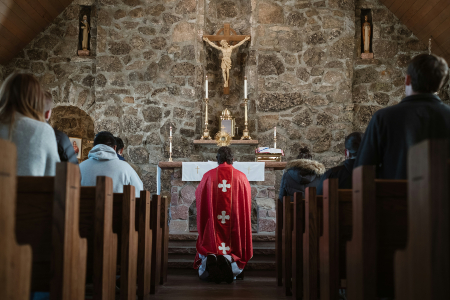
U.S. Catholic Parishes Experience Resurgence of Traditional Practices
-
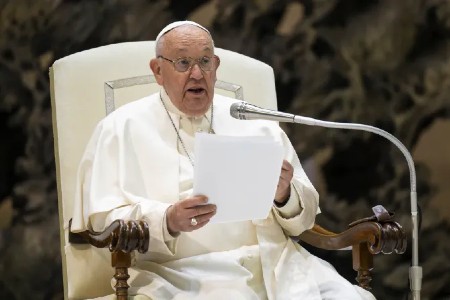
Pope Francis Urges Faith and Prayers for Peace
-
Florida Welcomes Volunteer Chaplains to Public Schools
-
10 Fascinating Details About St. Joseph the Worker: Celebrating His Feast Day - May 1
-
St. Joseph the Worker: Model for Men, Young and Old

Daily Catholic
- Daily Readings for Thursday, May 02, 2024
- St. Athanasius: Saint of the Day for Thursday, May 02, 2024
- The Our Father: Prayer of the Day for Thursday, May 02, 2024
- Daily Readings for Wednesday, May 01, 2024
- St. Marculf: Saint of the Day for Wednesday, May 01, 2024
- To Saint Peregrine: Prayer of the Day for Wednesday, May 01, 2024
 Daily Readings for Thursday, May 02, 2024
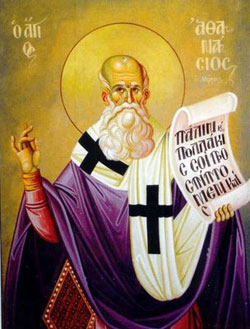 St. Athanasius: Saint of the Day for Thursday, May 02, 2024
 The Our Father: Prayer of the Day for Thursday, May 02, 2024

 Hi readers, it seems you use Catholic Online a lot; that's great! It's a little awkward to ask, but we need your help. If you have already donated, we sincerely thank you. We're not salespeople, but we depend on donations averaging $14.76 and fewer than 1% of readers give. If you donate just $5.00, the price of your coffee, Catholic Online School could keep thriving. Thank you. Help Now >

Copyright 2024 Catholic Online. All materials contained on this site, whether written, audible or visual are the exclusive property of Catholic Online and are protected under U.S. and International copyright laws, © Copyright 2024 Catholic Online. Any unauthorized use, without prior written consent of Catholic Online is strictly forbidden and prohibited.
Catholic Online is a Project of Your Catholic Voice Foundation, a Not-for-Profit Corporation. Your Catholic Voice Foundation has been granted a recognition of tax exemption under Section 501(c)(3) of the Internal Revenue Code. Federal Tax Identification Number: 81-0596847. Your gift is tax-deductible as allowed by law.