Federigo Fregoso
FREE Catholic Classes
Cardinal ; b. at Genoa, about 1480; d. 22 July, 1541; belonged to the Fregosi, one of the four great burgess families who from the end of the fourteenth century gave many doges to the republic. Federigo was the son of Agostino Fregoso, governor of Genoa in 1488 for Ludovic Moro, and of Gentilla de Montefeltre, niece of Guidobaldo, Duke of Urbino. His brother, Ottaviano, was Doge of Genoa. Having spent his youth at the court of his uncle, the Duke of Urbino, he took Holy orders, and in 1507 received from Julius II the Archbishopric of Salerno. But the King of Spain having refused to recognize him because of his sympathies with France, the Pope promised him the See of Gubbio. At the court of Urbino, Federigo had received a good classical education, and had allied himself with such humanists as Bembo and Baldassare Castiglione. Every day he withdrew himself from his occupations in order to devote several hours to the study of the ancients. Nevertheless, circumstances were to make him a man of action.
In 1510, after the troubles in Genoa and the victory of the Adorni, Federigo was exiled and compelled to seek refuge at Rome. Three years later, the Fregosi returned to Genoa, Ottaviano was elected Doge, and Federigo, having become his chief counsellor, was placed at the head of the army, and defended the republic against internal dangers (revolts of the Adorni and the Fieschi) and external dangers (suppression of the Barbary piracy). Cortogoli, a corsair from Tunis, blockaded the coast with a squadron, and within a few days had captured eighteen merchantmen. Being given the command of the Genoese fleet, in which Andrea Doria was serving, Federigo surprised Cortogoli before Bizerta, effected a descent on the island of Djerba and returned to Genoa with great booty. The Fregosi had recognized Francis I, King of France , as Lord of Genoa. In 1522, Charles V besieged the city. Federigo directed the defence and was wounded. The Spaniards having taken the city by assault, he was compelled to seek safety on a French vessel. Francis I accorded him a warm reception and gave him the Abbey of St. Benignus at Dijon. Here he devoted himself to the study of Greek and Hebrew, but he had quarrels with the monks, who could not endure his severity, and he returned to Italy. In 1529 he resigned the See of Salerno and was named titular Bishop of Gubbio. In 1539 Paul III made him a cardinal-priest, with the title of St. John and St. Paul. He died at Gubbio, in 1541, mourned by the people of his diocese, who had named him, "the father of the poor ". He wrote several edifying works, and some of his letters are in the collections of Bembo and Baldassare Castiglione.
We ask you, humbly: don't scroll away.
Hi readers, it seems you use Catholic Online a lot; that's great! It's a little awkward to ask, but we need your help. If you have already donated, we sincerely thank you. We're not salespeople, but we depend on donations averaging $14.76 and fewer than 1% of readers give. If you donate just $5.00, the price of your coffee, Catholic Online School could keep thriving. Thank you.Help Now >
 Hi readers, it seems you use Catholic Online a lot; that's great! It's a little awkward to ask, but we need your help. If you have already donated, we sincerely thank you. We're not salespeople, but we depend on donations averaging $14.76 and fewer than 1% of readers give. If you donate just $5.00, the price of your coffee, Catholic Online School could keep thriving. Thank you. Help Now >
Join the Movement
When you sign up below, you don't just join an email list - you're joining an entire movement for Free world class Catholic education.


-

-
Mysteries of the Rosary
-
St. Faustina Kowalska
-
Litany of the Blessed Virgin Mary
-
Saint of the Day for Wednesday, Oct 4th, 2023
-
Popular Saints
-
St. Francis of Assisi
-
Bible
-
Female / Women Saints
-
7 Morning Prayers you need to get your day started with God
-
Litany of the Blessed Virgin Mary

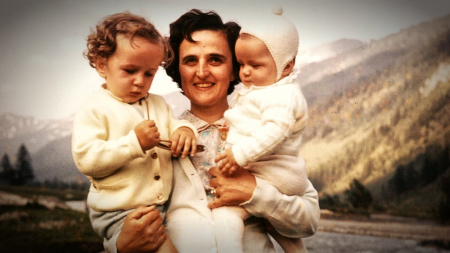
Sacrifices of Faith: The Pro-Life Legacies of St. Gianna and Jessica Hanna
-
How to love God by caring for our bodies
-
Pope Francis calls for negotiations to End Russia-Ukraine War
-
Pope Francis Contemplates Return to U.S. for United Nations Assembly Address
-
Pope Francis Calls on Faithful to Embrace Faith, Hope, and Charity in New Teaching Series

Daily Catholic
- Daily Readings for Sunday, April 28, 2024
- St. Peter Chanel: Saint of the Day for Sunday, April 28, 2024
- Prayer before a Crucifix: Prayer of the Day for Sunday, April 28, 2024
- Daily Readings for Saturday, April 27, 2024
- St. Zita: Saint of the Day for Saturday, April 27, 2024
- Prayer for the Dead # 2: Prayer of the Day for Saturday, April 27, 2024
 Daily Readings for Sunday, April 28, 2024
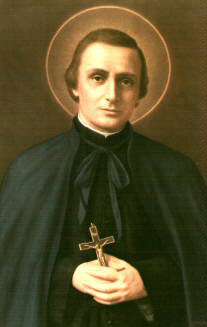 St. Peter Chanel: Saint of the Day for Sunday, April 28, 2024
 Prayer before a Crucifix: Prayer of the Day for Sunday, April 28, 2024


Copyright 2024 Catholic Online. All materials contained on this site, whether written, audible or visual are the exclusive property of Catholic Online and are protected under U.S. and International copyright laws, © Copyright 2024 Catholic Online. Any unauthorized use, without prior written consent of Catholic Online is strictly forbidden and prohibited.
Catholic Online is a Project of Your Catholic Voice Foundation, a Not-for-Profit Corporation. Your Catholic Voice Foundation has been granted a recognition of tax exemption under Section 501(c)(3) of the Internal Revenue Code. Federal Tax Identification Number: 81-0596847. Your gift is tax-deductible as allowed by law.