Georges Darboy
FREE Catholic Classes
Archbishop of Paris and ecclesiastical writer, b. at Fayl-Billot, near Langres, 1813; killed by Communists at Paris, 24 May, 1871. Ordained priest in 1836, he served for a time as curate of Notre-Dame at Saint-Dizier and as professor at the Grand Séminaire of Langres, then joined Mgr. Affre at Paris, 1845, where from "prêtre auxiliaire à la maison des carmes" and chaplain of the Lycée Henri-IV, he soon rose to the position of canon of Notre-Dame, vicar-general and archdeacon of Saint-Denis, having previously been made prothonotary Apostolic. In 1859 he was appointed to the See of Nancy . During his three years as incumbent of that see, he took a special interest in educational matters, established the Ecole-Saint-Léopold, enlarged the Grand Séminaire, and wrote (1862) his famous letter, "Sur la nécessité de l'étude". Promoted by an imperial decree of 10 January, 1863, to the Archbishopric of Paris, made vacant by the death of Mgr. Morlot, he consecrated within a year the basilica of Notre-Dame, then completely restored, and was honoured with the titles of Grand Almoner, Senator, and Imperial Councillor. Though lacking the independence of Mgr. Affre, the administrative skill of Mgr. Sibour, and the affability of Cardinal Morlot, Darboy was a learned, conscientious, and respected prelate. With the help of such men as Buquet, Isoard, Langénieux, Meignan, and Foulon, he gave a new impetus to the somewhat remiss administration of his aged predecessor. The Gallicanism of Darboy made him unduly subservient to imperial wishes and caused him to assume against the exemptions of the religious an attitude which Rome (1869) compelled him to abandon. It was his chief motive for siding, during the Vatican Council, with the minority which deemed inopportune the definition of papal infallibility, his reasons being more of a political than of a theological nature. Darboy was one of those who suggested diplomatic intervention as a means of ending difficulties. He left Rome before the final vote of 18 July, 1870, and expressed sentiments which, however, he generously retracted when, several months after the definition, he subscribed to it. During the siege of Paris Darboy showed himself a true pastor and won the admiration of all. Arrested 4 April, 1871, by order of the Commune, and confined to Mazas Prison, the best efforts of his friends failed to save him; he was shot at Roquette, 24 May, and died blessing his executioners. As soon as order could be restored a national funeral was celebrated for him and the other victims of the Commune. The Abbé Perraud delivered his eulogy at Paris, and Père Didon at Nancy. Darboy was the author of the following works: "OEuvres de saint Denys l'Aréopagite, traduites du grec" (Paris, 1845); "Les femmes de la Bible" (Paris, 1846-9); "Les saintes femmes" (Paris, 1850); "Lettres à Combalot" (Paris, 1851); "Jérusalem et la terre sainte" (Paris, 1852); "L'imitation de Jésus-Christ, traduction nouvelle" (Paris, 1852); "Statistique religieuse du diocèse de Paris" (Paris, 1856); "Saint Thomas Becket" (Paris, 1858). He also contributed to the "Correspondant" (1847-1855) and was for a year (1850) director of the "Moniteur Catholique". His pastoral works (2 vols., Paris, 1876) were edited by his biographer, Foulon.

We ask you, humbly: don't scroll away.
Hi readers, it seems you use Catholic Online a lot; that's great! It's a little awkward to ask, but we need your help. If you have already donated, we sincerely thank you. We're not salespeople, but we depend on donations averaging $14.76 and fewer than 1% of readers give. If you donate just $5.00, the price of your coffee, Catholic Online School could keep thriving. Thank you.Help Now >

Join the Movement
When you sign up below, you don't just join an email list - you're joining an entire movement for Free world class Catholic education.


-

-
Mysteries of the Rosary
-
St. Faustina Kowalska
-
Litany of the Blessed Virgin Mary
-
Saint of the Day for Wednesday, Oct 4th, 2023
-
Popular Saints
-
St. Francis of Assisi
-
Bible
-
Female / Women Saints
-
7 Morning Prayers you need to get your day started with God
-
Litany of the Blessed Virgin Mary

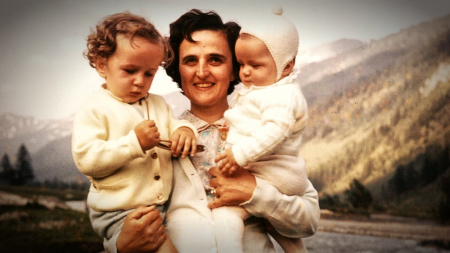
Sacrifices of Faith: The Pro-Life Legacies of St. Gianna and Jessica Hanna
-
How to love God by caring for our bodies
-
Pope Francis calls for negotiations to End Russia-Ukraine War
-
Pope Francis Contemplates Return to U.S. for United Nations Assembly Address
-
Pope Francis Calls on Faithful to Embrace Faith, Hope, and Charity in New Teaching Series


Daily Catholic
- Daily Readings for Sunday, April 28, 2024
- St. Peter Chanel: Saint of the Day for Sunday, April 28, 2024
- Prayer before a Crucifix: Prayer of the Day for Sunday, April 28, 2024
- Daily Readings for Saturday, April 27, 2024
- St. Zita: Saint of the Day for Saturday, April 27, 2024
- Prayer for the Dead # 2: Prayer of the Day for Saturday, April 27, 2024
 Daily Readings for Sunday, April 28, 2024
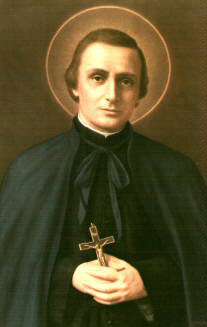 St. Peter Chanel: Saint of the Day for Sunday, April 28, 2024
 Prayer before a Crucifix: Prayer of the Day for Sunday, April 28, 2024
 Hi readers, it seems you use Catholic Online a lot; that's great! It's a little awkward to ask, but we need your help. If you have already donated, we sincerely thank you. We're not salespeople, but we depend on donations averaging $14.76 and fewer than 1% of readers give. If you donate just $5.00, the price of your coffee, Catholic Online School could keep thriving. Thank you. Help Now >

We ask you, humbly: don't scroll away.
Hi readers, it seems you use Catholic Online a lot; that's great! It's a little awkward to ask, but we need your help. If you have already donated, we sincerely thank you. We're not salespeople, but we depend on donations averaging $14.76 and fewer than 1% of readers give. If you donate just $5.00, the price of your coffee, Catholic Online School could keep thriving. Thank you.Help Now >

Copyright 2024 Catholic Online. All materials contained on this site, whether written, audible or visual are the exclusive property of Catholic Online and are protected under U.S. and International copyright laws, © Copyright 2024 Catholic Online. Any unauthorized use, without prior written consent of Catholic Online is strictly forbidden and prohibited.
Catholic Online is a Project of Your Catholic Voice Foundation, a Not-for-Profit Corporation. Your Catholic Voice Foundation has been granted a recognition of tax exemption under Section 501(c)(3) of the Internal Revenue Code. Federal Tax Identification Number: 81-0596847. Your gift is tax-deductible as allowed by law.