 Hi readers, it seems you use Catholic Online a lot; that's great! It's a little awkward to ask, but we need your help. If you have already donated, we sincerely thank you. We're not salespeople, but we depend on donations averaging $14.76 and fewer than 1% of readers give. If you donate just $5.00, the price of your coffee, Catholic Online School could keep thriving. Thank you. Help Now >
Boniface of Savoy
FREE Catholic Classes
Forty-sixth Archbishop of Canterbury and son of Thomas, Count of Savoy, date of birth uncertain; d. in Savoy, 14 July, 1270. While yet a child he became a Carthusian. In 1234, as sub-deacon, he was elected Bishop of Belley in Burgundy : and, in 1241, administered the Diocese of Valence. His connection with the royal house of England secured his promotion to the primacy. The Queen of Henry III was Eleanor, daughter of Berengar, Count of Provence, and Beatrice of Savoy. This Beatrice was the sister of the future archbishop. When St. Edmund died, in 1241, the Queen's uncle was elected. But Gregory IX and Celestine IV dying unexpectedly, it was not until the end of 1243 that the new Pope, Innocent IV , was able to confirm his election. In the following year Boniface went to England for the first time. He found his see in debt. The heavy taxation during the sequestration in St. Edmund's primacy had severely burdened its already slender resources. Therefore his first act was to make every economy, abolishing all sinecures and unnecessary offices connected with the archbishopric. He ordered the tenants and clergy to contribute towards the liquidation of the debt.
In 1244 he set out for the Council of Lyons, where he was consecrated (15 January, 1245) by the pope. His brother Philip, afterwards Count of Savoy, although not consecrated, held the archbishopric of Lyons and was in command of the papal troops. During the sitting of the council Boniface held a commission under him. He obtained from the pope the grant of the first-fruits of all vacant benefices in the Province of Canterbury during seven years, and his claim to levy a contribution from the whole province to meet the debt of the metropolitan see was allowed. In 1249 he returned to England and was enthroned with great pomp at Canterbury on All Saints' Day. The archbishop then began a personal visitation of his diocese, correcting abuses and levying fines. But, on extending his visitation to the dioceses of his suffragans, resistance was offered to him. In London the Dean and Canons of St. Paul's protested that the Bishop of London was their visitor and appealed. They were promptly excommunicated. On the following day the archbishop visited the Priory of St. Bartholomew. He was met by the sub-prior and brethren, who welcomed him as a prelate but not as a visitor. Like the clergy of St. Paul's they represented that they had their own bishop and would not submit to other jurisdiction without permission from him. The archbishop was so incensed that he felled the venerable sub-prior to the earth. This was more than the Londoners could stand from a foreigner, even were he their archbishop. They fell upon him, his vestments were torn in the struggle, and the coat of mail worn beneath them disclosed. He was rescued by his bodyguard and escaped by barge to Lambeth, where he proceeded to excommunicate the clergy of St. Bartholomew's and the Bishop of London.

He then announced his intention of holding a visitation at St. Albans. The suffragans met and resolved to resist him. The clergy of the province levied a tax upon themselves in order to proceed against him at Rome. Learning of these things he promptly set out for the Roman court. The result was a compromise, the pope confirming the right of visitation, but restricting its use. Godwin says of him that Boniface did three worthy things: he paid off a debt of 22,000 marks; he built and endowed the hospital at Maidstone; and he finished the great hall of the archbishop's palace.
Pope Gregory XVI, at the suit of Charles Albert of Savoy, King of Sardinia (1831-49), approved the cult of Boniface, Archbishop of Canterbury, as ab immemorabili .
Hi readers, it seems you use Catholic Online a lot; that's great! It's a little awkward to ask, but we need your help. If you have already donated, we sincerely thank you. We're not salespeople, but we depend on donations averaging $14.76 and fewer than 1% of readers give. If you donate just $5.00, the price of your coffee, Catholic Online School could keep thriving. Thank you. Help Now >
We ask you, humbly: don't scroll away.
Hi readers, it seems you use Catholic Online a lot; that's great! It's a little awkward to ask, but we need your help. If you have already donated, we sincerely thank you. We're not salespeople, but we depend on donations averaging $14.76 and fewer than 1% of readers give. If you donate just $5.00, the price of your coffee, Catholic Online School could keep thriving. Thank you.Help Now >
Join the Movement
When you sign up below, you don't just join an email list - you're joining an entire movement for Free world class Catholic education.


-

-
Mysteries of the Rosary
-
St. Faustina Kowalska
-
Litany of the Blessed Virgin Mary
-
Saint of the Day for Wednesday, Oct 4th, 2023
-
Popular Saints
-
St. Francis of Assisi
-
Bible
-
Female / Women Saints
-
7 Morning Prayers you need to get your day started with God
-
Litany of the Blessed Virgin Mary


Sacrifices of Faith: The Pro-Life Legacies of St. Gianna and Jessica Hanna
-
How to love God by caring for our bodies
-
Pope Francis calls for negotiations to End Russia-Ukraine War
-
Pope Francis Contemplates Return to U.S. for United Nations Assembly Address
-
Pope Francis Calls on Faithful to Embrace Faith, Hope, and Charity in New Teaching Series


Daily Catholic
- Daily Readings for Sunday, April 28, 2024
- St. Peter Chanel: Saint of the Day for Sunday, April 28, 2024
- Prayer before a Crucifix: Prayer of the Day for Sunday, April 28, 2024
- Daily Readings for Saturday, April 27, 2024
- St. Zita: Saint of the Day for Saturday, April 27, 2024
- Prayer for the Dead # 2: Prayer of the Day for Saturday, April 27, 2024
 Daily Readings for Sunday, April 28, 2024
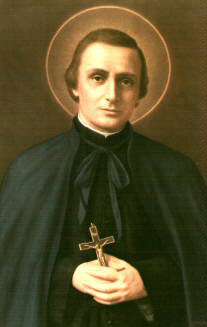 St. Peter Chanel: Saint of the Day for Sunday, April 28, 2024
 Prayer before a Crucifix: Prayer of the Day for Sunday, April 28, 2024
We ask you, humbly: don't scroll away.
Hi readers, it seems you use Catholic Online a lot; that's great! It's a little awkward to ask, but we need your help. If you have already donated, we sincerely thank you. We're not salespeople, but we depend on donations averaging $14.76 and fewer than 1% of readers give. If you donate just $5.00, the price of your coffee, Catholic Online School could keep thriving. Thank you.Help Now >



Copyright 2024 Catholic Online. All materials contained on this site, whether written, audible or visual are the exclusive property of Catholic Online and are protected under U.S. and International copyright laws, © Copyright 2024 Catholic Online. Any unauthorized use, without prior written consent of Catholic Online is strictly forbidden and prohibited.
Catholic Online is a Project of Your Catholic Voice Foundation, a Not-for-Profit Corporation. Your Catholic Voice Foundation has been granted a recognition of tax exemption under Section 501(c)(3) of the Internal Revenue Code. Federal Tax Identification Number: 81-0596847. Your gift is tax-deductible as allowed by law.