St. Gregory VII
Facts
Death: 1085
Author and Publisher - Catholic Online
Printable Catholic Saints PDFs
Shop St. Gregory VII
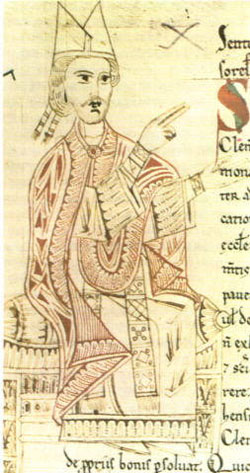
Gregory VII Born Hildebrand c. 1020 in Tuscany, Pope/St. Gregory VII was one of the great church reformers. Educated in Rome, Hildebrand was chaplain to Gregory VI, whose exile he shared. When Gregory VI died in 1047, Hildebrand entered a monastery where he remained until Leo IX called him to Rome to serve as treasurer of the church. Elected pope in 1073, Hildebrand took the name Gregory in honor of St. Gregory the Great and began to institute reforms against simony, clerical marriage (and/or unchastity), and lay investiture. The same year, he issued the Dictatus papae, which proclaimed the supremacy of the pope and avowed that the pope inherited the personal sanctity of St. Peter. Gregory's opposition to lay investiture led to conflict with Emperor Henry IV, who deposed Gregory at the Synod of Worms in 1076. Gregory promptly excommunicated Henry. The two were reconciled in 1077 at Canossa but had another falling out three years later. When Henry captured Rome in 1084, Robert Guiscard rescued the pope, who later fled to Monte Cassino to escape a popular rebellion against Guiscard. Gregory died in Salerno in 1085, and Paul V canonized him in 1606.
Come Grow With Us
Sign up and walk the Catholic journey with millions around the world.
Receive inspiring emails on saints, daily readings, and free faith-building resources—no cost, ever.
This could change the future of Catholic Online.
Watch Now
- 7 Morning Prayers
- Mysteries of the Rosary
- Litany of the Bl. Virgin Mary
- Popular Saints
- Popular Prayers
- Female Saints
- Saint Feast Days by Month
- Stations of the Cross
- St. Francis of Assisi
- St. Michael the Archangel
- The Apostles' Creed
- Unfailing Prayer to St. Anthony
- Pray the Rosary







Copyright 2026 Catholic Online. All materials contained on this site, whether written, audible or visual are the exclusive property of Catholic Online and are protected under U.S. and International copyright laws, © Copyright 2026 Catholic Online. Any unauthorized use, without prior written consent of Catholic Online is strictly forbidden and prohibited.
Catholic Online is a Project of Your Catholic Voice Foundation, a Not-for-Profit Corporation. Your Catholic Voice Foundation has been granted a recognition of tax exemption under Section 501(c)(3) of the Internal Revenue Code. Federal Tax Identification Number: 81-0596847. Your gift is tax-deductible as allowed by law.
