 Dear readers, Catholic Online was de-platformed by Shopify for our pro-life beliefs. They shut down our Catholic Online, Catholic Online School, Prayer Candles, and Catholic Online Learning Resources essential faith tools serving over 1.4 million students and millions of families worldwide. Our founders, now in their 70's, just gave their entire life savings to protect this mission. But fewer than 2% of readers donate. If everyone gave just $5, the cost of a coffee, we could rebuild stronger and keep Catholic education free for all. Stand with us in faith. Thank you. Help Now >
St. Pachomius
Facts
Birth: 292
Death: 348
Author and Publisher - Catholic Online
Printable Catholic Saints PDFs
Shop St. Pachomius
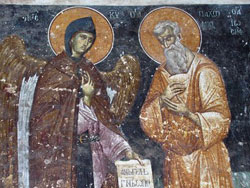
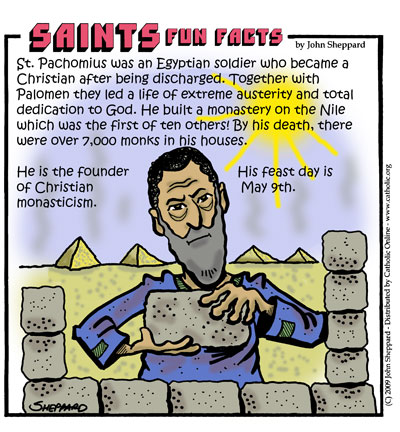
St. Pachomius was born about 292 in the Upeer Thebaid in Egypt and was inducted into the Emperor's army as a twenty-year-old. The great kindness of Christians at Thebes toward the soldiers became embedded in his mind and led to his conversion after his discharge. After being baptized, he became a disciple of an anchorite, Palemon, and took the habit. The two of them led a life of extreme austerity and total dedication to God; they combined manual labor with unceasing prayer both day and night. Later, Pachomius felt called to build a monastery on the banks of the Nile at Tabennisi; so about 318 Palemon helped him build a cell there and even remained with him for a while. In a short time some one hundred monks joined him and Pachomius organized them on principles of community living. So prevalent did the desire to emulate the life of Pachomius and his monks become, that the holy man was obliged to establish ten other monasteries for men and two nunneries for women. Before his death in 346, there were seven thousand monks in his houses, and his Order lasted in the East until the 11th century. St. Pachomius was the first monk to organize hermits into groups and write down a Rule for them. Both St. Basil and St. Benedict drew from his Rule in setting forth their own more famous ones. Hence, though St. Anthony is usually regarded as the founder of Christian monasticism, it was really St. Pachomius who began monasticism as we know it today. Other saints whose feast day is May 9th are St. Gregory Nazianzen and St. Beatus.
More Saints
 New Saints canonized by Pope Francis
FREE Saint Classes Printable Saint PDF's Light a Virtual Saint Candle
Join the Movement
When you sign up below, you don't just join an email list - you're joining an entire movement for Free world class Catholic education.
-

- Easter / Lent
- Ascension Day
- 7 Morning Prayers
- Mysteries of the Rosary
- Litany of the Bl. Virgin Mary
- Popular Saints
- Popular Prayers
- Female Saints
- Saint Feast Days by Month
- Stations of the Cross
- St. Francis of Assisi
- St. Michael the Archangel
- The Apostles' Creed
- Unfailing Prayer to St. Anthony
- Pray the Rosary


The Coup Against Trump: A Treasonous Conspiracy to Overthrow the United States

Back to School: Reclaiming the Catholic Family

The Law of Forgiveness: Hope for Every Heart
Daily Catholic
- Daily Readings for Monday, August 18, 2025
- St. Helena: Saint of the Day for Monday, August 18, 2025
- St. Christopher's Prayer for Strength: Prayer of the Day for Monday, August 18, 2025
- Daily Readings for Sunday, August 17, 2025
- St. Clare of Montefalco: Saint of the Day for Sunday, August 17, 2025
- Act of Faith: Prayer of the Day for Sunday, August 17, 2025
 Daily Readings for Monday, August 18, 2025
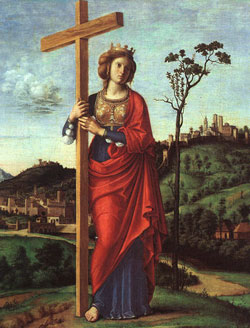 St. Helena: Saint of the Day for Monday, August 18, 2025
 St. Christopher's Prayer for Strength: Prayer of the Day for Monday, August 18, 2025
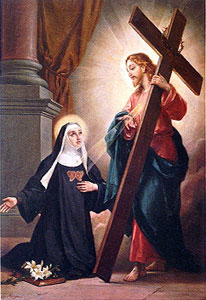 St. Clare of Montefalco: Saint of the Day for Sunday, August 17, 2025

Copyright 2025 Catholic Online. All materials contained on this site, whether written, audible or visual are the exclusive property of Catholic Online and are protected under U.S. and International copyright laws, © Copyright 2025 Catholic Online. Any unauthorized use, without prior written consent of Catholic Online is strictly forbidden and prohibited.
Catholic Online is a Project of Your Catholic Voice Foundation, a Not-for-Profit Corporation. Your Catholic Voice Foundation has been granted a recognition of tax exemption under Section 501(c)(3) of the Internal Revenue Code. Federal Tax Identification Number: 81-0596847. Your gift is tax-deductible as allowed by law.