 Dear readers, Catholic Online was de-platformed by Shopify for our pro-life beliefs. They shut down our Catholic Online, Catholic Online School, Prayer Candles, and Catholic Online Learning Resources essential faith tools serving over 2.2 million students and millions of families worldwide. Our founders, now in their 70's, just gave their entire life savings to protect this mission. But fewer than 2% of readers donate. If everyone gave just $5, the cost of a coffee, we could rebuild stronger and keep Catholic education free for all. Stand with us in faith. Thank you. DONATE TODAY >
St. Wilfrid
Facts
Birth: 633
Death: 710
Author and Publisher - Catholic Online
Printable Catholic Saints PDFs
Shop St. Wilfrid
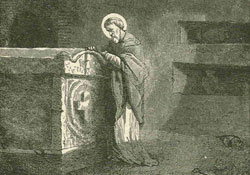
Born in Northumberland in 634, St. Wilfrid was educated at Lindesfarne and then spent some time in Lyons and Rome. Returning to England, he was elected abbot of Ripon in 658 and introduced the Roman rules and practices in opposition to the celtic ways of northern England. In 664, he was the architect of the definitive victory of the Roman party at the Conference of Whitby. He was appointed Bishop of York and after some difficulty finally took possession of his See in 669. He labored zealously and founded many monasteries of the Benedictine Order, but he was obliged to appeal to Rome in order to prevent the subdivision of his diocese by St. Theodore, Archbishop of Canterbury. While waiting for the case to be decided, he was forced to go into exile, and worked hard and long to evangelize the heathen south Saxons until his recall in 686. In 691, he had to retire again to the Midlands until Rome once again vindicated him. In 703, he resigned his post and retired to his monastery at Ripon where he spent his remaining time in prayer and penitential practices, until his death in 709. St. Wilfrid was an outstanding personage of his day, extremely capable and possessed of unbounded courage, remaining firm in his convictions despite running afoul of civil and ecclesiastical authorities. He helped bring the discipline of the English Church into line with that of Rome. He was also a dedicated pastor and a zealous and skilled missionary; his brief time spent in Friesland in 678-679 was the starting point for the great English mission to the Germanic peoples of continental Europe. His feast day is October 12th.
Come Grow With Us
Sign up and walk the Catholic journey with millions around the world.
Receive inspiring emails on saints, daily readings, and free faith-building resources—no cost, ever.
An important update for our readers.
Please Watch
- 7 Morning Prayers
- Mysteries of the Rosary
- Litany of the Bl. Virgin Mary
- Popular Saints
- Popular Prayers
- Female Saints
- Saint Feast Days by Month
- Stations of the Cross
- St. Francis of Assisi
- St. Michael the Archangel
- The Apostles' Creed
- Unfailing Prayer to St. Anthony
- Pray the Rosary








Copyright 2026 Catholic Online. All materials contained on this site, whether written, audible or visual are the exclusive property of Catholic Online and are protected under U.S. and International copyright laws, © Copyright 2026 Catholic Online. Any unauthorized use, without prior written consent of Catholic Online is strictly forbidden and prohibited.
Catholic Online is a Project of Your Catholic Voice Foundation, a Not-for-Profit Corporation. Your Catholic Voice Foundation has been granted a recognition of tax exemption under Section 501(c)(3) of the Internal Revenue Code. Federal Tax Identification Number: 81-0596847. Your gift is tax-deductible as allowed by law.
