St. Venantius Fortunatus
Facts
Death: 610
Author and Publisher - Catholic Online
Printable Catholic Saints PDFs
Shop St. Venantius Fortunatus
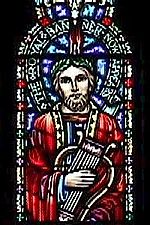
Gallic poet and (briefly) serving bishop of Poitiers, France. Known in full as Venantius Clementianus Fortunatus, he was born in Trevise, near Venice, Italy, and studied at Ravenna. He suffered from some ailment of the eye, but thanks to St. Martin of Tours, he was able to embark upon a pilgrimage in 565 which brought him to Mainz, Cologne, and Trier, Gennany, and to Metz and the Moselle, France. He reached the court of King Sigebert (r. sixth century) at Metz in 566 and there was much praise for his poetry, especially his eulogies. Venantius next journeyed to Verdun, Reims, Soissons, Paris, and finaIly Tours, where he prayed at the tomb of St. Martin. Moving on to Poitiers, he entered into the service of Queen Rodegunda who was now living as a nun, acting as her secretary until her death in August 587. Shortly before his death, he was named bishop of Potiers. A brilliant poet, considered a transitional figure in literature between the ancient and medieval periods, Venanhus was a prolific writer: six poems on the Cross, including the two famous works Vexilla Regia and Pange Lzngua Gloijosi; eleven books of poems; a metrical life of St. Martin of Tours; the prose lives of eleven Gallic saints, including the Vita Rodegundis; and the elegy DeExcidie Thui'ingiae.
Come Grow With Us
Sign up and walk the Catholic journey with millions around the world.
Receive inspiring emails on saints, daily readings, and free faith-building resources—no cost, ever.
Easter Was Just the Beginning - Please Watch
- Easter / Lent
- 5 Lenten Prayers
- Ash Wednesday
- 7 Morning Prayers
- Mysteries of the Rosary
- Litany of the Bl. Virgin Mary
- Popular Saints
- Popular Prayers
- Female Saints
- Saint Feast Days by Month
- Stations of the Cross
- St. Francis of Assisi
- St. Michael the Archangel
- The Apostles' Creed
- Unfailing Prayer to St. Anthony
- Pray the Rosary








Copyright 2026 Catholic Online. All materials contained on this site, whether written, audible or visual are the exclusive property of Catholic Online and are protected under U.S. and International copyright laws, © Copyright 2026 Catholic Online. Any unauthorized use, without prior written consent of Catholic Online is strictly forbidden and prohibited.
Catholic Online is a Project of Your Catholic Voice Foundation, a Not-for-Profit Corporation. Your Catholic Voice Foundation has been granted a recognition of tax exemption under Section 501(c)(3) of the Internal Revenue Code. Federal Tax Identification Number: 81-0596847. Your gift is tax-deductible as allowed by law.
