C. Vettius Aquilinus Juvencus
FREE Catholic Classes
Christian Latin poet of the fourth century. Of his life we know only what St. Jerome tells us (De viris, lxxxiv; cf. Chron., ad an. 2345; Epist. lxx, 5; In Matt., I, ii, 11). He was a Spaniards of very good birth, became a priest, and wrote in the time of Constantine. From one passage in his work (II, 806, sq.) and from St. Jerome's Chronicle it must be inferred that he wrote about the year 330. His poem, in dactylic hexameters, is entitled "Evangeliorum libri" (The Gospels ). It is a history of Christ according to the Gospels, particularly that of St. Matthew. He goes to the other Evangelists for what he does not find in St. Matthew -- as the story of the Infancy, which he takes from St. Luke. He follows his model very closely, "almost literally", as St. Jerome says. The whole problem for him is to render the Gospel text into easy language conformable to the tradition of the Latin poets, and borrowed especially from Virgil. His task is of no higher order than might be accomplished by a proficient schoolboy; it permits of little originality beyond that exhibited in new words composed, or derived, according to familiar types ( auricolor, flammiuomus, flammicomans, sinuamen ), elegant synonyms to express the Christian realities ( tonans for "God", genitor for the Father, spiramen for the Holy Ghost, uersutia for the Devil ), or, lastly, archaic expressions. There is no colour, no movement. The language is correct, the verses well constructed. A few obscurities of prosody betray the period in which the work was written. The whole effect is carefully wrought out.

In the prologue Juvencus announces that he wishes to meet the lying tales of the pagan poets, Homer and Virgil, with the glories of the true Faith. He hopes that his poem will survive the destruction of the world by fire, and will deliver him, the poet, from hell. He invokes the Holy Spirit as the pagans invoked the Muses or Apollo. The work is divided into four books, which make arbitrary divisions of the life of Christ. The number four seems to be symbolical, corresponding to the number of the Evangelists. Other traces of symbolism have been found in Juvencus, the most notable being the significance attached to the gifts of the Magi -- the incense offered to the God, the gold to the King, the myrrh to the Man. This interpretation, of which he, certainly, was not the inventor, was to have the greatest success, as we know. Lastly, eight preliminary verses, Juvencus's authorship of which is disputed, characterize the Evangelists and assign emblems to them; but they assign the eagle to St. Mark and the lion to St. John. The Bible text which Juvencus paraphrased was of course an ancient one. He appears, too, to have had recourse at times to the Greek text. The source of his poetical phraseology and his technic is, first, Virgil, then Lucretius, Propertius, Horace, Ovid, Silius, and Status. The cold correctness of the work recommended it to the taste of the Middle Ages, when it was frequently quoted, imitated, and copied.
St. Jerome tells us that Juvencus composed another, shorter, Christian poem on "the order of the mysteries" ( Sacramentorum ordinem ). This work is lost. Modern writers have incorrectly attributed to him the "Heptateuchus", a work of Cyprian of Gaul, and the "De Laudibus Domini", a work of Juvencus's time, but to be credited to some pupil of the rhetoricians of Augustodunum (Autun). The two best editions of Juvencus are those of Marold (Leipzig, 1886) in the "Bibliotheca Teubneriana", and of Hümer (Vienna, 1891) in the "Corpus script. ecclesiast. latinorum".


Join the Movement
When you sign up below, you don't just join an email list - you're joining an entire movement for Free world class Catholic education.


-

-
Mysteries of the Rosary
-
St. Faustina Kowalska
-
Litany of the Blessed Virgin Mary
-
Saint of the Day for Wednesday, Oct 4th, 2023
-
Popular Saints
-
St. Francis of Assisi
-
Bible
-
Female / Women Saints
-
7 Morning Prayers you need to get your day started with God
-
Litany of the Blessed Virgin Mary

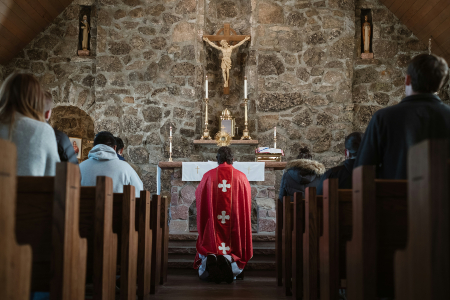
U.S. Catholic Parishes Experience Resurgence of Traditional Practices
-
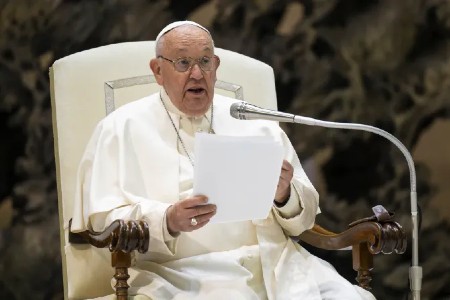
Pope Francis Urges Faith and Prayers for Peace
-
Florida Welcomes Volunteer Chaplains to Public Schools
-
10 Fascinating Details About St. Joseph the Worker: Celebrating His Feast Day - May 1
-
St. Joseph the Worker: Model for Men, Young and Old

Daily Catholic
- Daily Readings for Thursday, May 02, 2024
- St. Athanasius: Saint of the Day for Thursday, May 02, 2024
- The Our Father: Prayer of the Day for Thursday, May 02, 2024
- Daily Readings for Wednesday, May 01, 2024
- St. Marculf: Saint of the Day for Wednesday, May 01, 2024
- To Saint Peregrine: Prayer of the Day for Wednesday, May 01, 2024
 Daily Readings for Thursday, May 02, 2024
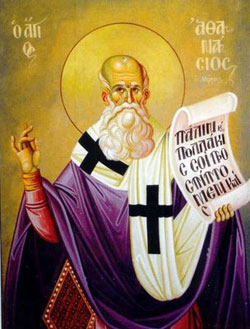 St. Athanasius: Saint of the Day for Thursday, May 02, 2024
 The Our Father: Prayer of the Day for Thursday, May 02, 2024


Copyright 2024 Catholic Online. All materials contained on this site, whether written, audible or visual are the exclusive property of Catholic Online and are protected under U.S. and International copyright laws, © Copyright 2024 Catholic Online. Any unauthorized use, without prior written consent of Catholic Online is strictly forbidden and prohibited.
Catholic Online is a Project of Your Catholic Voice Foundation, a Not-for-Profit Corporation. Your Catholic Voice Foundation has been granted a recognition of tax exemption under Section 501(c)(3) of the Internal Revenue Code. Federal Tax Identification Number: 81-0596847. Your gift is tax-deductible as allowed by law.