Altruism
FREE Catholic Classes
A term formed by Auguste Comte in 1851, on the Italian adjective altrui , and employed by him to denote the benevolent, as contrasted with the selfish propensities. It was introduced into English by George H. Lewes in 1853 (Comte's Philosophy of the Sciences , 1, xxi), and popularized thereafter by expounders and advocates of Comte's philosophy. Though used primarily, in a psychological sense, to designate emotions of a reflective kind, the immediate consequences of which are beneficial to others, its important significance is ethical. As such it defines a theory of conduct by which only actions having for their object the happiness of others possess a moral value. Anticipations of this doctrine are found in Cumberland's "De Legibus Naturae" (1672), and in Shaftesbury's "Inquiry concerning Virtue and Merit" (1711). Comte, however, is the founder of the Social Eudaemonism, based on Positivism, to which the name of Altruism is given. Comte's system is both ethical and religious. Not only is the happiness to be found in living for others the supreme end of conduct, but a disinterested devotion to Humanity as a whole is the highest form of religious service. His ethical theory may be epitomized in the following propositions.
The religious part of Comte's system was never acceptable to more than a few of his adherents. It was too extravagant, and as he himself confesses, it transcended position science. Even Littré, one of the earliest, ablest, and most ardent of his followers, disavowed it. In England, it is true, it has one advocate of prominence, Frederic Harrison. Practically, however, it has ceased to attract any attention. The main defects of Comte's ethical system are those that are common to all forms of Eudaemonism: its norm of morality is relative and contingent ; it possesses no principles by which the quality of its subject-matter, social happiness, may be defined; its imperative imposes no moral obligation. Its special defects are mainly those of Positivism, which denies or ignores any reality beyond external facts, and recognized no law except the successions, coexistences, and resemblances of those phenomena. Hence it can set before us no summum bonum outside the region of sense. It confounds physical law with moral law, the fact that the affective faculty moves to action sufficing to make it also the norm of action. It, moreover, contracts the field of morality, and immorality as well, by making purely personal virtue or vice non-ethical. The English school of Altruists differs from the French in appealing to psychology for their facts, and in interpreting them by the principles of evolution. Comte based his system on a theory of cerebral physiology borrowed with modifications from Gall. Littré found the origin of morality in two primary physiological needs, nutrition, and reproduction, and in their transformation into the conflicting impulses of egoism and altruism. Both rejected the evolutionary hypothesis, and looked with disfavour on psychology. The representative exponent of English altruism is Herbert Spencer. The leading features of his system are these:
- Conduct becomes ethical in the latest stages of evolution, when it assumes social aspects, when namely its tendency is to raise the aggregate happiness of the community.
- The sense of duty originates in egoistic feelings of utility. But these in the process of evolution are modified by experience which associates personal happiness with social, political, and religious well-being and their sanctions. These associated experiences are recorded in the brain, and by hereditary transmission, and accumulation in successive generations they finally become certain faculties or moral intuitions, which we mistake for the voice of a superhuman authority.
- The conflict between egoism and altruism is not to be removed by giving preponderance to either, since pure egoism and pure altruism are both fatal to society ; but by compromise of their respective claims such that the final result will be general altruism, as distinguished from the altruism that ministers to the egoistic satisfaction of others only, whether these others be individuals, or the community impersonally conceived.
- This reconciliation can only be reached when society is perfectly evolved; when namely we are so constituted that our spontaneous activities are congruous with conditions imposed by our social environments and social relations are so complete in their adjustments that altruism will not be associated with self-sacrifice, nor egoism with disregard for others.
- Hence the distinction between Absolute Ethics which formulates the behaviour of the completely adapted man in completely evolved society, and Relative Ethics which enjoins only what is relatively right, or least wrong. The former services as a standard by which we estimate divergences from right ; the latter by which we guide ourselves, as well as we can, in solving the problems of real conduct. By absolutely right conduct is understood, of course, that which produces pleasure unalloyed with pain; by relatively right conduct, that which has any painful concomitants or consequences.
The Catholic teaching on love of others is summed up in the precept of Christ: Love they neighbour as thyself. The love due to oneself is the exemplar of the love due to others, though not the measure of it. Disinterested love of others, or the love of benevolence, the outward expression of which is beneficence, implies a union proximately based on likeness. All men are alike in this that they partake of the same rational nature made to the image and likeness of their Creator; have by nature the same social aptitudes, inclinations, and needs; and are destined for the same final union with God by which the likeness receive through creation is perfected. By supernatural grace the natural likeness of man to man is exalted, changing fellowship into brotherhood. All likeness of whatever grade is founded ultimately in likeness with God. Love, therefore, whether of oneself or of others is in its last analysis love of God, by partaking of Whose perfections we become lovable.
 Hi readers, it seems you use Catholic Online a lot; that's great! It's a little awkward to ask, but we need your help. If you have already donated, we sincerely thank you. We're not salespeople, but we depend on donations averaging $14.76 and fewer than 1% of readers give. If you donate just $5.00, the price of your coffee, Catholic Online School could keep thriving. Thank you. Help Now >
The conflict between self-love and benevolence, which is inevitable in all systems that determine the morality of an act by its relations to an agreeable psychological state, need not arise in systems that make the ethical norm of action objective; the ethically desirable and the psychologically desirable are not identified. Catholic ethics does not deny that happiness of some kind is the necessary consequence of good conduct, or that the desire to attain or confer it is lawful; but it does deny that the pursuit of it for its own sake is the ultimate aim of conduct. Apparent conflict, however, may arise between duties to self and to others, when only mediately known. But these arise from defective limitations of the range of one or other duty, or of both. They do not inhere in the duties themselves. The general rules for determining the prevailing duty given by Catholic moralists are these:
- Absolutely speaking there is no obligation to love others more than self.
- There is an obligation which admits of no exceptions, to love self more than others, whenever beneficence to others entails moral guilt.
- In certain circumstances it may be obligatory, or at least a counsel of perfection, to love others more than self. Apart from cases in which one's profession or state of life, or justice imposes duties, these circumstances are determined by comparing the relative needs of self and others.
- These needs may be spiritual or temporal; the need of the community or of the individual ; the need of one in extreme, serious or ordinary want; the need of those who are near to us by natural or social ties, and of those whose claims are only union in a common humanity. The first class in each group has precedence over the second.
We ask you, humbly: don't scroll away.
Hi readers, it seems you use Catholic Online a lot; that's great! It's a little awkward to ask, but we need your help. If you have already donated, we sincerely thank you. We're not salespeople, but we depend on donations averaging $14.76 and fewer than 1% of readers give. If you donate just $5.00, the price of your coffee, Catholic Online School could keep thriving. Thank you.Help Now >


Join the Movement
When you sign up below, you don't just join an email list - you're joining an entire movement for Free world class Catholic education.


-

-
Mysteries of the Rosary
-
St. Faustina Kowalska
-
Litany of the Blessed Virgin Mary
-
Saint of the Day for Wednesday, Oct 4th, 2023
-
Popular Saints
-
St. Francis of Assisi
-
Bible
-
Female / Women Saints
-
7 Morning Prayers you need to get your day started with God
-
Litany of the Blessed Virgin Mary

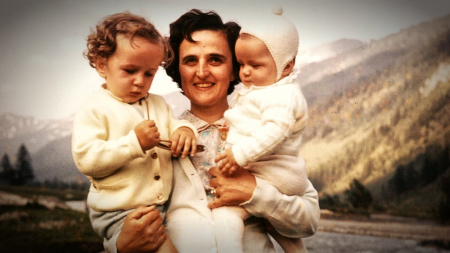
Sacrifices of Faith: The Pro-Life Legacies of St. Gianna and Jessica Hanna
-
How to love God by caring for our bodies
-
Pope Francis calls for negotiations to End Russia-Ukraine War
-
Pope Francis Contemplates Return to U.S. for United Nations Assembly Address
-
Pope Francis Calls on Faithful to Embrace Faith, Hope, and Charity in New Teaching Series


Daily Catholic
- Daily Readings for Sunday, April 28, 2024
- St. Peter Chanel: Saint of the Day for Sunday, April 28, 2024
- Prayer before a Crucifix: Prayer of the Day for Sunday, April 28, 2024
- Daily Readings for Saturday, April 27, 2024
- St. Zita: Saint of the Day for Saturday, April 27, 2024
- Prayer for the Dead # 2: Prayer of the Day for Saturday, April 27, 2024
 Daily Readings for Sunday, April 28, 2024
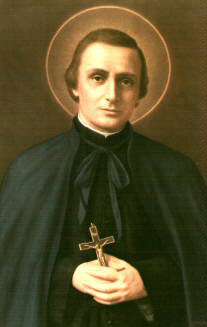 St. Peter Chanel: Saint of the Day for Sunday, April 28, 2024
 Prayer before a Crucifix: Prayer of the Day for Sunday, April 28, 2024
We ask you, humbly: don't scroll away.
Hi readers, it seems you use Catholic Online a lot; that's great! It's a little awkward to ask, but we need your help. If you have already donated, we sincerely thank you. We're not salespeople, but we depend on donations averaging $14.76 and fewer than 1% of readers give. If you donate just $5.00, the price of your coffee, Catholic Online School could keep thriving. Thank you.Help Now >



Copyright 2024 Catholic Online. All materials contained on this site, whether written, audible or visual are the exclusive property of Catholic Online and are protected under U.S. and International copyright laws, © Copyright 2024 Catholic Online. Any unauthorized use, without prior written consent of Catholic Online is strictly forbidden and prohibited.
Catholic Online is a Project of Your Catholic Voice Foundation, a Not-for-Profit Corporation. Your Catholic Voice Foundation has been granted a recognition of tax exemption under Section 501(c)(3) of the Internal Revenue Code. Federal Tax Identification Number: 81-0596847. Your gift is tax-deductible as allowed by law.