We ask you, humbly: don't scroll away.
Hi readers, it seems you use Catholic Online a lot; that's great! It's a little awkward to ask, but we need your help. If you have already donated, we sincerely thank you. We're not salespeople, but we depend on donations averaging $14.76 and fewer than 1% of readers give. If you donate just $5.00, the price of your coffee, Catholic Online School could keep thriving. Thank you.Help Now >
Society of the Holy Name
FREE Catholic Classes
(Confraternity of the Most Holy Name of God and Jesus).
An indulgenced confraternity in the Catholic Church. The primary object of the society is to beget due love and reverence for the Holy Name of God and Jesus Christ. The secondary object is to suppress blasphemy, perjury, oaths of any character that are forbidden, profanity, unlawful swearing improper language, and, as far as the members can, to prevent those vices in others ( Pius IV, 13 April 1564). It had its origin in the Council of Lyons, 1274, which prescribed that the faithful should have a special devotion to the Holy Name of Jesus , that reparation might be made for insults offered to it by Albigenses and other blasphemers. The Friars Preachers were preaching everywhere with the Zeal of St. Dominic ; it was natural, then, that Gregory X selected the Dominicans to preach the devotion, which he did by a letter to Blessed John of Vercelli, master general of the order, 20 September 1274 (Constit. "Nuper in"). The master general immediately wrote to all the provincials of the order, expressing the pope's wish, and enjoining upon all the duty of labouring for its fulfilment (Litterae Encyclicae Mag. Gen Ord. Praed., Reichert, 1900). The brethren gave their best energies in executing the command, preaching everywhere the power and glory of the Holy Name of Jesus ; and to give permanency to the devotion excited in the hearts of the people, it was ordained that in every Dominican church an altar of the Holy Name should be erected, and that societies or confraternities under the title and invocation of the Holy Name of Jesus should be established. St. Peter, Martyr (d. 1252); John of Vercelli, a contemporary of St. Dominic ; Blessed Ambrose of Siena (d. 1286) are said to have been great propagators of the devotion. In the fourteenth century Blessed Henry Suso (d. 1365) is the most notable apostle of devotion to the Holy Name .
We ask you, humbly: don't scroll away.
Hi readers, it seems you use Catholic Online a lot; that's great! It's a little awkward to ask, but we need your help. If you have already donated, we sincerely thank you. We're not salespeople, but we depend on donations averaging $14.76 and fewer than 1% of readers give. If you donate just $5.00, the price of your coffee, Catholic Online School could keep thriving. Thank you.Help Now >
The history of the society in the fourteenth and the fifteenth centuries is somewhat obscure, but that it continued to exist is certain from papal Bulls addressed to the Order of St. Dominic. Boniface IX in his Constitution "Hodie" 31 October, 1401, granted indulgences to those visiting the altar of the confraternity in the Dominican monastery at Schusen, Diocese of Werden, Saxony. In 1432 at Lisbon the devotion preached by a retired Dominican bishop, Andrea Diaz, was a means of stopping the ravages of a plague that was then afflicting that city. In gratitude for their deliverance, the people of all classes in Lisbon held, on 1 Jan., 1433, what was probably the first procession in honour of the Holy Name of Jesus. At this period St. Bernardine of Siena, an Italian Franciscan gained great renown as a promoter of the devotion in Italy. In the sixteenth century Emperor Charles V and King Philip II, moved by the prevalence of blasphemy and sacrilege, exhorted and encouraged the Dominicans to spread the devotion and to establish the society throughout their dominions. Among the preachers engaged in this apostolate, the most celebrated was the Spanish Dominican, Didacus of Victoria (d. 1450), who may be properly called the great preacher of the devotion of the Holy Name of God. He founded a confraternity known as the Society of the Holy Name of God, of which the special object was to suppress the horrible profanation of the Divine Name by blasphemers, perjurers, and by men in their ordinary conversation, and to this end he drew up a rule and constitution for its government.
His confraternity was approved by Pope Pius IV 13 April, 1564, who richly endowed it with indulgences, commanded all ecclesiastical authorities to favour it with all their power, and, in a special letter, recommended it to the laity (Bullarium Ord. Praed., tom. I, v). Later, this confraternity was merged into the Society of the Holy Name of Jesus. Thereafter the society was called by both titles. It also bore the title of "Confraternity against Oaths ". Following the example of Pius IV, the popes of the sixteenth and seventeenth centuries, notably Innocent XI, made the society an object of special solicitude, encouraging its promotion, granting indulgences, and regulating its organization. St. Pius V, in the Motu Proprio "Decet Romanum", 21 June, 1571, absolutely restricted the canonical erection of the society to the Dominican order. Letters patent from the master general of the Dominicans are required for the canonical establishment of the society (for the United States these letters are issued through the bureau of the Holy Name Society, New York). In missionary countries special provision is made for the establishment of the society.
 Hi readers, it seems you use Catholic Online a lot; that's great! It's a little awkward to ask, but we need your help. If you have already donated, we sincerely thank you. We're not salespeople, but we depend on donations averaging $14.76 and fewer than 1% of readers give. If you donate just $5.00, the price of your coffee, Catholic Online School could keep thriving. Thank you. Help Now >
The acts of the general chapters of the order held since 1571 contain numerous regulations and admonitions insisting upon zeal in propagating the confraternity. Great encouragement to the development of the society was given at the close of the nineteenth century by Pope Leo XIII , who decreed through the Congregation of Indulgences, 20 May, 1896, that the bishops may dispense from the Clementine decree "Quaecumque", requiring that there should be only one confraternity in a town or city. Before this the society had existed in many churches of various cities of the United States, by virtue of the dispensations obtained from Rome. Since then branches of the society have multiplied very rapidly and in several dioceses ; following the example set in the Archdiocese of New York, 21 May, 1882, they have been formed into diocesan unions under a director general appointed by the ordinary. Being thus united, the men of the society in the United States (they number about 500,000) are able to accomplish great good by public yearly processions of many thousands professing reverence for the Name of Jesus Christ, and abhorrence of blasphemy, profanity, and immorality. They are required to receive Holy Communion in a body at least once every three months; in most places the rule prescribes Communion on the second Sunday of every month, when they may gain plenary and partial indulgences granted by Gregory XIII. A complete list of indulgences, all of which may be applied to the souls in purgatory, is contained in the "Pocket Manual of the Holy Name Society" (new edition, New York, 1909), by the Dominican, Father McKenna, who for many years has been recognized as the apostle of the Holy Name in the United States. In 1907 the monthly publication of "The Holy Name Journal" (New York) was begun by the Dominican Fathers.
We ask you, humbly: don't scroll away.
Hi readers, it seems you use Catholic Online a lot; that's great! It's a little awkward to ask, but we need your help. If you have already donated, we sincerely thank you. We're not salespeople, but we depend on donations averaging $14.76 and fewer than 1% of readers give. If you donate just $5.00, the price of your coffee, Catholic Online School could keep thriving. Thank you.Help Now >

Join the Movement
When you sign up below, you don't just join an email list - you're joining an entire movement for Free world class Catholic education.


-

-
Mysteries of the Rosary
-
St. Faustina Kowalska
-
Litany of the Blessed Virgin Mary
-
Saint of the Day for Wednesday, Oct 4th, 2023
-
Popular Saints
-
St. Francis of Assisi
-
Bible
-
Female / Women Saints
-
7 Morning Prayers you need to get your day started with God
-
Litany of the Blessed Virgin Mary


Sacrifices of Faith: The Pro-Life Legacies of St. Gianna and Jessica Hanna
-
How to love God by caring for our bodies
-
Pope Francis calls for negotiations to End Russia-Ukraine War
-
Pope Francis Contemplates Return to U.S. for United Nations Assembly Address
-
Pope Francis Calls on Faithful to Embrace Faith, Hope, and Charity in New Teaching Series


Daily Catholic
- Daily Readings for Sunday, April 28, 2024
- St. Peter Chanel: Saint of the Day for Sunday, April 28, 2024
- Prayer before a Crucifix: Prayer of the Day for Sunday, April 28, 2024
- Daily Readings for Saturday, April 27, 2024
- St. Zita: Saint of the Day for Saturday, April 27, 2024
- Prayer for the Dead # 2: Prayer of the Day for Saturday, April 27, 2024
 Daily Readings for Sunday, April 28, 2024
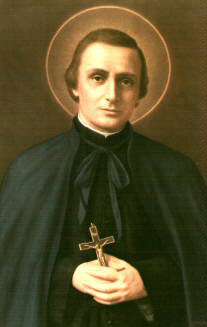 St. Peter Chanel: Saint of the Day for Sunday, April 28, 2024
 Prayer before a Crucifix: Prayer of the Day for Sunday, April 28, 2024


Copyright 2024 Catholic Online. All materials contained on this site, whether written, audible or visual are the exclusive property of Catholic Online and are protected under U.S. and International copyright laws, © Copyright 2024 Catholic Online. Any unauthorized use, without prior written consent of Catholic Online is strictly forbidden and prohibited.
Catholic Online is a Project of Your Catholic Voice Foundation, a Not-for-Profit Corporation. Your Catholic Voice Foundation has been granted a recognition of tax exemption under Section 501(c)(3) of the Internal Revenue Code. Federal Tax Identification Number: 81-0596847. Your gift is tax-deductible as allowed by law.