We ask you, humbly: don't scroll away.
Hi readers, it seems you use Catholic Online a lot; that's great! It's a little awkward to ask, but we need your help. If you have already donated, we sincerely thank you. We're not salespeople, but we depend on donations averaging $14.76 and fewer than 1% of readers give. If you donate just $5.00, the price of your coffee, Catholic Online School could keep thriving. Thank you.Help Now >
Hatto
FREE Catholic Classes
Archbishop of Mainz ; b. of a noble Swabian family, c. 850; d. 15 May, 913. He was educated at the monastery of Ellwagen in Swabia, became a Benedictine monk at Fulda, was elected in 888 Abbot of Reichenau, and, a year later, also Abbot of Ellwangen. As abbot of these two imperial monasteries he exercised a great influence on the political affairs of Germany. On account of his deep insight, his energy, and his unselfish devotion to the royal throne, King Arnulf of Germany appointed him Archbishop of Mainz in September, 891. In 892 he presided over a synod at Frankfort, at which, the rights of the Archbishop of Cologne over the Diocese of Bremen were discussed by order of Pope Formosus. He likewise presided over the great politico-ecclesiastical assembly at Tribur (now Trebur), near Mainz, in May, 895 ( Mansi, Coll. Conc. Ampl., XVIII, 129-166). When in 894 Pope Formosus called upon King Arnulf to defend him against Guido (or Wido) of Spoleto and his son Lambert, Hatto accompanied the King to Italy. He also accompanied him on a second expedition to Italy (from the autumn 895 to the spring 896), on which occasion he received the pallium from Pope Formosus at Rome.
In his far-reaching political Hatto was guided by the idea of a consolidated German kingdom with a strong king possessing the central authority. For this reason he was hated by the dukes who desired to break up the German nation into independent states. After the death of Arnulf in 899, the election of King Louis the Child, the six year old son of Arnulf, was chiefly due to Hatto, who with prudence and strength administered the affairs of the State during the short life of the young king (d. 911). The election of Conrad I, Duke of Franconia, as King of Germany was again the work of Hatto. During the remaining two years of his life Hatto was the chief councillor of Conrad I. Hatto has been greatly maligned by historians. His alleged implication in the "treacherous" capture of Duke Adalbert of Badenberg was probably and invention of his enemies, and the fable of the "Müusethurm", where he is said to have been eaten up by mice and rats in punishment for his hardheartedness during a famine, has no historical foundation. The same story is related of Hatto II, Archbishop of Mainz (968-970), and of many other persons.


We ask you, humbly: don't scroll away.
Hi readers, it seems you use Catholic Online a lot; that's great! It's a little awkward to ask, but we need your help. If you have already donated, we sincerely thank you. We're not salespeople, but we depend on donations averaging $14.76 and fewer than 1% of readers give. If you donate just $5.00, the price of your coffee, Catholic Online School could keep thriving. Thank you.Help Now >
Join the Movement
When you sign up below, you don't just join an email list - you're joining an entire movement for Free world class Catholic education.


-

-
Mysteries of the Rosary
-
St. Faustina Kowalska
-
Litany of the Blessed Virgin Mary
-
Saint of the Day for Wednesday, Oct 4th, 2023
-
Popular Saints
-
St. Francis of Assisi
-
Bible
-
Female / Women Saints
-
7 Morning Prayers you need to get your day started with God
-
Litany of the Blessed Virgin Mary


Sacrifices of Faith: The Pro-Life Legacies of St. Gianna and Jessica Hanna
-
How to love God by caring for our bodies
-
Pope Francis calls for negotiations to End Russia-Ukraine War
-
Pope Francis Contemplates Return to U.S. for United Nations Assembly Address
-
Pope Francis Calls on Faithful to Embrace Faith, Hope, and Charity in New Teaching Series


Daily Catholic
- Daily Readings for Sunday, April 28, 2024
- St. Peter Chanel: Saint of the Day for Sunday, April 28, 2024
- Prayer before a Crucifix: Prayer of the Day for Sunday, April 28, 2024
- Daily Readings for Saturday, April 27, 2024
- St. Zita: Saint of the Day for Saturday, April 27, 2024
- Prayer for the Dead # 2: Prayer of the Day for Saturday, April 27, 2024
 Daily Readings for Sunday, April 28, 2024
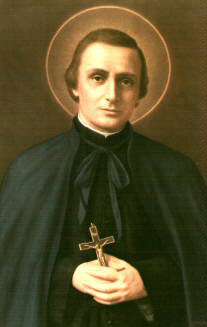 St. Peter Chanel: Saint of the Day for Sunday, April 28, 2024
 Prayer before a Crucifix: Prayer of the Day for Sunday, April 28, 2024



Copyright 2024 Catholic Online. All materials contained on this site, whether written, audible or visual are the exclusive property of Catholic Online and are protected under U.S. and International copyright laws, © Copyright 2024 Catholic Online. Any unauthorized use, without prior written consent of Catholic Online is strictly forbidden and prohibited.
Catholic Online is a Project of Your Catholic Voice Foundation, a Not-for-Profit Corporation. Your Catholic Voice Foundation has been granted a recognition of tax exemption under Section 501(c)(3) of the Internal Revenue Code. Federal Tax Identification Number: 81-0596847. Your gift is tax-deductible as allowed by law.
