Geoffrey of Monmouth
FREE Catholic Classes
(GAUFRIDUS ARTURUS, GALFRIDUS MONEMETENSIS, GALFFRAI or GRUFFYD AB ARTHUR).
Bishop of St. Asaph and chronicler; b. at Monmouth about 1100, d. at Llandaff, 1154. He was the son of Arthur, a priest, and was educated by his uncle Uchtryd, afterwards Bishop of Llandaff. It has been surmised that he became a Benedictine monk, but this is uncertain. At Oxford he met Walter the Archdeacon, who suggested to him the idea of his great work, "Historia Regum Britanniae". About 1140 he accompanied Uchtryd to Llandaff, where he became archdeacon of St.Teilo's, and opened schools in which many clerics and chieftains were educated. This "Historia" had appeared before 1139, but Geoffrey continued to work at it, and in 1147 he completed it in its final form. In 1151-2 he was elected bishop of St. Asaph and was consecrated at Lambeth by Theobald Archbishop of Canterbury , on 24 Feb., having been ordained priest a week before, but he died without having entered his diocese. Geoffrey's "History" has been one of the great influences in English literature, making itself especially felt in the national romance from Layamon to Tennyson. Shakespeare, Milton, Dryden, Pope, and Wordsworth have all used his legends, while many of the earlier chroniclers followed him as an historian. But the twelve books of his "History", recounting how Brut, great-grandson of Aeneas, founded the kingdom, and narrating the adventures of subsequent kings, are in truth not history at all but the beginning of English story-telling. Among his legends is that of King Arthur, which became the most famous of the great cycles of romance so popular in the Middle Ages. Geoffrey's legend having received a new form from Sir Thomas Malory in the fifteenth century has again been given fresh life by Tennyson in the "Idylls of the Kings". Geoffrey claimed that his work was founded on a "most ancient book" -- probably a collection of British legends no longer extant. Geoffrey also wrote a Latin version of the Cymric "Prophecies of Merlin" and a life of Merlin is attributed to him. His stories exercised a wide influence in Germany, France, and Italy, while England they furthered the unification of the English people by spreading belief in a common origin of Briton, Saxon, and Norman. The "Historia Britonum" was first printed at Paris, 1508; the latest editions being those of Giles (London, 1844) and Schulz (Halle, 1854).



Join the Movement
When you sign up below, you don't just join an email list - you're joining an entire movement for Free world class Catholic education.


-

-
Mysteries of the Rosary
-
St. Faustina Kowalska
-
Litany of the Blessed Virgin Mary
-
Saint of the Day for Wednesday, Oct 4th, 2023
-
Popular Saints
-
St. Francis of Assisi
-
Bible
-
Female / Women Saints
-
7 Morning Prayers you need to get your day started with God
-
Litany of the Blessed Virgin Mary

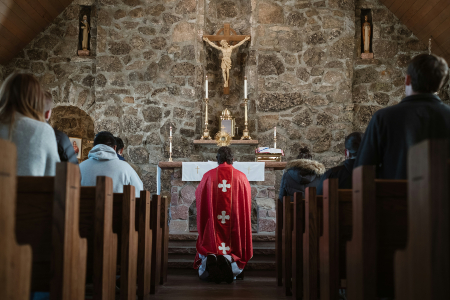
U.S. Catholic Parishes Experience Resurgence of Traditional Practices
-
Pope Francis Urges Faith and Prayers for Peace
-
Florida Welcomes Volunteer Chaplains to Public Schools
-
10 Fascinating Details About St. Joseph the Worker: Celebrating His Feast Day - May 1
-
St. Joseph the Worker: Model for Men, Young and Old

Daily Catholic
- Daily Readings for Thursday, May 02, 2024
- St. Athanasius: Saint of the Day for Thursday, May 02, 2024
- The Our Father: Prayer of the Day for Thursday, May 02, 2024
- Daily Readings for Wednesday, May 01, 2024
- St. Marculf: Saint of the Day for Wednesday, May 01, 2024
- To Saint Peregrine: Prayer of the Day for Wednesday, May 01, 2024
 Daily Readings for Thursday, May 02, 2024
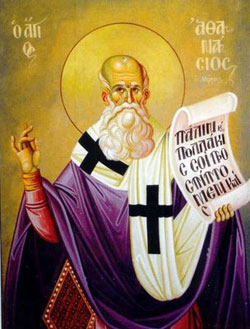 St. Athanasius: Saint of the Day for Thursday, May 02, 2024
 The Our Father: Prayer of the Day for Thursday, May 02, 2024


Copyright 2024 Catholic Online. All materials contained on this site, whether written, audible or visual are the exclusive property of Catholic Online and are protected under U.S. and International copyright laws, © Copyright 2024 Catholic Online. Any unauthorized use, without prior written consent of Catholic Online is strictly forbidden and prohibited.
Catholic Online is a Project of Your Catholic Voice Foundation, a Not-for-Profit Corporation. Your Catholic Voice Foundation has been granted a recognition of tax exemption under Section 501(c)(3) of the Internal Revenue Code. Federal Tax Identification Number: 81-0596847. Your gift is tax-deductible as allowed by law.