We ask you, humbly: don't scroll away.
Hi readers, it seems you use Catholic Online a lot; that's great! It's a little awkward to ask, but we need your help. If you have already donated, we sincerely thank you. We're not salespeople, but we depend on donations averaging $14.76 and fewer than 1% of readers give. If you donate just $5.00, the price of your coffee, Catholic Online School could keep thriving. Thank you.Help Now >
Furness Abbey
FREE Catholic Classes
Situated in the north of Lancashire about five miles from the town of Ulverston. Originally a Benedictine monastery of the Savigny Reform it afterwards became Cistercian. Vitalis, the founder of Savigny and the disciple of Robert d'Arbrissel, came to England in 1119, and Stephen, Count of Boulogne and afterwards King of England, offered him land at Tulketh on the Ribble, one mile below Preston. Accordingly, in 1124, Ewan d'Avranches, with a colony of monks, was sent from Savigny to establish the monastery at Tulketh. In 1127 Stephen gave to these monks his forest of Furness in Lancashire and thither they removed. This grant was most munificent, for it included large possessions in woods, pastures, fisheries, and mills, with a large share in the salt works and mines of the district. Development was so rapid that in 1134 a colony of monks was sent forth to establish Calder near the Scotch border. Besides Calder, Swyneshead and Rushin were also colonized, and from Calder the famous Abbey of Byland was founded. By the year 1148 the Cistercian Reform, under the leadership of St. Bernard, was everywhere attracting attention and all the Savigny monks, those of Furness included, became Cistercians. In 1249 the Cistercian General Chapter placed four Irish monasteries under the control of Furness, viz. Fermoy, Wethirlaghn, Inislounagh, and Corcumcrae. Through the foundation of Rushin there was frequent communication between Furness and the Isle of Man and more than one monk of Furness became Bishop of Man. This, no doubt, was due to the privilege held by the Abbey of Rushin of appointing the bishop, subject to the consent of the Manxmen. Nicholas de Meaux, a native of the Orkneys and once a canon of Wartre, was a monk at Meaux, a monk and Abbot of Furness, and finally Bishop of Man. Jocelin, a monk of Furness and afterwards of Iniscourcy, in Ireland, wrote the life of St. Patrick at the command of Thomas, Archbishop of Armagh ; other works attributed to him are: "Book of British bishops "; "Life of St. Waldeve, Second abbot of Melrose "; "Life of St. Kentigern or Mungo". The names of thirty-two abbots of Furness are known, the last being Roger Pyle. In October, 1535, the royal commissioners visited the abbey ; a little later the monks were accused of being implicated in the Pilgrimage of Grace and two of them were imprisoned at Lancaster. The final disruption came on 9 April, 1537, when the abbot, prior, and twenty-eight monks were forced to sign the deed of surrender. The site and lands were at first held by the Crown. Later they were assigned to the Earl of Salisbury and afterwards came into the possession of the Prestons of Preston Patrick. They were next acquired by Lord George Augustus Cavendish, and now belong to the Dukes of Devonshire. The buildings were renowned more for their grandeur than for their richness and beauty; portions of the ruins still remain to show this.


Join the Movement
When you sign up below, you don't just join an email list - you're joining an entire movement for Free world class Catholic education.
-

-
Mysteries of the Rosary
-
St. Faustina Kowalska
-
Litany of the Blessed Virgin Mary
-
Saint of the Day for Wednesday, Oct 4th, 2023
-
Popular Saints
-
St. Francis of Assisi
-
Bible
-
Female / Women Saints
-
7 Morning Prayers you need to get your day started with God
-
Litany of the Blessed Virgin Mary

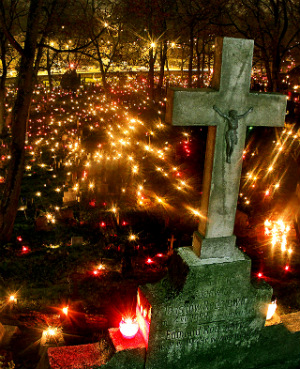
All Saints' Day, Halloween and All Souls' Day: What's the difference?
-
Should Christians Celebrate Halloween?
-
Since when did Halloween become a Christian holiday?
-
ADORABLE: A Little Boy's Heartfelt Lunchtime Prayer
-
Scientists Decode 3,000-Year-Old Babylonian Tablet, Revealing Potential Location of Noah's Ark
Daily Catholic
- Daily Readings for Friday, November 01, 2024
- St. Valentine Berrio-Ochoa: Saint of the Day for Friday, November 01, 2024
- Litany of the Saints: Prayer of the Day for Friday, November 01, 2024
- Daily Readings for Thursday, October 31, 2024
- St. Wolfgang: Saint of the Day for Thursday, October 31, 2024
- Memorare: Prayer of the Day for Thursday, October 31, 2024
 Daily Readings for Friday, November 01, 2024
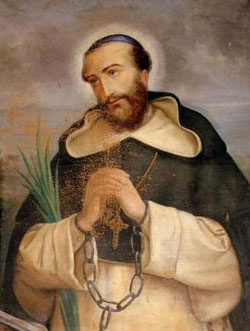 St. Valentine Berrio-Ochoa: Saint of the Day for Friday, November 01, 2024
 Litany of the Saints: Prayer of the Day for Friday, November 01, 2024



Copyright 2024 Catholic Online. All materials contained on this site, whether written, audible or visual are the exclusive property of Catholic Online and are protected under U.S. and International copyright laws, © Copyright 2024 Catholic Online. Any unauthorized use, without prior written consent of Catholic Online is strictly forbidden and prohibited.
Catholic Online is a Project of Your Catholic Voice Foundation, a Not-for-Profit Corporation. Your Catholic Voice Foundation has been granted a recognition of tax exemption under Section 501(c)(3) of the Internal Revenue Code. Federal Tax Identification Number: 81-0596847. Your gift is tax-deductible as allowed by law.