We ask you, humbly: don't scroll away.
Hi readers, it seems you use Catholic Online a lot; that's great! It's a little awkward to ask, but we need your help. If you have already donated, we sincerely thank you. We're not salespeople, but we depend on donations averaging $14.76 and fewer than 1% of readers give. If you donate just $5.00, the price of your coffee, Catholic Online School could keep thriving. Thank you.Help Now >
Julius Echter von Mespelbrunn
FREE Catholic Classes
Prince- Bishop of Würzburg, b. 18 March, 1545, in the Castle of Mespelbrunn, Spessart (Bavaria); d. 13 Sept., 1617, at Würzburg. Descended from an ancient family in the service of the archbishops of Mainz, he received a good education in the schools of that city, also at Louvain, Douai, Paris, Angers, Pavia, and Rome ; it was in Rome that he became a licentiate of canon and civil law. In 1567 he entered on his duties as canon of Würzburg, an office to which he had been appointed in 1554; in 1570 he became the dean of the cathedral chapter, and in 1573, at the age of twenty-eight, even before his ordination to the priesthood, was appointed Prince- Bishop of Würzburg. Various causes had combined to bring the diocese into a sad state. Deeply in debt and poorly administered, it had an almost entirely Protestant population. The clergy, in point of virtue and learning, were for the most part unequal to their task, and the cathedral chapter was adverse to any ecclesiastical reform. During the first ten years of Echter's government the attempt to unite the Abbey of Fulda and the Bishopric of Würzburg, after the deposition of the Prince-Abbot Balthasar von Dernbach, caused much confusion. This was due to the youthful ambition of Echter, and not, as some wish to interpret it, a sign of any anti-Catholic sentiments on his part. From the outset he endeavoured to carry out a thorough ecclesiastical restoration. For this reason he encouraged, as far as possible, the Jesuits and promoted their beneficient ministry. In the same spirit he conceived the plan of founding a university at Würzburg, and despite all difficulties it was solemnly opened (2 Jan., 1582) and became a model for all similar Counter-Reformation institutions. Under the Jesuits it flourished, grew rapidly, and furnished the see with the priests and officials needed to counterbalance the more or less irreligious temper of the population. The bishop was now able to take decisive steps against Protestantism. He banished all Lutheran preachers from his territory and removed all priests who were unwilling to observe the rules of their office. the public officials had to be Catholics, and none but Catholic teachers could be appointed. He began, moreover, courses of careful instruction for non-Catholics, and to some extent threatened them with penalties and even with banishment. Within three years about 100,000 returned to the Catholic Church. Public worship was also improved by the introduction of new devotions, processions, and the establishment of confraternities. Bishop Echter restored ruinous monasteries or devoted their revenues to the erection of new parishes and to the building of three hundred new churches. The tapering towers of these churches, called after the bishop "Julius towers", still preserve his memory. His most beneficial and lasting monument, after the university, is the Julius Hospital, which he founded with the endowment of the abandoned monastery of Heiligenthal. By skilful administration he improved the decadent economic conditions of his ecclesiastical states, reduced taxes, perfected the administration of justice, and established many primary schools. In a word, he proved himself one of the most capable rulers of his time. Not only in his own diocese did he display an extraordinary and varied activity, but as the founder and soul of the Catholic League, he exercised a decisive influence on the future of Germany.
We ask you, humbly: don't scroll away.
Hi readers, it seems you use Catholic Online a lot; that's great! It's a little awkward to ask, but we need your help. If you have already donated, we sincerely thank you. We're not salespeople, but we depend on donations averaging $14.76 and fewer than 1% of readers give. If you donate just $5.00, the price of your coffee, Catholic Online School could keep thriving. Thank you.Help Now >


Join the Movement
When you sign up below, you don't just join an email list - you're joining an entire movement for Free world class Catholic education.


-

-
Mysteries of the Rosary
-
St. Faustina Kowalska
-
Litany of the Blessed Virgin Mary
-
Saint of the Day for Wednesday, Oct 4th, 2023
-
Popular Saints
-
St. Francis of Assisi
-
Bible
-
Female / Women Saints
-
7 Morning Prayers you need to get your day started with God
-
Litany of the Blessed Virgin Mary


Sacrifices of Faith: The Pro-Life Legacies of St. Gianna and Jessica Hanna
-
How to love God by caring for our bodies
-
Pope Francis calls for negotiations to End Russia-Ukraine War
-
Pope Francis Contemplates Return to U.S. for United Nations Assembly Address
-
Pope Francis Calls on Faithful to Embrace Faith, Hope, and Charity in New Teaching Series


Daily Catholic
- Daily Readings for Saturday, April 27, 2024
- St. Zita: Saint of the Day for Saturday, April 27, 2024
- Prayer for the Dead # 2: Prayer of the Day for Saturday, April 27, 2024
- Daily Readings for Friday, April 26, 2024
- St. Cletus: Saint of the Day for Friday, April 26, 2024
- Prayer before the Closing of the Day: Prayer of the Day for Friday, April 26, 2024
 Daily Readings for Saturday, April 27, 2024
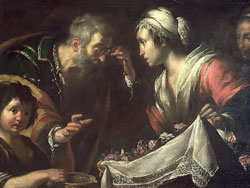 St. Zita: Saint of the Day for Saturday, April 27, 2024
 Prayer for the Dead # 2: Prayer of the Day for Saturday, April 27, 2024

Copyright 2024 Catholic Online. All materials contained on this site, whether written, audible or visual are the exclusive property of Catholic Online and are protected under U.S. and International copyright laws, © Copyright 2024 Catholic Online. Any unauthorized use, without prior written consent of Catholic Online is strictly forbidden and prohibited.
Catholic Online is a Project of Your Catholic Voice Foundation, a Not-for-Profit Corporation. Your Catholic Voice Foundation has been granted a recognition of tax exemption under Section 501(c)(3) of the Internal Revenue Code. Federal Tax Identification Number: 81-0596847. Your gift is tax-deductible as allowed by law.