 Hi readers, it seems you use Catholic Online a lot; that's great! It's a little awkward to ask, but we need your help. If you have already donated, we sincerely thank you. We're not salespeople, but we depend on donations averaging $14.76 and fewer than 1% of readers give. If you donate just $5.00, the price of your coffee, Catholic Online School could keep thriving. Thank you. Help Now >
Cyrus of Alexandria
FREE Catholic Classes
A Melchite patriarch of that see in the seventh century, and one of the authors of Monothelism ; d. about 641. He had been since 620 Bishop of Phasis in Colchis when the Emperor Heraclius, in the course of his Persian campaign (626), consulted him about a plan for bringing the Monophysites of Egypt back to the Church and to the support of the empire. The plan, suggested by Sergius, Patriarch of Constantinople, consisted of confessing the faith of Chalcedon on the two natures of Christ, while practically nullifying it by the admission of one theandric will and operation, . Cyrus hesitated at first, but being assured by Sergius that this formula was opposed to neither the Fathers nor Chalcedon and was destined to achieve great results, he became a stanch supporter of it, and was, in return, raised by Heraclius to the then vacant See of Alexandria (630). Once a patriarch, he set himself vigorously to effect the desired union. In a synod held at Alexandria he proposed what is known as the or "Satisfactio", an agreement in nine articles, the seventh of which is a bold assertion of the Monothelite heresy. The Monophysites (Theodosians or Severians) welcomed the agreement with, however, the remark that Chalcedon was coming to them, not they to Chalcedon. The union thus effected was adroitly exploited, with a view to win over Pope Honorius to Monothelism ; otherwise it proved ineffective, and soon fell into discredit under the name of , contemptuously called the "washy union". Cyrus persevered none the less in his adhesion to the compromise, and even accepted the Ecthesis, a new imperial formulary of the same error (637). When Omar's general, Amru, threatened the Prefecture of Egypt, Cyrus was made prefect and entrusted with the conduct of the war. Certain humiliating stipulations, to which he subscribed for the sake of peace, angered his imperial master. He was recalled and harshly accused of connivance with the Saracens ; however, he was soon restored to his former authority, owing to the impending siege of Alexandria, but could not avert the fall of the great city (640) and died shortly after.

From Cyrus we have three letters to Sergius and the "Satisfactio", all preserved in the acts of the Roman Synod of the Lateran and of the Sixth Œcumenical Council ( Mansi, X, 1004; XI, 560, 562, 964). The first letter is an acceptation of the Ecthesis; in the second Cyrus describes his perplexity between Pope Leo and Sergius; the conversion of the Theodosians is narrated in the third. The seventh article of the "Satisfactio" — the others are irrelevant — reads thus: "The one and same Christ, the Son, performs the works proper to God and to man by one theandric operation [ ] according to St. Dionysius". Cyrus' chief opponents, St. Sophronius, d. in 637 (Epistola synodica, Mansi, XI, 480), and St. Maximus, d. in 662 (Epistola ad Nicandrum; disputatio cum Pyrrho, P.G., XCI, 101, 345), reproached him for falsifying the then much-respected text of Dionysius and substituting for (new). They showed, moreover, the inanity of his claim to the support of the Fathers, and explained how the Divine and human natures of Christ, sometimes styled one, because they belong to the same person and work in perfect harmony, can no more by physically identified than the natures from which they proceed. Historians are not agreed as to how Cyrus came by this error. Some think that he was, from the outset, a Monophysite at heart. Others, with more reason, hold that he was led into error by Sergius and Heraclius. Cyrus was condemned as a heretic in the Lateran Council of 649 ( Denzinger, Enchiridion, 217, 219) and in 680 at the Third Œcumenical Council of Constantinople ( Denzinger, 238; Mansi, XI, 554). (See M ONOTHELITES .)


Join the Movement
When you sign up below, you don't just join an email list - you're joining an entire movement for Free world class Catholic education.


-

-
Mysteries of the Rosary
-
St. Faustina Kowalska
-
Litany of the Blessed Virgin Mary
-
Saint of the Day for Wednesday, Oct 4th, 2023
-
Popular Saints
-
St. Francis of Assisi
-
Bible
-
Female / Women Saints
-
7 Morning Prayers you need to get your day started with God
-
Litany of the Blessed Virgin Mary


Sacrifices of Faith: The Pro-Life Legacies of St. Gianna and Jessica Hanna
-
How to love God by caring for our bodies
-
Pope Francis calls for negotiations to End Russia-Ukraine War
-
Pope Francis Contemplates Return to U.S. for United Nations Assembly Address
-
Pope Francis Calls on Faithful to Embrace Faith, Hope, and Charity in New Teaching Series


Daily Catholic
- Daily Readings for Sunday, April 28, 2024
- St. Peter Chanel: Saint of the Day for Sunday, April 28, 2024
- Prayer before a Crucifix: Prayer of the Day for Sunday, April 28, 2024
- Daily Readings for Saturday, April 27, 2024
- St. Zita: Saint of the Day for Saturday, April 27, 2024
- Prayer for the Dead # 2: Prayer of the Day for Saturday, April 27, 2024
 Daily Readings for Sunday, April 28, 2024
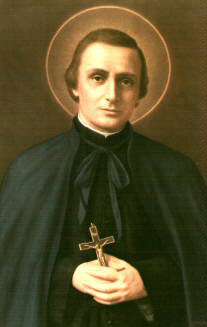 St. Peter Chanel: Saint of the Day for Sunday, April 28, 2024
 Prayer before a Crucifix: Prayer of the Day for Sunday, April 28, 2024



Copyright 2024 Catholic Online. All materials contained on this site, whether written, audible or visual are the exclusive property of Catholic Online and are protected under U.S. and International copyright laws, © Copyright 2024 Catholic Online. Any unauthorized use, without prior written consent of Catholic Online is strictly forbidden and prohibited.
Catholic Online is a Project of Your Catholic Voice Foundation, a Not-for-Profit Corporation. Your Catholic Voice Foundation has been granted a recognition of tax exemption under Section 501(c)(3) of the Internal Revenue Code. Federal Tax Identification Number: 81-0596847. Your gift is tax-deductible as allowed by law.