We ask you, humbly: don't scroll away.
Hi readers, it seems you use Catholic Online a lot; that's great! It's a little awkward to ask, but we need your help. If you have already donated, we sincerely thank you. We're not salespeople, but we depend on donations averaging $14.76 and fewer than 1% of readers give. If you donate just $5.00, the price of your coffee, Catholic Online School could keep thriving. Thank you.Help Now >
Bull of the Crusade
FREE Catholic Classes
A Bull granting indulgences to those who took part in the wars against the infidels. These indulgences were similar to those which, as far back as the eleventh century, had been granted to the faithful of the Spanish Mark who took part in the work of building churches and monasteries, or who gave alms to be devoted to this purpose. The first of these Crusade Bulls which concerned Spain was that of Urban II to the Counts Berenguer Ramón de Barcelona and Armengal de Besalú in 1089 at the time of the reconquest of Tarragona, and that of Gelasius II to Alfonso I of Aragon, when he undertook to reconquer Saragossa in 1118. Clement IV in 1265 issued a general Bull for the whole of Spain, when the Kings of Aragon and Castile joined in the expedition against Murcia. In the course of time these pontifical concessions became more and more frequent; in the reign of the Catholic kings alone they were granted in 1478, 1479, 1481, 1482, 1485, 1494, 1503, and 1505, and were continued during the following reigns, that granted by Gregory XIII in 1573 being renewed by his successors.
The alms given by the faithful in response to this Bull, which were at first used exclusively for carrying on the war against the infidels, were afterwards used for the construction and repair of churches and other pious works; sometimes they were also used to defray expenses of the State. The Cortes of Valladolid of 1523 and that of Madrid of 1592 petitioned that this money should not be used for any other purpose than that for which it had originally been intended by the donors, but, notwithstanding the provisions made by Philip III in compliance with this request, the abuse already mentioned continued. After 1847 the funds derived from this source were devoted to the endowment of churches and the clergy, this disposition being ratified by a law in 1849 and in the Concordat of 1851, still in force.
We ask you, humbly: don't scroll away.
Hi readers, it seems you use Catholic Online a lot; that's great! It's a little awkward to ask, but we need your help. If you have already donated, we sincerely thank you. We're not salespeople, but we depend on donations averaging $14.76 and fewer than 1% of readers give. If you donate just $5.00, the price of your coffee, Catholic Online School could keep thriving. Thank you.Help Now >
In virtue of the concessions granted by this Bull, the faithful of the Spanish dominions who had fulfilled the necessary conditions could gain the plenary indulgence, granted to those who fought for the reconquest of the Holy Land and to those who went to Rome in the year of Jubilee, provided they went to confession and received Holy Communion. They enjoyed also the privilege of being absolved twice of sins and censures reserved to the Holy See and the ordinary, except open heresy, and others concerning ecclesiastics ; to have vows which could not be fulfilled without difficulty commuted by their confessor, unless failure to fulfil them would be to the disadvantage of another; also simple vows of perpetual chastity, of religious profession, and of pilgrimage to the Holy Land. Those who visited five churches or altars, or the same altar five times, and prayed for the intentions of the Crusade, could gain the indulgences granted to those who visited the stations in Rome. The Bull, moreover, permitted the faithful of the Spanish dominions to eat meat on all the days of Lent and other days of fast and abstinence, except Ash Wednesday, the Fridays of Lent, the last four days of Holy Week, and the vigils of the feasts of the Nativity, Pentecost, the Assumption, and Sts. Peter and Paul.


Join the Movement
When you sign up below, you don't just join an email list - you're joining an entire movement for Free world class Catholic education.


-

-
Mysteries of the Rosary
-
St. Faustina Kowalska
-
Litany of the Blessed Virgin Mary
-
Saint of the Day for Wednesday, Oct 4th, 2023
-
Popular Saints
-
St. Francis of Assisi
-
Bible
-
Female / Women Saints
-
7 Morning Prayers you need to get your day started with God
-
Litany of the Blessed Virgin Mary


Sacrifices of Faith: The Pro-Life Legacies of St. Gianna and Jessica Hanna
-
How to love God by caring for our bodies
-
Pope Francis calls for negotiations to End Russia-Ukraine War
-
Pope Francis Contemplates Return to U.S. for United Nations Assembly Address
-
Pope Francis Calls on Faithful to Embrace Faith, Hope, and Charity in New Teaching Series


Daily Catholic
- Daily Readings for Sunday, April 28, 2024
- St. Peter Chanel: Saint of the Day for Sunday, April 28, 2024
- Prayer before a Crucifix: Prayer of the Day for Sunday, April 28, 2024
- Daily Readings for Saturday, April 27, 2024
- St. Zita: Saint of the Day for Saturday, April 27, 2024
- Prayer for the Dead # 2: Prayer of the Day for Saturday, April 27, 2024
 Daily Readings for Sunday, April 28, 2024
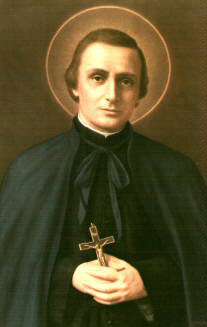 St. Peter Chanel: Saint of the Day for Sunday, April 28, 2024
 Prayer before a Crucifix: Prayer of the Day for Sunday, April 28, 2024
We ask you, humbly: don't scroll away.
Hi readers, it seems you use Catholic Online a lot; that's great! It's a little awkward to ask, but we need your help. If you have already donated, we sincerely thank you. We're not salespeople, but we depend on donations averaging $14.76 and fewer than 1% of readers give. If you donate just $5.00, the price of your coffee, Catholic Online School could keep thriving. Thank you.Help Now >

Copyright 2024 Catholic Online. All materials contained on this site, whether written, audible or visual are the exclusive property of Catholic Online and are protected under U.S. and International copyright laws, © Copyright 2024 Catholic Online. Any unauthorized use, without prior written consent of Catholic Online is strictly forbidden and prohibited.
Catholic Online is a Project of Your Catholic Voice Foundation, a Not-for-Profit Corporation. Your Catholic Voice Foundation has been granted a recognition of tax exemption under Section 501(c)(3) of the Internal Revenue Code. Federal Tax Identification Number: 81-0596847. Your gift is tax-deductible as allowed by law.
