We ask you, humbly: don't scroll away.
Hi readers, it seems you use Catholic Online a lot; that's great! It's a little awkward to ask, but we need your help. If you have already donated, we sincerely thank you. We're not salespeople, but we depend on donations averaging $14.76 and fewer than 1% of readers give. If you donate just $5.00, the price of your coffee, Catholic Online School could keep thriving. Thank you.Help Now >
African Synods
FREE Catholic Classes
There was no general council of the entire Church held at any time in North Africa. There were, however, many national or plenary assemblies of bishops representing the North African Church. These are commonly called African or Carthaginian Synods, and are not to be confounded with the district or provincial assemblies, of which there were also very many in the separate provinces of North Africa. These Roman provinces lay between the Sahara and the Mediterranean and extended from Cyrenaica on the east to the Atlantic on the west, corresponding roughly to the part of the continent occupied by modern Tripoli, Algeria, and Morocco. The Church entered into history there at the end of the second century, and disappeared in the beginning of the eighth.
Ecclesiastical Organizations
About the middle of the third century the bishops of the three civil provinces (Proconsular Africa, Numidia, and Mauretania) formed but one ecclesiastical province, but as dioceses were multiplied, they came to be grouped into divisions corresponding to the prevailing political divisions of the country. Diocletian re-districted North Africa into six civil provinces, and by the end of the fourth century the Church had adjusted her organization to these lines. Thus there came to be six ecclesiastical provinces :

Number of Synods
In the time of Tertullian there were no synods held in Africa. But about 220, Agrippinus called together seventy bishops from Proconsular Africa and Numidia. From the time of St. Cyprian general synods came to be the wonted resource of Church administration, and they were held in Africa with greater frequency and regularity than elsewhere in Christendom. We know from the letters of St. Cyprian that, except in time of persecution, the African bishops met at least once a year, in the springtime, and sometimes again in the autumn. Six or seven synods, for instance, were held under St. Cyprian's presidency during the decade of his administration (249-258), and more than fifteen under Aurelius (391-429). The Synod of Hippo (393) ordered a general meeting yearly. But this was found too onerous for the bishops, and in the Synod of Carthage (407) it was decided to hold a general synod only when necessary for the needs of all Africa, and it was to be held at a place most convenient for the purpose. As a matter of fact, the needs were so persistent that general synods were held with perhaps equal frequency up to the Vandal invasion (429), and Carthage continued to be the meeting-place. The Church of Africa then entered on "penal times". Towards the end of the Vandal domination there was a cessation of persecution, and synods were resumed. The general Synod of Carthage in 525, though numerously attended, shows in reality a humble and diminished church. There was an improvement under the Byzantine control (533-647), and the Synod of 534 (perhaps the only general one for this period) is the second largest in point of numbers of all the African synods. In 646 we still find the bishops meeting in provincial synods, on the very eve of the final dissolution of their ancient organization. The Arab domination spread in successive waves from 647 up to 698, when Carthage fell. Within the following half century the Church of Roman Africa had ceased to be.
We ask you, humbly: don't scroll away.
Hi readers, it seems you use Catholic Online a lot; that's great! It's a little awkward to ask, but we need your help. If you have already donated, we sincerely thank you. We're not salespeople, but we depend on donations averaging $14.76 and fewer than 1% of readers give. If you donate just $5.00, the price of your coffee, Catholic Online School could keep thriving. Thank you.Help Now >
Attendance and Representation
Elsewhere in Christendom only bishops attended general synods ; but in North Africa there was, at least for a time, a departure from this custom. In the synods held under St. Cyprian, to deal with the lapsed, and in the synod of 256, which considered the question of re- baptism, there were present not only the bishops, but many priests and deacons, and even a very large representation of the laity. Only the bishops, however, had a vote in the final determinations. Not all the bishops of the country were required to assist at the general synod. At the Synod of Hippo (393) it was ordered that "dignities" should be sent from each ecclesiastical province. Only one was required from Tripoli, because of the poverty of the bishops of that province. In the synod held in Carthage in September, 401, it was decreed that each province should be divided into two or three districts, and that each of them should send deputies to the general synod. Attendance was urgently insisted on. There were ninety bishops in attendance at the synod that condemned Privatus (236-248), and more than two hundred and twenty-three, the largest recorded for Africa, at the Synod of 418. It has been through her literature, the writings of Tertullian, St. Cyprian , and, more than all, of St. Augustine, rather than by her synodal action that the great Church of Africa has modified the world's history. The African synods dealt for the most part, as was natural, with matters of local discipline, and today are chiefly of interest to students of Church History and Canon Law. Nevertheless, at times, their decrees transcended their immediate and local scope and helped, in concert with Rome, to fix the discipline and to define the doctrine of the Church Universal. The penitential decrees drawn up after the Decian persecution and the decrees against Pelagianism are instances in point.
Brief Analysis of Synodal Acts
The synodal decrees show how restless and factional the national temper was, and how ready to break out into violent schism. Those who lapsed under Decius formed a party strong enough to withstand the hierarchy, and the synods of the fourth and fifth centuries are constantly engaged with the bitter and persistent Donatist Schism, which upset all Africa and perplexed both Church and State. Civil intervention was invoked in the Synod of 404. The persecution of Decius left in Africa, as elsewhere, many who had denied or compromised their faith under fear of death. The Church was now called upon to determine whether she might forgive so grave a sin. In the Synod of May, 251, under the presidency of St. Cyprian, it was decided that the lapsed should be admitted to penance, and should be reconciled at least at the moment of death. The next year (Synod of 252) further grace was shown them in view of the persecution of Gallus, and all who had entered seriously upon a course of penance were to be restored to fellowship at once. The Church of Africa was not equally fortunate in finding the solution for the difficult problem of the worth of Baptism as administered outside the Church. The earliest synod (about 220) took the matter up and declared such Baptism invalid, and this decision was reaffirmed in synods held in 255-256 under St. Cyprian. All converts should be re- baptized. St. Cyprian strove to press the African views on Rome, but Pope Stephen menaced excommunication. At the celebrated September Synod of 256 the eighty-seven bishops assembled from the three provinces still maintained their attitude against Baptism by heretics. This error was finally retracted in the Synod (345-348) under Gratus.

These records show how the close relations between Africa and Rome were several times troubled during the course of five centuries. The baptismal controversy put the Church into a state of passive resistance to Rome. In the Synod of September, 256, St. Cyprian was placed in a painful dilemma. While maintaining the right of bishops to think for themselves, he still clung to the necessity of unity in the Church, and would not break the revered bond with Rome. Again, early in the fifth century, the appeal to Rome of Apiarius, a deposed priest, stirred up strong feeling among the African bishops, and appeals of priests and laics "over sea" (to Rome ) were forbidden in the Synod of 418. Legates came from Rome to adjust the difference. In the Synods of 419 an enquiry was made into the canonical warrant for such appeals. The Roman legates cited by mistake, as canons passed at Nicea (325), the canons of Sardica (343) regulating the appeals of bishops. This led to a tedious delay, and the whole matter was dropped for the moment. It was reopened a few years later, when Apiarius, who had been deposed a second time, on new charges, again appealed to Rome for reinstatement. Faustinus, the Roman legate, reappeared at the Synod of 424 and demanded the annulment of the sentence passed on the priest. Apiarius, however, broke down under examination, and admitted his guilt. So nothing further could be done for him. A synodal letter to Rome emphasized how needful it was that Rome should not lightly credit all complainants from Africa, nor receive into fellowship such as had been excommunicated.
At the Synod of Hippo (393), and again at the Synod of 397 at Carthage, a list of the books of Holy Scripture was drawn up. It is the Catholic canon (i.e. including the books classed by Protestants as "Apocrypha"). The latter synod, at the end of the enumeration, added, "But let Church beyond sea (Rome) be consulted about confirming this canon". St. Augustine was one among the forty-four bishops who signed the proceedings. Celestius, the friend of Pelagius, came to Carthage to be ordained a priest ; Paulinus, the deacon of Milan, warned the Bishop of Carthage against him; and thus, in 411, began the series of synods against Pelagianism. They had a most important influence in checking its spread. The earlier ones seem to have been provincial. The important Synod of 416, under Sylvanus, at Milevum urged Innocent I to stop the heresy, and in the synod of all Africa held at Carthage in 420 the bishops, intensely convinced that vital issues were involved, passed a series of doctrinal utterances with annexed anathemas against the Pelagians. St. Augustine was present. It was, in respect of doctrine, the most important of all the synods of Africa. It is no longer possible from the meagre remains to attempt a complete list of the general synods of Africa ; nor is it any longer possible to determine, with exactness in every instance, what synods were general. The following approximate enumeration is made therefore with all due reserve:
- Under St. Cyprian. Synods about A.D. 220 under Agrippinus ; 236-248 (condemned Privatus of Lambesa). Carthage, 251, 252, 254, 255; Autumn of 255, or Spring of 256; September 256.
- Under Gratus. at Carthage, 345-348.
- Under Aurelius. at Carthage, Hippo-Regius, 393, 394, 397 (two sessions), June and September; 401; at Milevum, 402; at Carthage, 403-410, end of 417 or beginning of 418; May, 418; May and November, 419; 420, 424.
- Under Boniface. Synod of Carthage, 525, 534.

We ask you, humbly: don't scroll away.
Hi readers, it seems you use Catholic Online a lot; that's great! It's a little awkward to ask, but we need your help. If you have already donated, we sincerely thank you. We're not salespeople, but we depend on donations averaging $14.76 and fewer than 1% of readers give. If you donate just $5.00, the price of your coffee, Catholic Online School could keep thriving. Thank you.Help Now >
Join the Movement
When you sign up below, you don't just join an email list - you're joining an entire movement for Free world class Catholic education.


-

-
Mysteries of the Rosary
-
St. Faustina Kowalska
-
Litany of the Blessed Virgin Mary
-
Saint of the Day for Wednesday, Oct 4th, 2023
-
Popular Saints
-
St. Francis of Assisi
-
Bible
-
Female / Women Saints
-
7 Morning Prayers you need to get your day started with God
-
Litany of the Blessed Virgin Mary


Sacrifices of Faith: The Pro-Life Legacies of St. Gianna and Jessica Hanna
-
How to love God by caring for our bodies
-
Pope Francis calls for negotiations to End Russia-Ukraine War
-
Pope Francis Contemplates Return to U.S. for United Nations Assembly Address
-
Pope Francis Calls on Faithful to Embrace Faith, Hope, and Charity in New Teaching Series


Daily Catholic
- Daily Readings for Sunday, April 28, 2024
- St. Peter Chanel: Saint of the Day for Sunday, April 28, 2024
- Prayer before a Crucifix: Prayer of the Day for Sunday, April 28, 2024
- Daily Readings for Saturday, April 27, 2024
- St. Zita: Saint of the Day for Saturday, April 27, 2024
- Prayer for the Dead # 2: Prayer of the Day for Saturday, April 27, 2024
 Daily Readings for Sunday, April 28, 2024
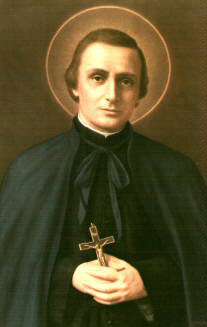 St. Peter Chanel: Saint of the Day for Sunday, April 28, 2024
 Prayer before a Crucifix: Prayer of the Day for Sunday, April 28, 2024


Copyright 2024 Catholic Online. All materials contained on this site, whether written, audible or visual are the exclusive property of Catholic Online and are protected under U.S. and International copyright laws, © Copyright 2024 Catholic Online. Any unauthorized use, without prior written consent of Catholic Online is strictly forbidden and prohibited.
Catholic Online is a Project of Your Catholic Voice Foundation, a Not-for-Profit Corporation. Your Catholic Voice Foundation has been granted a recognition of tax exemption under Section 501(c)(3) of the Internal Revenue Code. Federal Tax Identification Number: 81-0596847. Your gift is tax-deductible as allowed by law.
