We ask you, humbly: don't scroll away.
Hi readers, it seems you use Catholic Online a lot; that's great! It's a little awkward to ask, but we need your help. If you have already donated, we sincerely thank you. We're not salespeople, but we depend on donations averaging $14.76 and fewer than 1% of readers give. If you donate just $5.00, the price of your coffee, Catholic Online School could keep thriving. Thank you.Help Now >
Bl. Aegidius of Assisi
FREE Catholic Classes
One of the original companions of St. Francis. He is also known as Blessed Giles, and holds the foremost place among the companions of St. Francis, "The Knight of our Round Table" St. Francis called him. Of his antecedents and early life nothing certain is known. In April, 1209, moved by the example of two leading fellow-Assisians, who became the first followers of St. Francis, he begged permission to join the little band. and on the feast of St. George was invested in a poor habit St. Francis had begged for him. Almost immediately afterwards he set out with St. Francis to preach in the Marches of Ancona. He accompanied the saint to Rome when the first Rule was approved orally by Innocent III, and appears to have then received the clerical tonsure . About 1212 Aegidius made a pilgrimage to the tomb of St. James at Compostella, in Spain. Shortly after his return to Assisi he started for Jerusalem, to venerate the Holy Places, visiting on his way home the Italian shrines of St. Michael, at Monte Gargano, and St. Nicholas, at Bari. We next find him in Rome and still later at Tunis. In these journeys Aegidius was ever at pains to procure by manual labour what food and shelter he needed. At Ancona he made reed baskets; at Brindisi he carried water and helped to bury the dead; at Rome he cut wood, trod the wine-press, and gathered nuts; while the guest of a cardinal at Rieti he insisted on sweeping the house and cleaning the knives. A keen observer of men and events, Aegidius acquired in the course of these travels much valuable knowledge and experience, which he turned to good account. For he lost no occasion of preaching to the people. His sermons, if such they can be called, were brief and heartfelt talks, replete with homely wisdom; he never minced his words, but spoke to all with apostolic freedom. After some years of activity Aegidius was assigned by St. Francis to the hermitage of Fabriano, where he began that life of contemplation and ecstasy which continued with very visible increase until his death. It was in 1262, on the fifty-second anniversary of his reception into the Order of Friars Minor, that Aegidius passed away, already revered as a saint. His immemorial cultus was confirmed by Pius VI, and his feast is celebrated on the twenty-third of April.
 Hi readers, it seems you use Catholic Online a lot; that's great! It's a little awkward to ask, but we need your help. If you have already donated, we sincerely thank you. We're not salespeople, but we depend on donations averaging $14.76 and fewer than 1% of readers give. If you donate just $5.00, the price of your coffee, Catholic Online School could keep thriving. Thank you. Help Now >
Aegidius was a stranger to theological and classical learning, but by constant contemplation of heavenly things, and by the divine love with which he was inflamed, he acquired that fullness of holy wisdom which filled his contemporaries with wonder, and which drew men of every condition, even the Pope himself, to Perugia to hear from Aegidius' lips the Word of Life. The answers and advice these visitors received were remembered, talked over, and committed to writing, and thus was formed a collection of the familiar "Dicta" or "Sayings" of Aegidius, which have often been edited in Latin and translated into different languages. St. Bonaventure held these "Sayings" in high esteem, and they are cited in the works of many subsequent ascetical writers. They are short, pithy, popular counsels on Christian perfection , applicable to all classes. Saturated with mysticism, yet exquisitely human and possessing a picturesque vein of originality, they faithfully reflect the early Franciscan spirit and teaching. The latest and best edition of the "Dicta" is that published at Quaracchi, in 1905. There is a critical English translation of the same: "The Golden Words of the Blessed Brother Giles", together with a sketch of his life, by the writer of this article (Philadelphia, 1906); also a new German version, "Der selige Aegidius von Assisi, sein Leben und seine Sprüche", by Gisbert Minge (Paderborn, 1905).


Join the Movement
When you sign up below, you don't just join an email list - you're joining an entire movement for Free world class Catholic education.


-

-
Mysteries of the Rosary
-
St. Faustina Kowalska
-
Litany of the Blessed Virgin Mary
-
Saint of the Day for Wednesday, Oct 4th, 2023
-
Popular Saints
-
St. Francis of Assisi
-
Bible
-
Female / Women Saints
-
7 Morning Prayers you need to get your day started with God
-
Litany of the Blessed Virgin Mary


Sacrifices of Faith: The Pro-Life Legacies of St. Gianna and Jessica Hanna
-
How to love God by caring for our bodies
-
Pope Francis calls for negotiations to End Russia-Ukraine War
-
Pope Francis Contemplates Return to U.S. for United Nations Assembly Address
-
Pope Francis Calls on Faithful to Embrace Faith, Hope, and Charity in New Teaching Series


Daily Catholic
- Daily Readings for Sunday, April 28, 2024
- St. Peter Chanel: Saint of the Day for Sunday, April 28, 2024
- Prayer before a Crucifix: Prayer of the Day for Sunday, April 28, 2024
- Daily Readings for Saturday, April 27, 2024
- St. Zita: Saint of the Day for Saturday, April 27, 2024
- Prayer for the Dead # 2: Prayer of the Day for Saturday, April 27, 2024
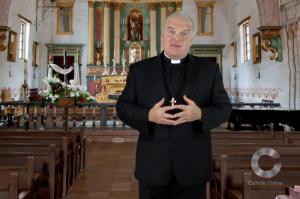 Daily Readings for Sunday, April 28, 2024
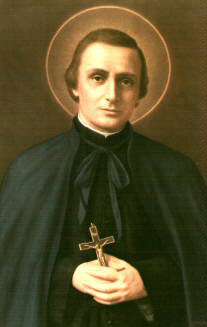 St. Peter Chanel: Saint of the Day for Sunday, April 28, 2024
 Prayer before a Crucifix: Prayer of the Day for Sunday, April 28, 2024
We ask you, humbly: don't scroll away.
Hi readers, it seems you use Catholic Online a lot; that's great! It's a little awkward to ask, but we need your help. If you have already donated, we sincerely thank you. We're not salespeople, but we depend on donations averaging $14.76 and fewer than 1% of readers give. If you donate just $5.00, the price of your coffee, Catholic Online School could keep thriving. Thank you.Help Now >

Copyright 2024 Catholic Online. All materials contained on this site, whether written, audible or visual are the exclusive property of Catholic Online and are protected under U.S. and International copyright laws, © Copyright 2024 Catholic Online. Any unauthorized use, without prior written consent of Catholic Online is strictly forbidden and prohibited.
Catholic Online is a Project of Your Catholic Voice Foundation, a Not-for-Profit Corporation. Your Catholic Voice Foundation has been granted a recognition of tax exemption under Section 501(c)(3) of the Internal Revenue Code. Federal Tax Identification Number: 81-0596847. Your gift is tax-deductible as allowed by law.