Pope St. Sylvester I (314-335)
FREE Catholic Classes
Date of birth unknown; d. 31 December, 335. According to the "Liber pontificalis" (ed. Duchesne, I, 170) he was the son of a Roman named Rufinus; the legendary "Vita beati Sylvestri" calls his mother Justa. After the death of Miltiades (Melchiades), Sylvester was made Bishop of Rome and occupied this position twenty-one years. This was the era of Constantine the Great, when the public position of the Church so greatly improved, a change which must certainly have been very noticeable at Rome ; it is consequently to be regretted that there is so little authoritative information concerning Sylvester's pontificate. At an early date legend brings him into close relationship wtih the first Christian emperor, but in a way that is contrary to historical fact. These legends were introduced especially into the "Vita beati Sylvestri" (Duchesne, loc. cit., Introd., cix sq.) which appeared in the East and has been preserved in Greek, Syriac, and Latin in the "Constitutum Sylvestri"–an apocryphal account of an alleged Roman council which belongs to the Symmachian forgeries and appeared between 501 and 508, and also in the "Donatio Constantini". The accounts given in all these writings concerning the persecution of Sylvester, the healing and baptism of Constantine, the emperor's gift to the pope, the rights granted to the latter, and the council of 275 bishops at Rome, are entirely legendary. The pope, however, took part in the negotiations concerning Arianism and the Council of Nicæa, and the expression ‘omoo&úsion was probably agreed upon with him before the council. The pontiff also sent legates to the first œcumenical council. Still it is not certain whether Constantine had arranged beforehand with Sylvester concerning the actual convening of the council, nor whether there was an express papal confirmation of the decrees beyond the signatures of the papal legates (cf. Funk in "Kirchengesch. Abhandlungen und Untersuchungen", I, 95, 501 sq.).

During Sylvester's pontificate were built the great churches founded at Rome by Constantine, e.g. the basilica and baptistery of the Lateran near the former imperial palace where the pope lived, the basilica of the Sessorian palace (Santa Croce), the Church of St. Peter in the Vatican, and several cemeterial churches over the graves of martyrs. No doubt the pope helped towards the construction of these churches. Sylvester's memory is especially connected with the tiitular Church of Equitius, which takes its name from a Roman presbyter who is said to have erected this church on his property. It was situated near the thermæ of Diocletian, and still exists. Parts of the present building may date from the fourth century. No doubt the pope contributed to the development of the liturgy of the Church at Rome. During his reign, moreover, the first martyrology of Roman martyrs was probably drawn up. Sylvester is connected also with the establishment of the Roman school of singing. on the Via Salaria he built a cemeterial church over the Catacomb of Priscilla, the ruins of which have lately been brought to light. In this church he was buried. His feast is given under 31 December in the "Depositio episcoporum", or list of the burial days of the Roman bishops, which was compiled barely a year after his death; the same date is given in the "Calendar" of Philocalus. This day, therefore, is doubtless the day of his burial. For his possible relations with Armenia, see G REGORY THE I LLUMINATOR .

Join the Movement
When you sign up below, you don't just join an email list - you're joining an entire movement for Free world class Catholic education.


-

-
Mysteries of the Rosary
-
St. Faustina Kowalska
-
Litany of the Blessed Virgin Mary
-
Saint of the Day for Wednesday, Oct 4th, 2023
-
Popular Saints
-
St. Francis of Assisi
-
Bible
-
Female / Women Saints
-
7 Morning Prayers you need to get your day started with God
-
Litany of the Blessed Virgin Mary


Sacrifices of Faith: The Pro-Life Legacies of St. Gianna and Jessica Hanna
-
How to love God by caring for our bodies
-
Pope Francis calls for negotiations to End Russia-Ukraine War
-
Pope Francis Contemplates Return to U.S. for United Nations Assembly Address
-
Pope Francis Calls on Faithful to Embrace Faith, Hope, and Charity in New Teaching Series


Daily Catholic
- Daily Readings for Sunday, April 28, 2024
- St. Peter Chanel: Saint of the Day for Sunday, April 28, 2024
- Prayer before a Crucifix: Prayer of the Day for Sunday, April 28, 2024
- Daily Readings for Saturday, April 27, 2024
- St. Zita: Saint of the Day for Saturday, April 27, 2024
- Prayer for the Dead # 2: Prayer of the Day for Saturday, April 27, 2024
 Daily Readings for Sunday, April 28, 2024
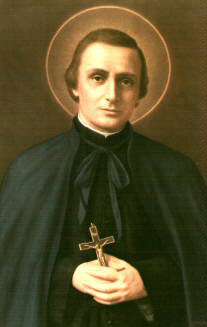 St. Peter Chanel: Saint of the Day for Sunday, April 28, 2024
 Prayer before a Crucifix: Prayer of the Day for Sunday, April 28, 2024
We ask you, humbly: don't scroll away.
Hi readers, it seems you use Catholic Online a lot; that's great! It's a little awkward to ask, but we need your help. If you have already donated, we sincerely thank you. We're not salespeople, but we depend on donations averaging $14.76 and fewer than 1% of readers give. If you donate just $5.00, the price of your coffee, Catholic Online School could keep thriving. Thank you.Help Now >

Copyright 2024 Catholic Online. All materials contained on this site, whether written, audible or visual are the exclusive property of Catholic Online and are protected under U.S. and International copyright laws, © Copyright 2024 Catholic Online. Any unauthorized use, without prior written consent of Catholic Online is strictly forbidden and prohibited.
Catholic Online is a Project of Your Catholic Voice Foundation, a Not-for-Profit Corporation. Your Catholic Voice Foundation has been granted a recognition of tax exemption under Section 501(c)(3) of the Internal Revenue Code. Federal Tax Identification Number: 81-0596847. Your gift is tax-deductible as allowed by law.