We ask you, humbly: don't scroll away.
Hi readers, it seems you use Catholic Online a lot; that's great! It's a little awkward to ask, but we need your help. If you have already donated, we sincerely thank you. We're not salespeople, but we depend on donations averaging $14.76 and fewer than 1% of readers give. If you donate just $5.00, the price of your coffee, Catholic Online School could keep thriving. Thank you.Help Now >
Rossano
FREE Catholic Classes
(ROSSANENSIS).
Archdiocese in Calabria, province of Cosenza, Southern Italy. The city is situated on an eminence not far from the Gulf of Taranto. It was the ancient Roscianum, a Roman colony, and was ravaged by Totile. The Saracens failed to conquer it. In 982 Otto II captured it temporarily from the Byzantines, who had made it the capital of their possessions in Southern Italy. It preserved its Greek character long after its conquest by the Normans. In the cathedral there is an ancient image of the "Madonna acheropita" (i.e. the "Madonna not made by hands"). Rossano was the birthplace of John VII , the antipope John VII (Philagathus), St. Nilus ,—founder of the Abbey of Grottaferrata, and St. Bartholomew, another abbot of that monastery. The first known bishop of this see is Valerianus, Bishop of the "Ecclesia Rosana" in the Roman Council of 680. Cappelletti, however, names a certain Saturninus as first bishop. In the tenth century, or perhaps earlier, the Greek Rite was introduced at Rossano, and continued until the sixteenth century, although two attempts were made to introduce the Latin Rite — once in 1092, and again by Bishop Matteo de' Saraceni in 1460. Priests of the Latin Rite, however, were often appointed bishops. The Greek Rite was maintained especially by the seven Basilian monasteries in the diocese, the most famous of which was S. Maria in Patiro. In 1571 the Greek Rite was abandoned in the cathedral, and half a century afterwards throughout the city. It is still observed in a few villages inhabited by Albanians. Noteworthy bishops were: Vincenzo Pimpinella (1525), nuncio in Germany ; Giovanni Battista Castagna (1553), afterwards Urban VII ; Lucio Sanseverino, founder of the seminary ; Pier Antonio Spinelli (1628) and Jacopo Carafa (1646), both of whom restored and embellished the cathedral. The archdiocese is without suffragans. It includes the ancient Diocese of Turio (Thurii), a city which arose after the destruction of Sybaris; five of its bishops are known, the first being Giovanni (501) and the last Guglielmo (1170). Rossano has 39 parishes, 70,000 Catholics 140 secular priests, 4 houses of nuns, and 3 schools for girls. For the famous "purple Codex Rossanensis", discovered in 1879 in the cathedral sacristy, see Batiffol (below). This Greek parchment manuscript of St. Matthew (to xvi, 14) and St. Mark is the oldest pictorial Gospel known, and is accorded by scholars various dates from the end of the fifth to the eighth or ninth century; it is probably of Alexandrine origin (ed. Gebhardt and Harnack, 1880; A. Muñoz, Rome, 1907).
 Hi readers, it seems you use Catholic Online a lot; that's great! It's a little awkward to ask, but we need your help. If you have already donated, we sincerely thank you. We're not salespeople, but we depend on donations averaging $14.76 and fewer than 1% of readers give. If you donate just $5.00, the price of your coffee, Catholic Online School could keep thriving. Thank you. Help Now >

Join the Movement
When you sign up below, you don't just join an email list - you're joining an entire movement for Free world class Catholic education.


-

-
Mysteries of the Rosary
-
St. Faustina Kowalska
-
Litany of the Blessed Virgin Mary
-
Saint of the Day for Wednesday, Oct 4th, 2023
-
Popular Saints
-
St. Francis of Assisi
-
Bible
-
Female / Women Saints
-
7 Morning Prayers you need to get your day started with God
-
Litany of the Blessed Virgin Mary


Sacrifices of Faith: The Pro-Life Legacies of St. Gianna and Jessica Hanna
-
How to love God by caring for our bodies
-
Pope Francis calls for negotiations to End Russia-Ukraine War
-
Pope Francis Contemplates Return to U.S. for United Nations Assembly Address
-
Pope Francis Calls on Faithful to Embrace Faith, Hope, and Charity in New Teaching Series


Daily Catholic
- Daily Readings for Sunday, April 28, 2024
- St. Peter Chanel: Saint of the Day for Sunday, April 28, 2024
- Prayer before a Crucifix: Prayer of the Day for Sunday, April 28, 2024
- Daily Readings for Saturday, April 27, 2024
- St. Zita: Saint of the Day for Saturday, April 27, 2024
- Prayer for the Dead # 2: Prayer of the Day for Saturday, April 27, 2024
 Daily Readings for Sunday, April 28, 2024
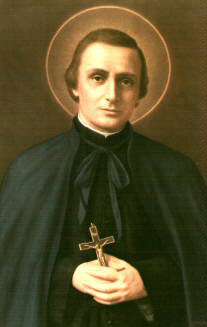 St. Peter Chanel: Saint of the Day for Sunday, April 28, 2024
 Prayer before a Crucifix: Prayer of the Day for Sunday, April 28, 2024
We ask you, humbly: don't scroll away.
Hi readers, it seems you use Catholic Online a lot; that's great! It's a little awkward to ask, but we need your help. If you have already donated, we sincerely thank you. We're not salespeople, but we depend on donations averaging $14.76 and fewer than 1% of readers give. If you donate just $5.00, the price of your coffee, Catholic Online School could keep thriving. Thank you.Help Now >

Copyright 2024 Catholic Online. All materials contained on this site, whether written, audible or visual are the exclusive property of Catholic Online and are protected under U.S. and International copyright laws, © Copyright 2024 Catholic Online. Any unauthorized use, without prior written consent of Catholic Online is strictly forbidden and prohibited.
Catholic Online is a Project of Your Catholic Voice Foundation, a Not-for-Profit Corporation. Your Catholic Voice Foundation has been granted a recognition of tax exemption under Section 501(c)(3) of the Internal Revenue Code. Federal Tax Identification Number: 81-0596847. Your gift is tax-deductible as allowed by law.