We ask you, humbly: don't scroll away.
Hi readers, it seems you use Catholic Online a lot; that's great! It's a little awkward to ask, but we need your help. If you have already donated, we sincerely thank you. We're not salespeople, but we depend on donations averaging $14.76 and fewer than 1% of readers give. If you donate just $5.00, the price of your coffee, Catholic Online School could keep thriving. Thank you.Help Now >
Rogation Days
FREE Catholic Classes
Days of prayer, and formerly also of fasting, instituted by the Church to appease God's anger at man's transgressions, to ask protection in calamities, and to obtain a good and bountiful harvest, known in England as "Gang Days" and "Cross Week", and in Germany as Bittage, Bittwoche, Kreuzwoche . The Rogation Days were highly esteemed in England and King Alfred's laws considered a theft committed on these days equal to one committed on Sunday or a higher Church Holy Day. Their celebration continued even to the thirteenth year of Elizabeth, 1571, when one of the ministers of the Established Church inveighed against the Rogation processions, or Gang Days, of Cross Week. The ceremonial may be found in the Council of Clovesho (Thorpe, Ancient Laws, I, 64; Hefele, Conciliengeschichte, III, 564).
The Rogation Days are the 25th of April, called Major, and the three days before the feast of the Ascension , called Minor. The Major Rogation, which has no connexion with the feast of St. Mark (fixed for this date much later) seems to be of very early date and to have been introduced to counteract the ancient Robigalia , on which the heathens held processions and supplications to their gods. St. Gregory the Great (d. 604) regulated the already existing custom. The Minor Rogations were introduced by St. Mamertus, Bishop of Vienne, and were afterwards ordered by the Fifth Council of Orléans, which was held in 511, and then approved by Leo III (795-816). This is asserted by St. Gregory of Tours in "Hist. Franc.", II, 34, by St. Avitus of Vienne in his "Hom. de Rogat." (P.L., LVIII, 563), by Ado of Vienne (P. L., CXXIII, 102), and by the Roman Martyrology. Sassi, in "Archiepiscopi Mediolanenses", ascribes their introduction at an earlier date to St. Lazarus. This is also held by the Bollandist Henschen in "Acta SS.", II, Feb., 522. The liturgical celebration now consists in the procession and the Rogation Mass. For 25 April the Roman Missal gives the rubric : "If the feast of St. Mark is transferred, the procession is not transferred. In the rare case of 25 April being Easter Sunday [1886, 1943], the procession is held not on Sunday but on the Tuesday following".

The order to be observed in the procession of the Major and Minor Rogation is given in the Roman Ritual, title X, ch. iv. After the antiphon "Exurge Domine", the Litany of the Saints is chanted and each verse and response is said twice. After the verse "Sancta Maria" the procession begins to move. If necessary, the litany may be repeated, or some of the Penitential or Gradual Psalms added. For the Minor Rogations the "Ceremoniale Episcoporum", book II, ch. xxxii, notes: "Eadem serventur sed aliquid remissius". If the procession is held, the Rogation Mass is obligatory, and no notice is taken of whatever feast may occur, unless only one Mass is said, for then a commemoration is made of the feast. An exception is made in favour of the patron or titular of the church, of whom the Mass is said with a commemoration of the Rogation. The colour used in the procession and Mass is violet. The Roman Breviary gives the instruction: "All persons bound to recite the Office, and who are not present at the procession, are bound to recite the Litany, nor can it be anticipated".

We ask you, humbly: don't scroll away.
Hi readers, it seems you use Catholic Online a lot; that's great! It's a little awkward to ask, but we need your help. If you have already donated, we sincerely thank you. We're not salespeople, but we depend on donations averaging $14.76 and fewer than 1% of readers give. If you donate just $5.00, the price of your coffee, Catholic Online School could keep thriving. Thank you.Help Now >
Join the Movement
When you sign up below, you don't just join an email list - you're joining an entire movement for Free world class Catholic education.


-

-
Mysteries of the Rosary
-
St. Faustina Kowalska
-
Litany of the Blessed Virgin Mary
-
Saint of the Day for Wednesday, Oct 4th, 2023
-
Popular Saints
-
St. Francis of Assisi
-
Bible
-
Female / Women Saints
-
7 Morning Prayers you need to get your day started with God
-
Litany of the Blessed Virgin Mary


Sacrifices of Faith: The Pro-Life Legacies of St. Gianna and Jessica Hanna
-
How to love God by caring for our bodies
-
Pope Francis calls for negotiations to End Russia-Ukraine War
-
Pope Francis Contemplates Return to U.S. for United Nations Assembly Address
-
Pope Francis Calls on Faithful to Embrace Faith, Hope, and Charity in New Teaching Series


Daily Catholic
- Daily Readings for Sunday, April 28, 2024
- St. Peter Chanel: Saint of the Day for Sunday, April 28, 2024
- Prayer before a Crucifix: Prayer of the Day for Sunday, April 28, 2024
- Daily Readings for Saturday, April 27, 2024
- St. Zita: Saint of the Day for Saturday, April 27, 2024
- Prayer for the Dead # 2: Prayer of the Day for Saturday, April 27, 2024
 Daily Readings for Sunday, April 28, 2024
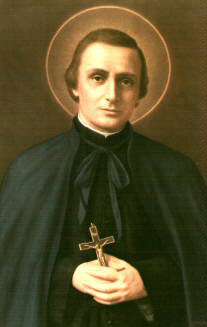 St. Peter Chanel: Saint of the Day for Sunday, April 28, 2024
 Prayer before a Crucifix: Prayer of the Day for Sunday, April 28, 2024

 Hi readers, it seems you use Catholic Online a lot; that's great! It's a little awkward to ask, but we need your help. If you have already donated, we sincerely thank you. We're not salespeople, but we depend on donations averaging $14.76 and fewer than 1% of readers give. If you donate just $5.00, the price of your coffee, Catholic Online School could keep thriving. Thank you. Help Now >

Copyright 2024 Catholic Online. All materials contained on this site, whether written, audible or visual are the exclusive property of Catholic Online and are protected under U.S. and International copyright laws, © Copyright 2024 Catholic Online. Any unauthorized use, without prior written consent of Catholic Online is strictly forbidden and prohibited.
Catholic Online is a Project of Your Catholic Voice Foundation, a Not-for-Profit Corporation. Your Catholic Voice Foundation has been granted a recognition of tax exemption under Section 501(c)(3) of the Internal Revenue Code. Federal Tax Identification Number: 81-0596847. Your gift is tax-deductible as allowed by law.