St. Matilda
Facts
Patron: of parents of large families
Birth: 895
Death: 968
Author and Publisher - Catholic Online
Printable Catholic Saints PDFs
Shop St. Matilda
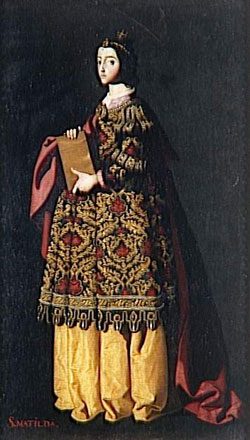
Saint Matilda (also known as Mechthild or Mathilda) was the daughter of Count Dietrich (Theodoric) of Westphalia and Reinhild of Denmark. She was raised at the convent of Erfurt under the care of her grandmother, the abbess, where she developed a deep love of prayer, charity, and work.
Around 909, she married Henry the Fowler, Duke of Saxony, who became King of Germany in 919. As queen, Matilda was renowned for her piety and generosity—she cared for the poor, visited prisoners, comforted the sick, and supported religious life. Henry supported her charitable works throughout his life.
After Henry’s death in 936, Matilda devoted herself even more to prayer and good works. Their son Otto I (Otto the Great) became King of Germany and later Holy Roman Emperor, while another son, Henry, became Duke of Bavaria. Conflicts between her sons caused Matilda great suffering, and at times she herself was criticized for her extensive charity, which some considered excessive.
Despite these trials, she remained steadfast in faith. She founded several monasteries and convents, including those at Quedlinburg and Nordhausen, and spent her later years in religious devotion.
She died on March 14, 968, and was buried at Quedlinburg. She is honored as a model of Christian charity, humility, and perseverance.
Come Grow With Us
Sign up and walk the Catholic journey with millions around the world.
Receive inspiring emails on saints, daily readings, and free faith-building resources—no cost, ever.
World Catholic Education Alliance
Your Child Needs Help Tonight—Could the Answer Be Right Here?
Watch the Video.

- 7 Morning Prayers
- Mysteries of the Rosary
- Litany of the Bl. Virgin Mary
- Popular Saints
- Popular Prayers
- Female Saints
- Saint Feast Days by Month
- Stations of the Cross
- St. Francis of Assisi
- St. Michael the Archangel
- The Apostles' Creed
- Unfailing Prayer to St. Anthony
- Pray the Rosary











Copyright 2026 Catholic Online. All materials contained on this site, whether written, audible or visual are the exclusive property of Catholic Online and are protected under U.S. and International copyright laws, © Copyright 2026 Catholic Online. Any unauthorized use, without prior written consent of Catholic Online is strictly forbidden and prohibited.
Catholic Online is a Project of Your Catholic Voice Foundation, a Not-for-Profit Corporation. Your Catholic Voice Foundation has been granted a recognition of tax exemption under Section 501(c)(3) of the Internal Revenue Code. Federal Tax Identification Number: 81-0596847. Your gift is tax-deductible as allowed by law.