
St. Michael de Sanctis
Facts
Patron: of cancer patients
Birth: 1591
Death: 1625
Author and Publisher - Catholic Online
Printable Catholic Saints PDFs
Shop St. Michael de Sanctis
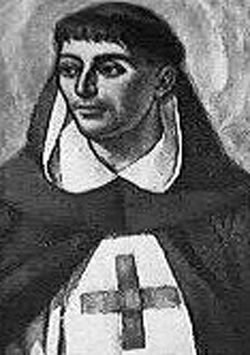
Michael de Sanctis was born in Catalonia, Spain around 1591. At the age of six he informed his parents that he was going to be a monk. Moreover, he imitated St. Francis of Assisi to such a great extent that he had to be restrained. After the death of his parents, Michael served as an apprentice to a merchant. However, he continued to lead a life of exemplary fervor and devotion, and in 1603, he joined the Trinitarian Friars at Barcelona, taking his vows at St. Lambert's monastery in Saragosa in 1607. Shortly thereafter, Michael expressed a desire to join the reformed group of Trinitarians and was given permission to do so. He went to the Novitiate at Madrid and, after studies at Seville and Salamanca, he was ordained a priest and twice served as Superior of the house in Valladolid. His confreres considered him to be a saint, especially because of his devotion to the Most Blessed Sacrament and his ecstacies during Mass. After his death at the age of thirty-five on April 10, 1625 many miracles were attributed to him. He was canonized in 1862 by Pope Pius IX. St. Michael de Sanctis is noted in the Roman Martyrology as being "remarkable for innocence of life, wonderful penitence, and love for God." He seemed from his earliest years to have been selected for a life of great holiness, and he never wavered in his great love of God or his vocation. As our young people look for direction in a world that seems not to care, St. Michael stands out as worthy of imitation as well as of the prayers of both young and old alike. His feast day is April 10.
Join the Movement
When you sign up below, you don't just join an email list - you're joining an entire movement for Free world class Catholic education.
- Easter / Lent
- Ascension Day
- 7 Morning Prayers
- Mysteries of the Rosary
- Litany of the Bl. Virgin Mary
- Popular Saints
- Popular Prayers
- Female Saints
- Saint Feast Days by Month
- Stations of the Cross
- St. Francis of Assisi
- St. Michael the Archangel
- The Apostles' Creed
- Unfailing Prayer to St. Anthony
- Pray the Rosary







Copyright 2025 Catholic Online. All materials contained on this site, whether written, audible or visual are the exclusive property of Catholic Online and are protected under U.S. and International copyright laws, © Copyright 2025 Catholic Online. Any unauthorized use, without prior written consent of Catholic Online is strictly forbidden and prohibited.
Catholic Online is a Project of Your Catholic Voice Foundation, a Not-for-Profit Corporation. Your Catholic Voice Foundation has been granted a recognition of tax exemption under Section 501(c)(3) of the Internal Revenue Code. Federal Tax Identification Number: 81-0596847. Your gift is tax-deductible as allowed by law.