St. Ignatius Loyola
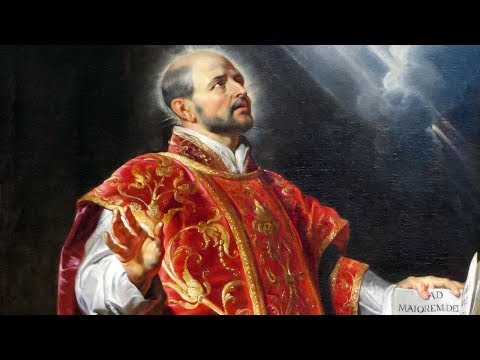

Facts
Patron: Dioceses of San Sebastian and Bilbao, Biscay & Gipuzkoa, Basque Country, Military Ordinariate of the Philippines, Society of Jesus, soldiers, Educators and Education.
Birth: 1491
Death: 1556
Beatified: July 27, 1609 by Paul V
Canonized: March 12, 1622 by Gregory XV
Author and Publisher - Catholic Online
Printable PDF of St. Ignatius Loyola
Shop St. Ignatius Loyola

Born Inigo Lopez de Loyola in 1491, the man known as Ignatius of Loyola entered the world in Loiola, Spain. At the time, the name of the village was spelled "Loyola," hence the discrepancy. Inigo came of age in Azpeitia, in northern Spain. Loyola is a small village at the southern end of Azpeitia.
Inigio was the youngest of thirteen children. His mother died when he was just seven, and he was then raised by Maria de Garin, who was the wife of a blacksmith. His last name, "Loyola" was taken from the village of his birth.
Despite the misfortune of losing his mother he was still a member of the local aristocracy and was raised accordingly. Inigio was an ambitious young man who had dreams of becoming a great leader. He was influenced by stories such as The Song of Roland and El Cid.
At the age of sixteen, he began a short period of employment working for Juan Velazquez, the treasurer of Castile. By the time he was eighteen, he became a soldier and would fight for Antonio Manrique de Lara, Duke of Nájera and Viceroy of Navarre.
Seeking wider acclaim, he began referring to himself as Ignatius. Ignatius was a variant of Inigio. The young Ignatius also gained a reputation as a duelist. According to one story, he killed a Moor with whom he argued about the divinity of Jesus.
Ignatius fought in several battles under the leadership of the Duke of Najera. He had a talent for emerging unscathed, despite participating in many battles. His talent earned him promotions and soon he commanded his own troops.
In 1521, while defending the town of Pamplona against French attack, Ignatius was struck by a cannonball in the legs. One leg was merely broken, but the other was badly mangled. To save his life and possibly his legs, doctors performed several surgeries. There were no anesthetics during this time, so each surgery was painful. Despite their best efforts, Ignatius' condition deteriorated. After suffering for a month, his doctors warned him to prepare for death.
On June 29, 1521, on the feast of Saints Peter and Paul, Ignatius began to improve. As soon as he was healthy enough to bear it, part of one leg was amputated which while painful, sped his recovery.
During this time of bodily improvement, Ignatius began to read whatever books he could find. Most of the books he obtained were about the lives of the saints and Christ. These stories had a profound impact on him, and he became more devout.
One story in particular influenced him, "De Vita Christi" (The life of Christ). The story offers commentary on the life of Christ and suggested a spiritual exercise that required visualizing oneself in the presence of Christ during the episodes of His life. The book would inspire Ignatius' own spiritual exercises.
As he lay bedridden, Ignatius developed a desire to become a working servant of Christ. He especially wanted to convert non-Christians.
Among his profound realizations, was that some thoughts brought him happiness and others sorrow. When he considered the differences between these thoughts, he recognized that two powerful forces were acting upon him. Evil brought him unpleasant thoughts while God brought him happiness. Ignatius discerned God's call, and began a new way of life, following God instead of men.
By the spring of 1522, Ignatius had recovered enough to leave bed. On March 25, 1522, he entered the Benedictine monastery, Santa Maria de Montserrat. Before an image of the Black Madonna, he laid down his military garments. He gave his other clothes away to a poor man.
He then walked to a hospital in the town of Manresa. In exchange for a place to live, he performed work around the hospital. He begged for his food. When he was not working or begging, he would go into a cave and practice spiritual exercises.
His time in prayer and contemplation helped him to understand himself better. He also gained a better understanding of God and God's plan for him.
The ten months he spent between the hospital and the cavern were difficult for Ignatius. He suffered from doubts, anxiety and depression. But he also recognized that these were not from God.
Ignatius began recording his thoughts and experiences in a journal. This journal would be useful later for developing new spiritual exercises for the tens of thousands of people who would follow him. Those exercises remain invaluable today and are still widely practiced by religious and laity alike.
The next year, in 1523, Ignatius made a pilgrimage to the Holy Land. His goal was to live there and convert non-believers. However, the Holy Land was a troubled place and Church officials did not want Ignatius to complicate things further. They asked him to return after just a fortnight.
Ignatius realized he needed to obtain a complete education if he wanted to convert people. Returning to Barcelona, Ignatius attended a grammar school, filled with children, to learn Latin and other beginning subjects. He was blessed with a great teacher during this time, Master Jeronimo Ardevol.
After completing his primary education, Ignatius traveled to Alcala, then Salamanca, where he studied at universities. In addition to studying, Ignatius often engaged others in lengthy conversations about spiritual matters.
These conversations attracted the attention of the Inquisition.
In Spain, the Inquisition was responsible for ferreting out religious dissent and combating heresy. The Inquisition was not as it has long been depicted in the media.
The Inquisition accused Ignatius of preaching without any formal education in theology. Without this training, it was likely that Ignatius could introduce heresy by way of conversation and misunderstanding.
Ignatius was questioned three times by the Inquisition, but he was always exonerated.
Ignatius eventually decided he needed more education, so he traveled north, seeking better schools and teachers. He was 38 years old when he entered the College of Saint Barbe of the University of Paris. This education was very structured and formalized. Later, Ignatius would be inspired to copy this model when establishing schools. The ideas of prerequisites and class levels would arise from the Jesuit schools, which here heavily inspired by Ignatius' experience in Paris.
Ignatius earned a master's degree at the age of 44. When he subsequently applied for his doctorate, he was passed over because of his age. He also suffered from ailments, which the school was concerned could impact his studies.
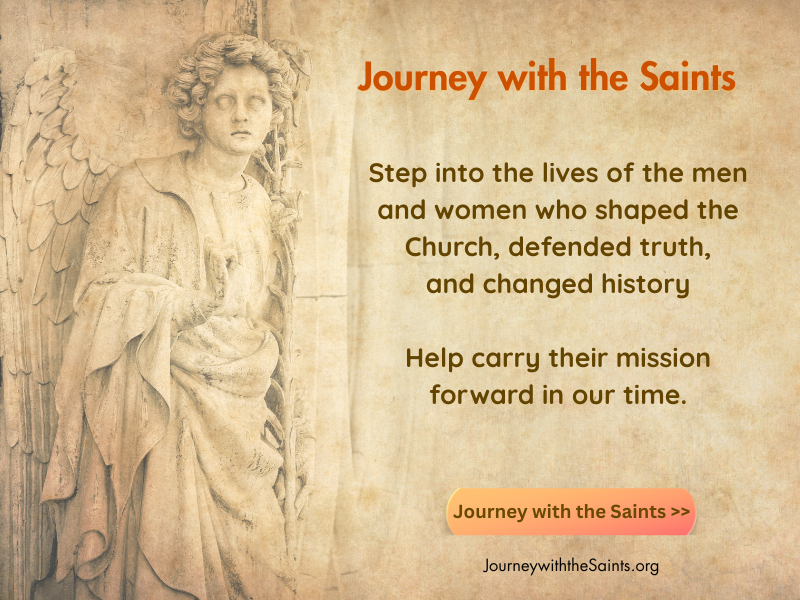
While at school in Paris, Ignatius roomed with Peter Faber and Francis Xavier. Faber was French and Xavier was Basque. The men became friends and Ignatius led them in his spiritual exercises. Other men soon joined their exercises and became followers of Ignatius. The group began to refer to themselves as “Friends in the Lord,” an apt description.
The circle of friends, shared Ignatius' dream of traveling to the Holy Land, but conflict between Venice and the Turks made such a journey impossible. Denied the opportunity to travel there, the group then decided to visit Rome. There, they resolved to present themselves to the Pope and to serve at his pleasure.
Pope Paul III received the group and approved them as an official religious order in 1540. The band attempted to elect Ignatius as their first leader, but he declined, saying he had not lived a worthy life in his youth. He also believed others were more experienced theologically.
The group insisted however, and Ignatius accepted the role as their first leader. They called themselves the Society of Jesus. Some people who did not appreciate their efforts dubbed them “Jesuits” in an attempt to disparage them. While the name stuck, by virtue of their good work the label lost its negative connotation.
Ignatius imposed a strict, almost military rule on his order. This was natural for a man who spent his youth as a soldier. It might be expected that such rigor would dissuade people from joining, but it had the opposite effect. The order grew.
The Society of Jesus soon found its niche in education. Before Ignatius died in 1556, his order established 35 schools and boasted 1,000 members. The order was responsible for much of the work of stopping the spread of the Protestant Reformation. The Society advocated the use of reason to persuade others and combat heresy.
Today, the Society of Jesus is known for its work in educating the youth around the world. Several universities have been founded in the name of Ignatius and in the traditional Jesuit spirit. The Jesuits also perform many other important works around the globe.
Ignatius' passed away on July 31, 1556, at the age of 64. He was beatified by Pope Paul V on July 27, 1609 and canonized on March 12, 1622. His feast day is July 31. He is the patron saint of the Society of Jesus, soldiers, educators and education.

Come Grow With Us
Sign up and walk the Catholic journey with millions around the world.
Receive inspiring emails on saints, daily readings, and free faith-building resources—no cost, ever.
Some children just need to know they’re not alone...
Watch 'Jessie’s Story: A Heart Changed by Faith'
- Easter / Lent
- 5 Lenten Prayers
- Ash Wednesday
- 7 Morning Prayers
- Mysteries of the Rosary
- Litany of the Bl. Virgin Mary
- Popular Saints
- Popular Prayers
- Female Saints
- Saint Feast Days by Month
- Stations of the Cross
- St. Francis of Assisi
- St. Michael the Archangel
- The Apostles' Creed
- Unfailing Prayer to St. Anthony
- Pray the Rosary






Copyright 2026 Catholic Online. All materials contained on this site, whether written, audible or visual are the exclusive property of Catholic Online and are protected under U.S. and International copyright laws, © Copyright 2026 Catholic Online. Any unauthorized use, without prior written consent of Catholic Online is strictly forbidden and prohibited.
Catholic Online is a Project of Your Catholic Voice Foundation, a Not-for-Profit Corporation. Your Catholic Voice Foundation has been granted a recognition of tax exemption under Section 501(c)(3) of the Internal Revenue Code. Federal Tax Identification Number: 81-0596847. Your gift is tax-deductible as allowed by law.