We have one question for you.
Has Catholic Online given you $5 worth of value this year? Maybe you came here for a prayer. Maybe you read today's Mass readings. Maybe you researched a saint. Maybe you needed an answer about the Catholic Faith. Maybe your child used Catholic Online School. If the answer is no, you don't owe us anything. Keep using Catholic Online. But if the answer is yes, we're asking you to give $5 today.
Catholic Online School has served 2.2 million student enrollments in 193 countries, and we continue working to make Catholic education available regardless of a family's financial circumstances. We don't need every reader to give. We need the readers who recognize the value of what they've received to stand behind it. Is Catholic Online worth $5 to you?
GIVE TODAY >>St. Jeanne de Lestonnac
Facts
Patron: of abuse victims, people rejected by religious orders, widows
Birth: 1556
Death: 1640
Author and Publisher - Catholic Online
Printable Catholic Saints PDFs
Shop St. Jeanne de Lestonnac
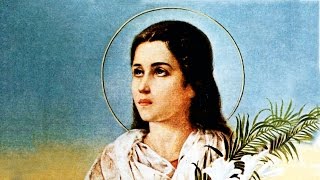
 In France, in the XVI century and in Bordeaux, the port at the mouth of the Garonne which became an important centre for Humanism, we approach Jeanne de Lestonnac's life.
Entering her home, we meet Richard de Lestonnac, her father - a counsellor in the Parliament of Bordeaux - and Jeanne Eyquem de Montaigne, her mother. Perhaps Montaigne's name is familiar. You will have heard, maybe, about Michael de Montaigne, the philosopher who wrote the "Essays" and created a new literary genre. He was Jeanne's uncle; they were great friends and his influence can be seen in her work.
Jeanne, the eldest of the Lestonnac - Eyquem de Montaigne family, was born in 1556. During this century a sharp political and religious conflict was raging. The advance of the Protestant Reformation, led by Calvin's followers, clashed with Catholic tradition, and the effects were felt everywhere. While still a child, Jeanne experienced the consequences of the religious differences between her parents. Her father - a fervent Catholic -wished to share his faith with her and had her baptized. Her mother "was convinced that the greatest benefit she could bestow on her daughter was to educate her in the religion of Calvin."
The girl's faith was put to the test and eventually gained from the struggle. Jeanne opted for her father's faith. Her first spiritual experience was as if an interior voice confirmed her choice and left an impression on her for the rest of her life.
"Be careful, daughter. Don't let the fire that I have enkindled in your heart, to serve me so fervently, ever die out."
Her desire to serve the Lord made her search for models of great women, such as St. Scholastica, St. Clare, St. Catherine of Siena, St.Teresa of Avila... but, considering the situation of religious life in France, it was difficult for her to pursue her ideal. When her father proposed that she marry, she took it as a clear sign of God's will.
Come Grow With Us
Sign up and walk the Catholic journey with millions around the world.
Receive inspiring emails on saints, daily readings, and free faith-building resources—no cost, ever.
What if your child could learn the Catholic Faith for FREE?
Please Watch

- 7 Morning Prayers
- Mysteries of the Rosary
- Litany of the Bl. Virgin Mary
- Popular Saints
- Popular Prayers
- Female Saints
- Saint Feast Days by Month
- Stations of the Cross
- St. Francis of Assisi
- St. Michael the Archangel
- The Apostles' Creed
- Unfailing Prayer to St. Anthony
- Pray the Rosary






Copyright 2026 Catholic Online. All materials contained on this site, whether written, audible or visual are the exclusive property of Catholic Online and are protected under U.S. and International copyright laws, © Copyright 2026 Catholic Online. Any unauthorized use, without prior written consent of Catholic Online is strictly forbidden and prohibited.
Catholic Online is a Project of Your Catholic Voice Foundation, a Not-for-Profit Corporation. Your Catholic Voice Foundation has been granted a recognition of tax exemption under Section 501(c)(3) of the Internal Revenue Code. Federal Tax Identification Number: 81-0596847. Your gift is tax-deductible as allowed by law.