We ask you, humbly: don't scroll away.
Hi readers, it seems you use Catholic Online a lot; that's great! It's a little awkward to ask, but we need your help. If you have already donated, we sincerely thank you. We're not salespeople, but we depend on donations averaging $14.76 and fewer than 1% of readers give. If you donate just $5.00, the price of your coffee, Catholic Online School could keep thriving. Thank you.Help Now >
Statute of Provisors
FREE Catholic Classes
The English statute usually so designated is the 25th of Edward III, St. 4 (1350-1), otherwise termed "The Statute of Provisors of Benefices", or anciently "Statutu de p'visoribs" or "Lestatut de revâcons & pvis".
This was among the statutes incidental to the "long and angry controversy" [to quote Dr. Lingard, "The History of England" (London, 1883), III, 349] between the English kings and the Court of Rome concerning filling of ecclesiastical benefices by means of papal provisions "by which the Pope, suspending for the time the right of the patron, nominated of his own authority, to the vacant benefice " (op. cit., II, 416), the papal nominee being called a provisor.
The resulting possession by Italians of church livings in England provoked at one period during the thirteenth century acts of lawless violence (ibid.). Pope Gregory IX (1227-41) pronounced against the propriety of such provisions as interfered with the rights of lay patrons (ibid., 417). And Pope Innocent IV expressed, in 1253, general disapprobation of these nominations (ibid., 419).
From the recitals of "The Statute of Provisors" it appears that the bestowal by the pope of English benefices and ecclesiastical possessions "as if he had been patron or avowee . . . as he was not of right by law of England ", and his "accroching to him the seignories" was complained of as not only an illegal injury to the property rights of particular patrons, but also as injurious spiritually and economically to the community in general. The holy church of England, " seinte eglise d'Engleterre ", was said to have been founded by the sovereigns and the nobles to inform them and the people of the law of God and also to make hospitalities, alms, and other works of charity in the places where churches were founded, and possessions assigned for such purposes to prelates, religious, and other people of holy church; and these purposes were said to be defeated by this granting of benefices to aliens who did not, and to cardinals who might not, live in England "and to others as well aliens as denizens". Certain of the economic evils had been dealt with by a Statute of Edward I (35 Edward I, St. 1, c. 1, 1306-07), forbidding alien priors or governors of a religious house to impose charges or burdens on their houses and forbidding abbots, priors or other religious to send out of the kingdom any tax imposed on them. But the "Statute of Provisors" recites that the evils complained of in the petition leading to this Statute of Edward I still continue, and "that our holy father, the Pope " ( Notre seinte piere le Pape ), still reserves to his collation benefices in England, giving them to aliens and denizens and taking first fruits and other profits, the purchasers of benefices taking out of the kingdom a great part of its treasure. The Statute, therefore, enacts that elections of bishops shall be free, that owners of advowsons shall have free collation and presentment, and that attempted reservation, collation, or provision by the Court of Rome shall cause the right of collation to revert to the king.
Later Statutes are 27 Edward III, St. 1, c. 1; 38 Edward III, St. 2; 3 Richard II; 7 Richard II, c. XII; 12 Richard II, c. XV; 13 Richard II, St. 2; 16 Richard II, c. 5, and finally in the parliament of 1400-1, the Statute 2 Henry IV, c. 3, c. 4.
Concerning adverse legislation of the Council of Trent respecting provisions, see BENEFICE.
We ask you, humbly: don't scroll away.
Hi readers, it seems you use Catholic Online a lot; that's great! It's a little awkward to ask, but we need your help. If you have already donated, we sincerely thank you. We're not salespeople, but we depend on donations averaging $14.76 and fewer than 1% of readers give. If you donate just $5.00, the price of your coffee, Catholic Online School could keep thriving. Thank you.Help Now >
Join the Movement
When you sign up below, you don't just join an email list - you're joining an entire movement for Free world class Catholic education.


-

-
Mysteries of the Rosary
-
St. Faustina Kowalska
-
Litany of the Blessed Virgin Mary
-
Saint of the Day for Wednesday, Oct 4th, 2023
-
Popular Saints
-
St. Francis of Assisi
-
Bible
-
Female / Women Saints
-
7 Morning Prayers you need to get your day started with God
-
Litany of the Blessed Virgin Mary


Sacrifices of Faith: The Pro-Life Legacies of St. Gianna and Jessica Hanna
-
How to love God by caring for our bodies
-
Pope Francis calls for negotiations to End Russia-Ukraine War
-
Pope Francis Contemplates Return to U.S. for United Nations Assembly Address
-
Pope Francis Calls on Faithful to Embrace Faith, Hope, and Charity in New Teaching Series


Daily Catholic
- Daily Readings for Sunday, April 28, 2024
- St. Peter Chanel: Saint of the Day for Sunday, April 28, 2024
- Prayer before a Crucifix: Prayer of the Day for Sunday, April 28, 2024
- Daily Readings for Saturday, April 27, 2024
- St. Zita: Saint of the Day for Saturday, April 27, 2024
- Prayer for the Dead # 2: Prayer of the Day for Saturday, April 27, 2024
 Daily Readings for Sunday, April 28, 2024
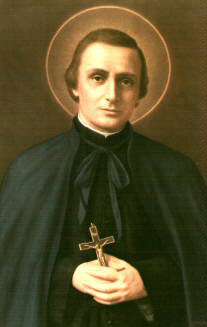 St. Peter Chanel: Saint of the Day for Sunday, April 28, 2024
 Prayer before a Crucifix: Prayer of the Day for Sunday, April 28, 2024
 Hi readers, it seems you use Catholic Online a lot; that's great! It's a little awkward to ask, but we need your help. If you have already donated, we sincerely thank you. We're not salespeople, but we depend on donations averaging $14.76 and fewer than 1% of readers give. If you donate just $5.00, the price of your coffee, Catholic Online School could keep thriving. Thank you. Help Now >


Copyright 2024 Catholic Online. All materials contained on this site, whether written, audible or visual are the exclusive property of Catholic Online and are protected under U.S. and International copyright laws, © Copyright 2024 Catholic Online. Any unauthorized use, without prior written consent of Catholic Online is strictly forbidden and prohibited.
Catholic Online is a Project of Your Catholic Voice Foundation, a Not-for-Profit Corporation. Your Catholic Voice Foundation has been granted a recognition of tax exemption under Section 501(c)(3) of the Internal Revenue Code. Federal Tax Identification Number: 81-0596847. Your gift is tax-deductible as allowed by law.