We ask you, humbly: don't scroll away.
Hi readers, it seems you use Catholic Online a lot; that's great! It's a little awkward to ask, but we need your help. If you have already donated, we sincerely thank you. We're not salespeople, but we depend on donations averaging $14.76 and fewer than 1% of readers give. If you donate just $5.00, the price of your coffee, Catholic Online School could keep thriving. Thank you.Help Now >
Pools in Scripture
FREE Catholic Classes
In the English Bibles, the word "pool" stands for three Hebrew words: (1) 'agam means properly a pond of stagnant water; in Ex., vii, 19; viii, 5, it designates probably sheets of water left in low places by the Nile from the inundation; (2) miqveh signifies originally "the gathering together" of the waters ( Genesis 1:10 ), hence a place where waters flowing from different directions are collected together, a reservoir being usually formed by damming up the valley; (3) berekah (comp. Arab. birket ) is an entirely artificial reservoir generally excavated in the rock and covered inside with a lining of masonry to prevent leaking. These three words convey a fair idea of the way the natives of Palestine and neighbouring regions have at all times secured a sufficient supply of water, a precaution by no means unimportant in countries where dry weather prevails for the greater part of the year. Natural pools of the kind described in Scripture by the name 'agam are practically unknown in Palestine. If importance be attached to the vocabulary of the sacred writers, we might be justified in supposing that most pools were wholly artificial, for all are indiscriminately styled berekah in the Hebrew Bible. Yet there can be no doubt that some were reservoirs obtained by building a dam across valleys; such was, at any rate, the Lower, or Old, Pool ( Birket el-Hamra , south of Jerusalem ), which, before the Upper Pool ( 'Ain Silwan ) was constructed, was filled from the Gihon (the Virgin's Fountain) by a surface conduit, along the eastern slope of the spur of Ophel, and later was fed from the surplus water overflowing from the Upper Pool.

The other pools in or about the Holy City were all entirely artificial, being excavated in the rock. Those mentioned in Scripture are: (1) the Pool of Siloe (A. V. Siloah; Nehemiah 3:15 ; John 9:7 ), or Upper Pool ( 2 Kings 18:17 ; Isaiah 7:3 ; 36:2 ), or the King's Pool ( Nehemiah 2:14 ), built by Ezechias "between the two walls" ( Isaiah 22:11 ), to bring into the city through an underground conduit, the Siloe tunnel, the water of Gihon; (2) the Pool of Bethsaida (A. V. Bethesda; John 5:2 ); the exact location of this pool is to this day an object of dispute; commonly but quite groundlessly it is identified with the Birket Israil, north of the Temple and southwest of St. Stephen's Gate ( Bab Sitti Maryam ); others (Conder, Paton etc.) see it in the pool at the Fountain of Gihon ( 'Ain Sitti Maryam ), southeast of the Haram---the berekah 'asuyah (i.e. "well made") of Neh. (II Esd.) iii, 16; others finally think it should be sought some distance north of the Birket Israil and west of St. Ann's Church and recognized there in old constructions still suggesting the form of porticoes; (3) the Berekah 'asuyah of II Esd. has just been mentioned; it was the reservoir of the intermittent spring of Gihon; (4) we should perhaps cite also the Dragon Fountain of II Esd., ii, 13, which lay between the Valley Gate (practically the modern Jaffa Gate) and the Dung Gate (about due west of the southern end of the Birket es-Sultan ); probably connected with the Dragon Fountain was the Serpent's Pool mentioned by Josephus (Bell. Jud., V, iii, 2), but the site of both is now a mere matter of conjecture. Despite the historical interest attached to them, it is needless to recall here the various pools of the Holy Land more or less incidentally mentioned in Scripture : the Pool of Gabaon, which witnessed the bloody encounter of the servants of David with the defenders of Saul's dynasty; the Pools of Hesebon, and finally the pools alluded to in Eccl., ii, 6 as being the work of Solomon. These are supposed by some to be the famous Pools of Solomon (about eight miles south of Jerusalem ) from which several winding aqueducts, one forty-seven miles long, brought the water into the city.
We ask you, humbly: don't scroll away.
Hi readers, it seems you use Catholic Online a lot; that's great! It's a little awkward to ask, but we need your help. If you have already donated, we sincerely thank you. We're not salespeople, but we depend on donations averaging $14.76 and fewer than 1% of readers give. If you donate just $5.00, the price of your coffee, Catholic Online School could keep thriving. Thank you.Help Now >

Join the Movement
When you sign up below, you don't just join an email list - you're joining an entire movement for Free world class Catholic education.


-

-
Mysteries of the Rosary
-
St. Faustina Kowalska
-
Litany of the Blessed Virgin Mary
-
Saint of the Day for Wednesday, Oct 4th, 2023
-
Popular Saints
-
St. Francis of Assisi
-
Bible
-
Female / Women Saints
-
7 Morning Prayers you need to get your day started with God
-
Litany of the Blessed Virgin Mary


Sacrifices of Faith: The Pro-Life Legacies of St. Gianna and Jessica Hanna
-
How to love God by caring for our bodies
-
Pope Francis calls for negotiations to End Russia-Ukraine War
-
Pope Francis Contemplates Return to U.S. for United Nations Assembly Address
-
Pope Francis Calls on Faithful to Embrace Faith, Hope, and Charity in New Teaching Series


Daily Catholic
- Daily Readings for Sunday, April 28, 2024
- St. Peter Chanel: Saint of the Day for Sunday, April 28, 2024
- Prayer before a Crucifix: Prayer of the Day for Sunday, April 28, 2024
- Daily Readings for Saturday, April 27, 2024
- St. Zita: Saint of the Day for Saturday, April 27, 2024
- Prayer for the Dead # 2: Prayer of the Day for Saturday, April 27, 2024
 Daily Readings for Sunday, April 28, 2024
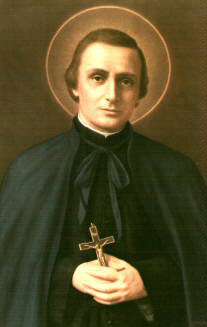 St. Peter Chanel: Saint of the Day for Sunday, April 28, 2024
 Prayer before a Crucifix: Prayer of the Day for Sunday, April 28, 2024


Copyright 2024 Catholic Online. All materials contained on this site, whether written, audible or visual are the exclusive property of Catholic Online and are protected under U.S. and International copyright laws, © Copyright 2024 Catholic Online. Any unauthorized use, without prior written consent of Catholic Online is strictly forbidden and prohibited.
Catholic Online is a Project of Your Catholic Voice Foundation, a Not-for-Profit Corporation. Your Catholic Voice Foundation has been granted a recognition of tax exemption under Section 501(c)(3) of the Internal Revenue Code. Federal Tax Identification Number: 81-0596847. Your gift is tax-deductible as allowed by law.
